Welcome to Impossibly Dainty French Woman, the The #1 blog dedicated to explaining to women worldwide how to be impossibly perfect like we Frenchwomen and enjoy the French lifestyle, be it the trains or beautiful cities, but most of all the cuisine that facilitates us in our quest to remain pencil-thin. Please subscribe to this blog to receive updates by e-mail (below).
As many of my readers will be aware, I am strongly in favour of trains as a transportation mode. Mireille Guiliano has often pointed out passive exercise as being a reason why French women are so effortlessly thin and perfect. In order to make this situation workable in today's globalised world, it is necessary to have good public transportation networks, of which high-speed intercity railway plays an important part.
Of the presidents we French have had in the past few years, Nicolas Sarkozy is the one I am most favourably disposed towards. He didn't help himself by being a bling-bling president pursuing a glamorous romance with his now-wife Carla Bruni, but he did many good things, such as coming up with some ideas for economic reform (rewarding hard work) and setting the process in motion for construction of LGVs (Lignes à Grande Vitesse, or high-speed lines), in particular Le Mans-Rennes, Tours-Bordeaux and Nîmes-Montpellier. In addition to this, he played a key role in starting the process for introducing high-speed rail to Morocco.
Granted, an organisation cannot go on indefinitely if its debts just keep ballooning and I am pleased that Emmanuel Macron is cracking down on the gravy train that many SNCF employees enjoy, but I am not happy with the change in the way high-speed lines will be funded. https://www.railjournal.com/in_depth/sncf-reform-back-on-track-after-devastating-strike explains that SNCF Network will not fund any more high-speed line projects, but the funding will come from the regions. I don't mind the idea that people in Marseille shouldn't be funding the Tours-Bordeaux line, given the limited benefits we will receive from it. Some of the principles behind it are good, but what I am unhappy with is the possibility that it will make LGV construction unviable, given the relative lack of power regions have to pull together disparate funding sources. It is hypothetically possible that Languedoc-Roussillon will persuade say Catalonia and the Spanish government to chip in for the LGV Montpellier-Perpignan. Maybe PACA (Provence-Alpes-Côte d'Azur) will persuade Liguria, Italy and other French regions to chip in for the upgrades to the Marseille-Nice route. I am not holding my breath though. Marseille-Nice is already badly congested and Montpellier-Perpignan stands to get worse, given the lines that converge at the ends of the proposed route (two in Montpellier and three in Perpignan).
Having done so much to stop future high-speed line construction, our ridiculous president is making appearances when new lines kicked off by Nicolas Sarkozy are opened. He showed up at the ceremony concerning the soon-to-be-opened Tangiers-Kénitra line, even though it clearly wouldn't have happened under him: - https://newsbeezer.com/franceeng/morocco-inaugurates-the-first-tgv-line-in-africa/ . I am pleased that the government pushed through the Paris-Marseille route with a lot of enthusiasm, but it is a shame LGV development looks like it has come to a grinding halt in France.
Having just given birth to our second baby and received regular confirmation from Bilal that I am still a "well buff wifey", I am once again reminded of how thin and impossibly perfect my figure is. Bilal is welcoming lots of visitors from La Savine (hip-hop people, in other words) to see our son: - the police were called to my flat because someone called them suggesting that there was drug dealing going on here, MDR. When Bilal's homies visit, he lets his guard down, i.e. using hip-hop French I don't always understand and openly talking about knocking me up and me being "well buff" after two children: - his "homies" often express open agreement with the second point. Unlike many Western women, I love this aspect of Bilal and I would never want a herbivore man: - I was always attracted to big, strong and macho men. I ask him to try and avoid saying things too openly in front of people who aren't from La Savine (who are like him) or church (who have come to accept him as he is), as it is easier to just not have to explain, MDR.
Being a mother-of-two and still beanpole thin, one thing that has become ever more apparent to me is that Anglo-Saxon women have an endless supply of excuses for not being thin. On the other hand, a Frenchwoman has an iron will and unbreakable self-discipline that enables her to be attractive in any season of life (both the young filly and old bag season, as Zoë Williams put it, MDR). In this blog post, I outline typical excuses of Anglo-Saxon women and what a Frenchwoman's solutions are.
Excuses
Anglo-Saxon women seem to be under this bizarre impression that they need to eat for two when expecting a baby. Granted, I have only given birth to two children, but having used the same strategy to stay thin during both pregnancies, my assumption is that the process is repeatable, no matter how many children a woman has: - Bilal is only too happy to oblige in enabling me to prove this, MDR. During both pregnancies, I observed the rules I observed when not pregnant, primarily portion size. If you remember them and have an iron will like we Frenchwomen, there is no reason to ever get fat.
Many Western women fall into the trap of comfort eating, the excuse being that because they are sad, depressed or whatever, they comfort-eat. In other words, what they are saying is they have a bad lack of self-control when their moods are low. A Frenchwoman knows very well that comfort eating never was the solution to low moods, as it causes large amounts of food to become like an addition, i.e. she is bad-tempered until she gets her fix.
Another common thing Western women do is blame people around them for "unrealistic" images of beauty, i.e. setting off a yo-yo dieting pattern because she does crash dieting to achieve the desired weight, which is followed up by eating more and getting heavier. They often blame unrealistic images and the men in their lives, as Natalie Grant did in that article. Our Heavenly Father displayed His wisdom in pairing Bilal and me: - I am able to listen to all he has to say about me being a "well buff wifey", appreciate it, and still remain in full control of my eating and weight, irrespective of anything Bilal does or doesn't say. Natalie Grant (the author of the article the link points to) would no doubt respond in a similar way if she were married to a man like Bilal who appreciates fine women.
Solutions
Simple solutions are often the best. A Frenchwoman knows that there is no black magic necessary to achieve a pencil thin figure: - just say "la moitié, s'il vous plaît" at every mealtime! If necessary, keep doing so until the portion is befitting of a dainty Frenchwoman! Simple! This phrase has been key to keeping a Frenchwoman thin for many generations. A French female learns this phrase that acts as the perfect solution for staying thin when she first starts to talk.
If the food portions available are more than twice as big as they should be, the next solution is to remember what proper food portion sizes are. Mireille Guiliano discussed portion sizes she regards as standard, though truth be told, they are a little too big for me, MDR. Even so, the principle behind the solution is the same: - women should build an idea in their mind about what standard portion sizes are and stick to what they remember. If she lacks ambition and she wants to use Mireille's portion sizes, she can carry such objects around with her to look at during quiet moments and continue building up her familiarity.
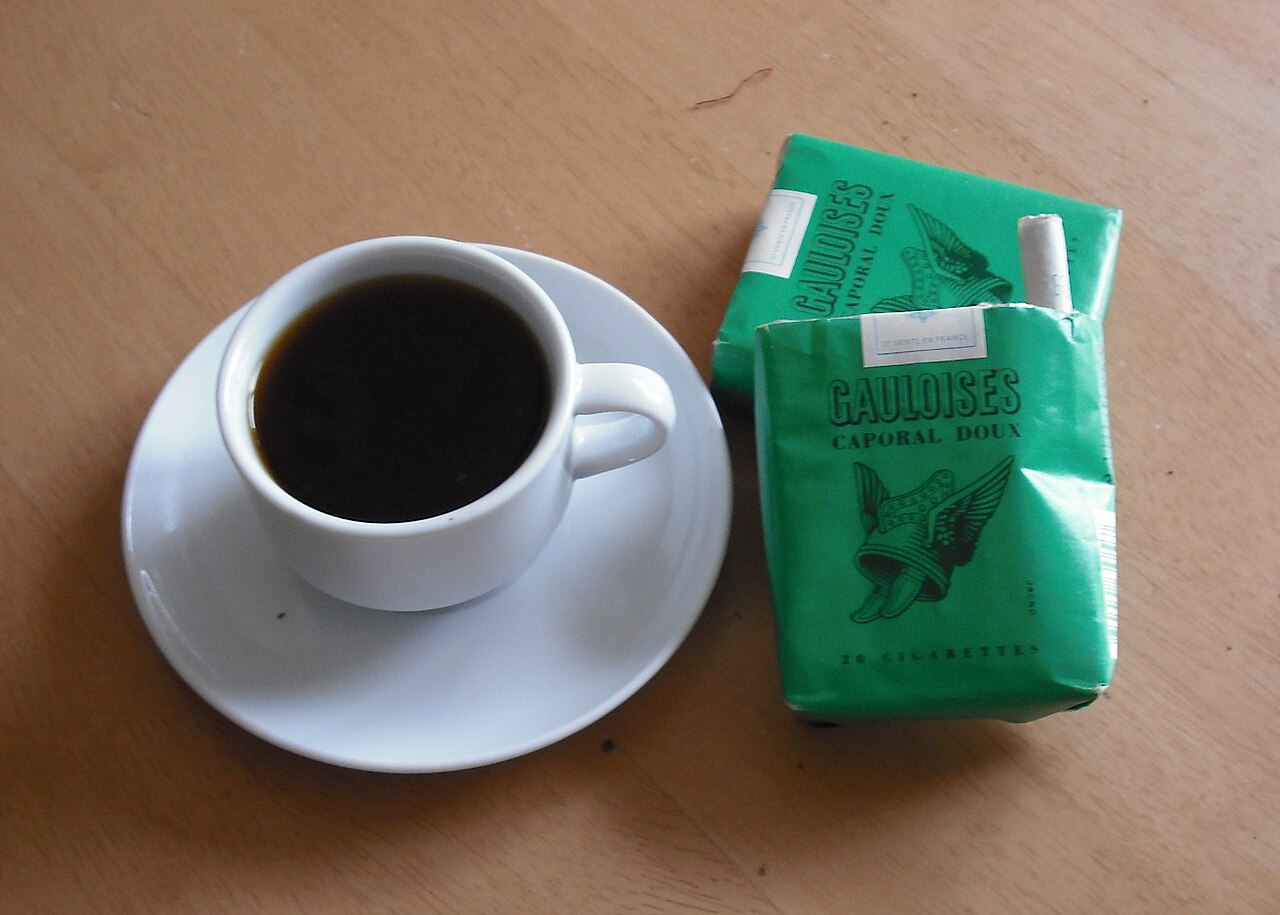
Exercising control of moods is another solution. A Frenchwoman does not tend to indulge her moods in ways that lead to her indulging herself further with food. Anglo-Saxon women tend to get angry about things and rant angrily, before resorting to comfort eating to lift their moods. On the other hand, a Frenchwoman will just light another Gauloise (just kidding, we French women are not the stereotypical chainsmokers Zoë Williams thinks we are), do a Gallic shrug and say "bof". She knows that self-discipline in general is key: - if she has mastered it over her moods, she will more than likely have self-discipline over food as well. I am not saying a Frenchwoman never has trying times in life, but her solution is to deal with them by other means, such as more searching for beautiful garments.
The power of imagination is another solution in a Frenchwoman's arsenal. She considers eating more of her favourite foods and then remembers the joy of being able to fit into all her favourite clothes. When tempted, she thinks of the joy of being able to walk round in tight outfits and the misery of being too fat to fit into beautiful clothes! Simple! The only times I have ever been too big are during my two pregnancies: - the danger during this time is women will slip, given that she won't fit into her previous clothes anyway, so she needs to picture a postpartum shopping spree for the most gorgeous clothes she can find (I wouldn't dream of wearing fashions from 9 months ago) and fitting into all of them perfectly as she has no pregnancy pounds. One day, I hopped on the train at Marseille-St. Charles at 08.38, arrived in Paris 3h07m later, rushed round shops selling haute couture (that would never fit fat and dumpy Anglo-Saxon women) and found anything I wanted fitted me just like before. I got on the 16.15 train at Paris-Gare de Lyon with my hands full of shopping (plenty of room though, given how little of the seat I took up, MDR) and 3h10m later arrived back at Marseille-St. Charles to find Bilal waiting for me with our sons telling me I was a "well buff wifey" in my latest outfit and that he was treating us to an exquisite dinner at the Vieux Port. Imaging such situations is the ideal solution for maintaining self-control during pregnancy!
Though France suffers from big government, a Frenchwoman knows the solution is to take responsibility for her own body. Mireille Guiliano pointed out that "French women choose their own indulgences and compensations. They understand that little things count, both additions and subtractions, and that as an adult everyone is the keeper of her own equilibrium." It is nice that Natalie Grant chose to take control of her diet for her own health, but she is vulnerable to falling into the bulimia trap again, as she lays the blame for this at the hands of her ex-boyfriend/fiancé, rather than accepting she is the keeper of her own equilibrium. Granted, her ex-boyfriend/fiancé was unsuitable for her as a believing lady: - my daddy made it clear he would turn away all suitors if they had no history of regular attendance, participation and volunteering in a church (eventually, he realised it was not possible to fault Bilal on this). However, a Frenchwoman has self-control and self-discipline and accepts responsibility whatever the men in her life are like: - I would never take the easy way out and blame the men in my life (Bilal and our two sons) for sidetracking me from exercising personal responsibility for staying beanpole thin!
So there you go: - common excuses for not being thin and a Frenchwoman's way round these excuses. Stop making excuses and be impossibly perfect as we Frenchwomen are!
Though I am heavily pregnant and due to give birth any day now, it was necessary to travel to Germany on business, as I am trying to get my magazine set up with a German office along with all the necessary infrastructure, such as distributors (admittedly, this is less of an issue in the online age). I am considering the question of which cities to site the premises in.
To me, transport connectivity is a big issue, as in spite of the internet revolution, the fashion business contains many aspects that just require people to be there in person. Airport connections don't really cut it for a Frenchwoman, as the short working week means she needs to be productive all the time, meaning that if she travels as part of her job, she needs to be able to do work during the journey, i.e. on a laptop/tablet hybrid on a table. It was therefore necessary to choose a city that is well-linked to France and other German cities.
One of the cities I am considering is Stuttgart. Current direct journey times from Paris are 3h11m. This should drop further when the Rastatt Tunnel is opened in 2022. Frankfurt is 1h17m on the fastest services. Munich is 2h13m, though this will drop substantially with the Stuttgart 21 project's completion and the new line to Ulm.
Berlin is 5h04m, though it admittedly has a long way to go before it becomes a fashion capital, even though it is full of the metro-trendies from my industry I detest! The Stuttgart 21 project will convert the main station from a terminus into a through station and shift it underground and will be completed concurrently with the Stuttgart-Wendlingen-Ulm high-speed line. When they all open in 2021, they are expected to reduce journeys starting in Stuttgart by around 26 minutes, with Frankfurt-Munich journeys (via the Stuttgart route) being about 3h00m instead of 3h37m. The increased saving for through journeys exists because of the time penalty for turning a train around.
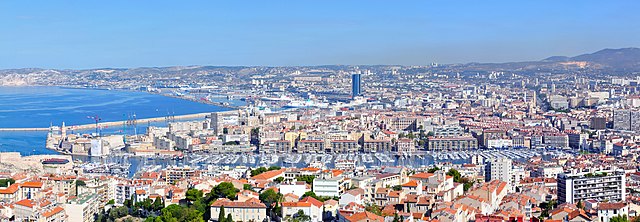
In addition to good intercity connections, Stuttgart also has a great metropolitan public transport network, focused mainly on the tram system, but it also has a rack railway and funicular railway as part of its urban transport system, as the city is built on a series of hills. Being from Marseille, this is something I am used to: - the city is shielded by mountains that mean the city is 8.4 degrees Celcius in January, compared with 5.5 in nearby Aix-en-Provence. Bilal is more used to it, given the years spent in La Savine, a high-up area of the city. The city has a series of outdoor staircases, a bit like Los Ángeles.
The Romans quickly discovered that Stuttgart has a mild climate suited to viticulture (some vineyards are a few hundred metres from the main station), which gives it an air of sophistication, though not to the same extent as France. Germany has a reasonably large number of wine-producing areas: - the Rhine and Mosel(le) valleys are often used for wine cultivation. The custom in these areas is to pick the grapes when snow arrives, which gives an extremely sweet quasi-dessert wine flavour: - not very good to my way of thinking, being a sophisticated Frenchwoman, but ultra-sweet dessert wines work with a few foods, such as crème caramel and blue cheese (Roquefort being a well-known French example).
Stuttgart is the capital of the Baden-Württemberg state and therefore contains the state parliament. It is also the biggest city in the state and therefore the place where things are happening. It is also a huge centre for the automotive industry: - Porsche and Mercedes-Benz are based in the city. As my readers will know, I am less enthusiastic about cars, given the increased difficulty of finding somewhere to drive at 320km/h (the LGV Est, Rhine-Rhône, Sud-Europe Atlantique and Bretagne), but these two brands have definitely succeeded in creating an image of glamour! Certainly, Stuttgart is a very prosperous city and these brands reinforce the image of luxury living.
A French it-girl such as myself will always be on the lookout for good places to go shopping. I haven't slowed down on shopping since becoming a mother, as motherhood is not the time to kick back, neglect personal beauty and end up looking ugly: - this is what silly Anglo-Saxon women do! Stuttgart is not as fabulous as the best French shopping destinations, but there are some reasonable bargain basement offerings and entry-level international cuisine in the form of the Calwer Passage: - after all, if German women are aspiring to be impossibly perfect and dainty like we Frenchwomen, they have to start somewhere! MDR.
We shall see if this venture into Germany is successful and whether a whole new country can be made aware of how impossibly and unattainably perfect we French women are (and ideally inspired to replicate our impossible example even though they will never reach it)!
I read an article just now about how South Korea is planning to revive its non-stop Seoul-Busan railway services (these two cities are the country's biggest). It said that direct services had existed, but were discontinued, though they believe the economics are now different. This got me thinking about one thing that is great about France's high-speed network: - the extensive use of non-stop or "infrequent-stop" services with great journey times. Great journey times are fundamental to a good railway system. The service planning that SNCF is probably the greatest thing about our high-speed network: - French train journey times are fantastic. A Frenchwoman loves to sit back, unwind and enjoy the moment, but she manages her time efficiently and therefore does not want to uselessly spend an unduly large amount of time on trains because of ridiculous service and timetable planning: - she doesn't like to rush, but she loves to move purposefully. She doesn't want to be stuck on a train going nowhere, whiling away the time in long dwell times at stations. This would deduct from the time she has to shop for the latest fashions and the choicest ingredients at markets.
Apart from a Frenchwoman wanting to move purposefully, SNCF is always in a hard-slog battle to compete with air travel, which is never easy. On some routes, it is in the lead (Paris-Marseille TGV services have an absolute majority), whereas the Paris-Orly Toulouse-Blagnac air route is the most congested in Europe. I guess this is due to the prosperity of Toulouse, the prevalence of its aerospace industry there and the extremely long journey times (5h27m direct, 5h24m with an interchange). When the LGV Sud-Europe Atlantique and the Toulouse branch of the GPSO (Grand Projet Ferroviaire du Sud-Ouest) are complete, journey times will be 3h14m with a stop in Bordeaux and 3h07m without, which will hopefully reduce air journeys drastically.
I know this is comparing apples and oranges, but roughly equivalent high-speed journeys in Germany for instance would take a very long time because of very generous timetabling and stopping patterns that prevent various routes from being competitive. For instance, Hamburg Hauptbahnhof-Munich Hauptbahnhof (admittedly with a few high-speed gaps, e.g between Würzburg and Nuremberg is about 780km, but the fastest direct service is 5h38m (5h36m possible with interchange). It stops in Hamburg-Harburg, Hannover Hauptbahnhof, Göttingen, Kassel-Wilhelmshöhe, Fulda, Würzburg, Nuremberg and Ingolstadt. I am aware that Germany's settlement pattern is very different (lots of medium-sized cities everywhere), but they have missed several opportunities for reasonable journey times, e.g. by not building bypasses. Apart from the Coburg bypass on the Erfurt-Nuremberg route to be opened this year, I struggle to think of high-speed bypasses in Germany where the town centre station is also served. Given that Germans dislike anything outside the ordinary as far as punctuality goes, timetable planning often involves very generous run and station dwell times. Probably, when they are planning timetables, they probably say, "How long does zis journey take at line speed? Five minutes? Give it an hour and ven it arrives on time, we will say, "Ve Germans are so efficient!"" There are plenty of stations that appear to be useless for high-speed traffic, given the low populations they serve, one example being Siegburg/Bonn station.
Austria also doesn't seem all that concerned about journey times: - whenever new railway improvements come along that should improve journey times, they always seem to slip in some more stops or journey time padding. For instance, I cannot understand the need to stop Railjet trains in Jenbach. Given that: -
1) Innsbruck, the major population centre, has a population of about 130,000, compared to Jenbach's 7,000
2) The Neue Unterinntalbahn (New Lower Inn Valley Railway) allows Jenbach to be bypassed at 220km/h
3) The Railjet trains, having a locomotive configuration, don't have particularly good acceleration
It therefore seems wasteful to stop trains in Jenbach. I believe the Austrians were aiming for "1-2-3" journey times from Vienna, i.e. 1 hour to Linz, 2 hours to Salzburg and 3 hours to Munich and Innsbruck. It is anybody's guess how this will be achieved if they are still pursuing it. However, they will face some competition from Westbahn, which is planning to operate fast services to Salzburg (2h10m, compared to 2h22m with Railjet services), with alternate services going onward to Innsbruck (not sure of the journey times).
On the other hand, the French network has bypasses aplenty and is designed around great journey times. Cities with high-speed bypasses where town centre through stations are served from both ends that I can think of include Douai, Arras and Lyon. The LGV Sud-Europe Atlantique to Bordeaux will also include them at Tours (half in service, used by non-stop Bordeaux trains), Poitier and Angoulême, debatably Châtellerault as well. Currently, there are no non-stop trains running to Marseille (seasonal, I guess), but where they exist, they have tended to offer journey times of 3h05m for the 742km journey. Similarly, though the Paris-Bordeaux services only run on high-speed line to just beyond Tours, they offer non-stop journeys of 3h11m, which will drop to around 2h when the LGV Sud-Europe Atlantique enters service this year. I don't quite understand the lack of a planned bypass at Bordeaux, given the need for Paris-Toulouse journey times to be competitive and a bypass for Eurostar trains not stopping at Lille Europe would be good, as the line goes round three sides of a square, but RFF has generally been enthusiastic about building bypasses. I am loathed to speak favourably of anything British, but the Ashford bypass is a fantastic feat of engineering: - the line goes underground as it approaches the outskirts of Ashford, stays underground a little way, comes up alongside Ashford International station and runs on a flyover through Ashford, allowing trains to pass through at 300km/h. This means I can minimise the time I spend in the unsophisticated UK, MDR!
I particularly appreciate good journey times when it is necessary to receive foreign clients at the Paris office, as well as during fashion show season (I hope Marseille becomes a fashion capital one day). Many foreign visitors come to Paris thinking they will find a quintessentially French city with the Eiffel Tower, people eating frog legs and snails, people wearing striped jerseys and berets etc. The Eiffel Tower is there and isn't going anywhere, but with all the immigrants and the foreign cultures they inflict upon us, Paris is definitely not a French city! Other nearby cities, though they have immigrants, don't have them in quite such large numbers. When they ask to see a more French city, there are several easily available options, e.g. Strasbourg (1h46m), Bordeaux (discussed above) etc.
One day, I hope people will realise the value of great journey times and their contribution to making France great.
Another article about high-speed rail. Yes, I know, there are things with more gravity that have happened to me recently (marriage and motherhood), which I will address in time. However, writing is not always about priorities, but where the creative inspiration lies at the time. There are plenty of stories to tell about the wedding, the honeymoon, pregnancy, childbirth etc, but they will be covered in due course.
Some readers may be aware that the project to build a y-shaped high-speed railway system between Bordeaux, Toulouse and the French border, or GPSO (Grand Projet Ferroviaire du Sud-Ouest) for short, is advancing, albeit slowly. François Hollande's government has unfortunately pushed the construction of new lines back significantly. Nicolas Sarkozy's government, in spite of being relatively right wing (it seems to be unusual for right-wing governments to favour high-speed rail), advanced several projects very substantially. Nicolas Sarkozy did various things to try and get the economy back on track, which have unfortunately died a death, though to François Hollande's credit, he is belatedly pursuing labour market reforms that Nicolas Sarkozy would no doubt have favoured, resulting in strikes everywhere.
I would personally welcome the flexibility. I don't plan to work more than 35 hours a week on a regular basis, but if it is a week with lots of fashion shows taking place, then obviously, my magazine's working requirements will be different in comparison to quiet times. It is no good if a fashion show requires 40 hours of labour in a week and I have to send two people to cover it because one person has maxed out at 35 hours. Obviously, when one person returns to the office, there is a large amount of work to catch up on, but it is an annoyance that I have to put two workers in a situation where they are rushing to catch up on their return. I would rather than send one person to a fashion show to work 40 hours and allowing a day-off-in-lieu (a lovely French expression that many English speakers mispronounce) when he or she has caught up. Apart from anything else, having to send two people to do one person's work is not an efficient use of my working resources.
Anyway, I'll stop this diatribe now, as I risk destroying Zoë Williams' image of French women never ranting, but lighting up another Gauloise and saying "bof" (I have never smoked, by the way). MDR! Back to the GPSO! So what does the GPSO mean for me personally in Marseille? It means that there are several cities in south-western France that I will be able to reach much more easily.
The benefits for reaching Bordeaux more quickly will be realised with the first phase in 2024. I love Bordeaux, given its position in the French wine industry. A Frenchwoman always loves a glass or two of wine: - there is the question of whether Islam (a religion prohibiting alcohol) compromises one's French credentials (reformed Christianity doesn't, particularly given the labours of John Calvin in places like Strasbourg), but that is another story. Bordeaux itself is a lovely town that is very easy to get around given its tram system. There are various sights, including the Place de la Bourse (Stock Exchange Square), the river Garonne, Saint André Cathedral (though I admit its beauty is more architectural than spiritual), the Porte Cailhau, the Column of the Girondins etc. Europe's largest sand dune is not too far from Bordeaux.
The benefits for reaching cities in the far south-west and northeastern Spain will be realised with the opening of the line in two phases in 2027 and 2032. The main city I like in that part of the country is Biarritz, a ritzy-glitzy seaside resort (okay, well admittedly not as glamorous as Monaco, which is closer to me). The city is known for its casinos (I'm not into gambling, but the glamour of these places is still nice) and surfing culture. There is also the Hôtel du Palais, which has extensive links with various thrones past and present. The square in front of Sainte Eugénie church is also pretty.
Toulouse is another city I love to visit, though journey times from Marseille will not improve with the GPSO. However, it is worth a mention. I have read that the route between Paris-Orly and Toulouse-Blagnac airports is the busiest in the whole of Europe. A search on http://www.bahn.de showed the fastest Paris-Toulouse journey to be 5h31m: - not competitive with air travel. However, LGV Sud-Europe Atlantique (Tours-Bordeaux, due to open next year) will reduce the journey time. When the Bordeaux-Toulouse comes into service, the journey time is expected to go down to 3h10m (which could admittedly be lower still with a proper bypass of Bordeaux, which does not yet appear to exist in the plans, bof). Bilal says 3 hours is a target the railway industry often uses in terms of deciding which links to pursue to make journeys competitive with air travel. In any case though, France has been generally a lot more enthusiastic about building bypasses when inner-city stations are served. Germany virtually never builds them (the one exception I can think of being Cobourg on the not-yet-opened Erfurt-Nuremberg line), the result being that it takes ages to get anywhere by train in Germany. Admittedly, it is harder in Germany, since it has lots of cities throughout the country that are in the way when you build a new line. However, Spain has a similar settlement pattern to France, yet there are no full-speed bypasses where inner-city stations are served, with the exception of those on the Madrid-Barcelona high-speed line. Therefore, Spain's journey times, though good, could be better.
Shame the benefits of this will not be realised until our recently-born baby is on the verge of adulthood, bof. Maybe someone like Nicolas Sarkozy will come to power and reinvigorate high-speed line construction and the economy. We can only hope.
As I have been keen to point out, we French are the best at pretty much everything, except perhaps low taxes and sumo wrestling, being fat ladies in circuses and gastric bypass operations (given the low amount of practice our doctors get in such matters, MDR). Some things we are better at than others. However, one thing we are notorious for being the best at is railway systems.
To make it clear that I am not misleading people on this point, I am not for one moment suggesting that we French were the first country in the world to have a high-speed network: - that title belongs to Japan (a country also characterised by very thin women, tee hee). We were not even the first European nation to have a high-speed line: - that title belongs to the Italians, who inaugurate the Direttissima in 1977 (though they were bonkers enough to electrify the line at 3kV DC). We are, unfortunately, never likely to be the European nation with the longest high-speed network in Europe (thanks to our incompetent pinko-liberal commie socialist president cutting back on high-speed line construction): - this title belongs to Spain, which is planning to open a large number of new routes next year.
However, in spite of not holding such records (though we do hold the record for the fastest speed achieved on a conventional line), we are nevertheless the best at high-speed rail networks. It is not really about one single factor. Rather, it is the combination of low prices, good journey times, comfort, extensiveness of destinations covered, airport connections and many other factors.
One of the great things to come out of France's railway industry is the AGV, which stands for "Automotrice à Grande Vitesse", which roughly translates as "Self-Propelled Vehicle at High-speed".
The reason for this name being used is that this is the first super high-speed train to be produced by Alstom that truly uses the EMU (electric multiple unit) configuration. The trains produced for Eurostar are technically classed as EMUs, given that there is some traction equipment in the front and rear passenger carriages. This is probably necessary, given the long length of the rolling stock and the small space for equipment on account of the small loading gauge: - the British are so daft when it comes to railway construction that they use loading gauges almost as small as a Frenchwoman's waistline! Tee hee! Anyway, up until recently, high-speed rolling stock produced by Alstom has used the locomotive configuration. This is not to say that this is the first time such technology has been used on high-speed rolling stock: - the Japanese have used EMU configurations with the Shinkansen since they first entered service in 1964.
Another point that is fairly distinctive about France's high-speed rolling stock is its articulated nature. Granted, France is not the only country to use high-speed articulated rolling stock. Talgo (a Spanish rolling stock manufacturer) in particular uses articulated rolling stock: - Bilal and I travelled on such a train on the day we travelled to Seville. That is before I mention that France's Alstom supplied Spain's first high-speed rolling stock for the opening of the Madrid-Seville line in 1992! MDR! This rolling stock is articulated and mostly identical in design to a French single-decker TGV, though with a few distinctions, including the white exterior and beefed-up air conditioning: - it is reasonably common for Córdoba and Seville (two cities along the route) to have temperatures exceeding 40 degrees in summer. South Korea also uses Alstom-derived articulated rolling stock.
As far as I am aware, one of the reasons SNCF has not yet decided to purchase any AGV sets is the fact that more motors means more maintenance. I cannot confess to having seen the numbers put together, but certainly, low costs are good, as they help reduce reliance on cars and help make the railways a mass-market solution. Walking to the station is one of the ways in which we impossibly dainty and perfect Frenchwomen build passive exercise into our routines and I must admit, it would be a bit of a hassle to park our cars slightly further away from home, so as to build passive exercise into our routines. I am therefore glad that we have such a great railway network. However, there are some routes where I think AGVs could be particularly useful. For instance, they would be very useful once the LGV Est extension to Strasbourg and the LGV Sud Europe between Tours and Bordeaux have been completed, given that the current route has several stops and most of the new route will have alignments suitable for 350km/h running. With fast services such as these, there will be more of an incentive for people to use Marne La Vallée-Chessy and Massy TGV stations, particularly given that Massy TGV will be along the future Line 18 that comprises part of the Grand Paris Express project.
Though I am a little disappointed by François Hollande's government's decision to slow down high-speed line construction, I still think we French are the best in the world when it comes to high-speed rail systems. I love the fact that I can be in the cold Northern European climate of Lille and then 4h50m later be back in sunny Marseille. I will also love the fact that once the link to Bordeaux is completed, I might find myself explaining to some Anglo-Saxon business contacts about how sophisticated French wines are, spontaneously hop on a train to Bordeaux, be there in just over two hours, savour the fine wines and easily get back to Paris that day if we wish. I will also love being able to show people the proper way to do a Kouglof (not overly sweet), as well as the beautiful mixed architectural styles of Strasbourg after a train ride of just 1h50m when the second phase of the LGV Est opens. In short, we French are the best at pretty much everything.
I enjoy travelling with Bilal and, as can be deduced from my posts, theology is a shared interest of ours. We were aware of a church conference taking place in London that we knew would be promoting sound theology, so we decided we would visit the conference. Bilal and I both found the conference edifying, but there is so much to be said about it that it is probably best discussed on a blog about theology, rather than a blog about how wonderfully dainty we Frenchwomen are! Naturally, I also decided I wanted to do some business: - given that the UK has absolutely no plans to introduce a 75% tax rate, there are far more opportunities for business than in France! This is just about the only favourable comparison I can make with France! MDR!One thing I often tend to do is leave Bilal to his own devices to explore while I am doing business trying to promote my fashion magazine and then travel over to where he is if he has found something that interests him.
Being a railway aficionado like my father, Bilal observes the route keenly during train journeys and he has often noticed that on the final approach to St. Pancras International, in between the two long tunnels (named London Tunnel 1 and London Tunnel 2), the Eurostar trains pass by, but never stop at, a station. Bilal looked up this station and found out that it is called Stratford International. During one of my business meetings, Bilal decided to Stratford International and watch the trains pass for a little while. The British high-speed rail line (known as the Channel Tunnel Rail Link) is unusual in that the trains go very fast through city centres: - in Ashford, this is by means of a flyover and in Stratford (an area of London), this is by means of a box.
When he started to feel hungry, Bilal ventured into the adjacent Stratford Westfield shopping centre. I had forgotten to make him something for lunch that day, given my desire to make sure he only eats high-quality food! MDR! Poor Bilal didn't find things very easy. He has coeliac disease and although he is learning English, he is not particularly fluent at present. Almost immediately upon entry to the shopping centre, there is a shop prominently selling artesan bread! He has a long way to go when it comes to written English as well and so he struggled to understand the labels to see if food contains gluten or not: - this is very different to Spain where gluten-free foods tend to contain a label to this effect! Eventually, after a lot of fruitless exploring, he overheard some people talking in French and decided to ask them if they could offer him some advice regarding seeking-gluten free food. Someone then explained that British supermarkets sometimes have a "free from" section and suggested trying Marks and Spencer (middle class, but still low quality in comparison to the worst France can offer).
On the way to Marks and Spencer, he walked passed a shop called New Era that he made a mental note of. After having bought a few items from the "free from" section of Marks and Spencer (he was feeling rather faint by this point), he walked back to the New Era store. Surprisingly for a hip-hop person such as him, Bilal was not aware of the existence of the New Era headwear company. Bilal was delighted to enter the door of the Stratford branch and see a whole shop filled with hip-hop baseball caps. Bilal had great fun trying them on, but after a while, it was proving difficult to find one for his head size, so he called me on my mobile and asked for me to tell the shop assistant by phone that he wanted to know if there were some caps in his size. The shop assistant said there were and opened some drawers containing the correct size. Bilal had a whale of a time trying on the caps and bought several. Unusually, he was so entranced by the variety of hip-hop baseball caps around that he didn't seem to mind the fact that his head was uncovered in public between trying different caps on!
After buying several caps from the New Era store, Bilal started exploring the Stratford area and very quickly, he fell in love with it, as everywhere he looked, he saw people of African origin dressed up in hip-hop clothing more often than not wearing baseball caps of the style sold by New Era. Bilal had no way of identifying who was a French speaker beforehand, so he waited for me to finish my business dealings elsewhere in the city and travel over to Stratford so that I could interpret for him. He had a great time socialising, even though he had to conduct his conversations through me.
Again, just as with our visit to the Aylesbury estate a few months ago, my interpretation abilities were tested to the max, given the large number of hip-hop slang words used by both Bilal and the locals! Some people were keen to learn French, but said that it didn't seem a very cool when they were taught it at school. Bilal suggested that if anyone genuinely thought that, they should seek to learn new vocabulary using a website he is intimately familiar with called Dictionnaire De La Zone. The locals in turn suggested that Bilal get himself acquainted with Urban Dictionary in order to familiarise himself with English-language hip-hop slang.
Apart from the New Era shop, Bilal also discovered a new chain store that interested him called Arabian Oud, which sells Arab-style perfume. The scents reminded him of when he visited Saudi Arabia, where the population as a whole is very keen on fragrances. Unfortunately, Bilal was performing the Hajj when he was in Saudi Arabia, in a way, this trip was part of the old man that needs to be mortified when one becomes a new creature in Christ, but he still thought it was a beautiful country and thought it was a shame that such a beautiful nation is under the yoke of Islam. Bilal bought some spicy men's perfume and I thought it smelled absolutely divine (in the non-religious sense of the word) on him. I respect many things Mireille Guiliano writes, but I don't agree with what she wrote about spicy fragrances not smelling good in hot weather! Bilal was very pleased to learn that there is a branch in Paris. In fact, I also remember one on Oxford Street that I saw on that occasion when I went to Selfridges to buy some Mariage Frères tea.
Bilal also spoke with a Muslim evangelist outside Stratford station who happened to be from Algeria. The Muslim evangelist made some very silly claims. Firstly, he claimed that there is no place in the Bible where it says Jesus and God are the same person: - Bilal suggested that perhaps he was half asleep when he read John 10:30. The Muslim evangelist then claimed that the Bible never says that Jesus is the Son of God. Bilal then pointed to our Lord's baptism and the Transfiguration and suggested that if, as he claimed, he had genuinely read through the entire Bible and reached the conclusion that the Bible never says Jesus is the Son of God, he must have been reading it using glasses with wooden lenses.
As per custom in areas like these, Bilal and the locals parted, friends for life, with a fist bump. Unfortunately, we hadn't left enough time for Bilal to spend more time with the locals: - we needed to get back to Marseille so that we could discharge our duties at our church in Marseille the following day, as well as doing some set up work for the various activities that take place on Sundays the day before. I also thought it a shame I didn't have more time to explore the uncountably large number of fashion stores in Westfield Stratford.
However, on the Eurostar to Paris, Bilal announced that he had enjoyed his time in Stratford (and previously the Walworth area) that he was planning to buy properties in both these areas to add to his investment portfolio. He is not sure if he plans to use them for short-term rentals, staying in them during holidays in London, or whether he will use them for longer-term rentals, but he will look into that in time.
Bilal and I are very different people: - he is what we French refer to as a "zoulou" (a lover of hip-hop culture) and I am obsessed with fashion and eating ever daintier portions! MDR! However, I really do love him and I am glad he was willing to persist in asking my father's permission to court me for several years until my father agreed. No surprise though, given that I'm worth it! Anyway, jokes aside, I hope he proposes soon, as he is quite rightly keeping distance between the two of us until we get married and I don't want to be in suspense much longer.

.jpg/480px-Nicolas_Sarkozy_(2008).jpg)





.jpg/450px-Pelz_Design_Petras_Stuttgart_(3).jpg)


.jpg/640px-ICE_4_Pr%C3%A4sentation_Berlin_Hbf_(039).jpg)


.jpg/640px-TGV_Duplex_LGV_M%C3%A9diterran%C3%A9e_(FR84).jpg)


.JPG/450px-Bordeaux_-_Juillet_2012_(71).JPG)


.jpg/320px-Italo_NVT_Class_575_No_575-154_(8614798976).jpg)


.jpg/401px-Westfield_shopping,_Stratford,_London_(7159866186).jpg)
