Showing posts with label train. Show all posts

2017-05-14

Excuses

Having just given birth to our second baby and received regular confirmation from Bilal that I am still a "well buff wifey", I am once again reminded of how thin and impossibly perfect my figure is.  Bilal is welcoming lots of visitors from La Savine (hip-hop people, in other words) to see our son: - the police were called to my flat because someone called them suggesting that there was drug dealing going on here, MDR.  When Bilal's homies visit, he lets his guard down, i.e. using hip-hop French I don't always understand and openly talking about knocking me up and me being "well buff" after two children: - his "homies" often express open agreement with the second point.  Unlike many Western women, I love this aspect of Bilal and I would never want a herbivore man: - I was always attracted to big, strong and macho men.  I ask him to try and avoid saying things too openly in front of people who aren't from La Savine (who are like him) or church (who have come to accept him as he is), as it is easier to just not have to explain, MDR.


Being a mother-of-two and still beanpole thin, one thing that has become ever more apparent to me is that Anglo-Saxon women have an endless supply of excuses for not being thin.  On the other hand, a Frenchwoman has an iron will and unbreakable self-discipline that enables her to be attractive in any season of life (both the young filly and old bag season, as Zoë Williams put it, MDR).  In this blog post, I outline typical excuses of Anglo-Saxon women and what a Frenchwoman's solutions are.


Excuses

Anglo-Saxon women seem to be under this bizarre impression that they need to eat for two when expecting a baby.  Granted, I have only given birth to two children, but having used the same strategy to stay thin during both pregnancies, my assumption is that the process is repeatable, no matter how many children a woman has: - Bilal is only too happy to oblige in enabling me to prove this, MDR.  During both pregnancies, I observed the rules I observed when not pregnant, primarily portion size.  If you remember them and have an iron will like we Frenchwomen, there is no reason to ever get fat.


Many Western women fall into the trap of comfort eating, the excuse being that because they are sad, depressed or whatever, they comfort-eat.  In other words, what they are saying is they have a bad lack of self-control when their moods are low.  A Frenchwoman knows very well that comfort eating never was the solution to low moods, as it causes large amounts of food to become like an addition, i.e. she is bad-tempered until she gets her fix.


Another common thing Western women do is blame people around them for "unrealistic" images of beauty, i.e. setting off a yo-yo dieting pattern because she does crash dieting to achieve the desired weight, which is followed up by eating more and getting heavier.  They often blame unrealistic images and the men in their lives, as Natalie Grant did in that article.  Our Heavenly Father displayed His wisdom in pairing Bilal and me: - I am able to listen to all he has to say about me being a "well buff wifey", appreciate it, and still remain in full control of my eating and weight, irrespective of anything Bilal does or doesn't say.  Natalie Grant (the author of the article the link points to) would no doubt respond in a similar way if she were married to a man like Bilal who appreciates fine women.


Solutions

Simple solutions are often the best.  A Frenchwoman knows that there is no black magic necessary to achieve a pencil thin figure: - just say "la moitié, s'il vous plaît" at every mealtime!  If necessary, keep doing so until the portion is befitting of a dainty Frenchwoman!  Simple!  This phrase has been key to keeping a Frenchwoman thin for many generations.  A French female learns this phrase that acts as the perfect solution for staying thin when she first starts to talk.


If the food portions available are more than twice as big as they should be, the next solution is to remember what proper food portion sizes are.  Mireille Guiliano discussed portion sizes she regards as standard, though truth be told, they are a little too big for me, MDR.  Even so, the principle  behind the solution is the same: - women should build an idea in their mind about what standard portion sizes are and stick to what they remember.  If she lacks ambition and she wants to use Mireille's portion sizes, she can carry such objects around with her to look at during quiet moments and continue building up her familiarity.
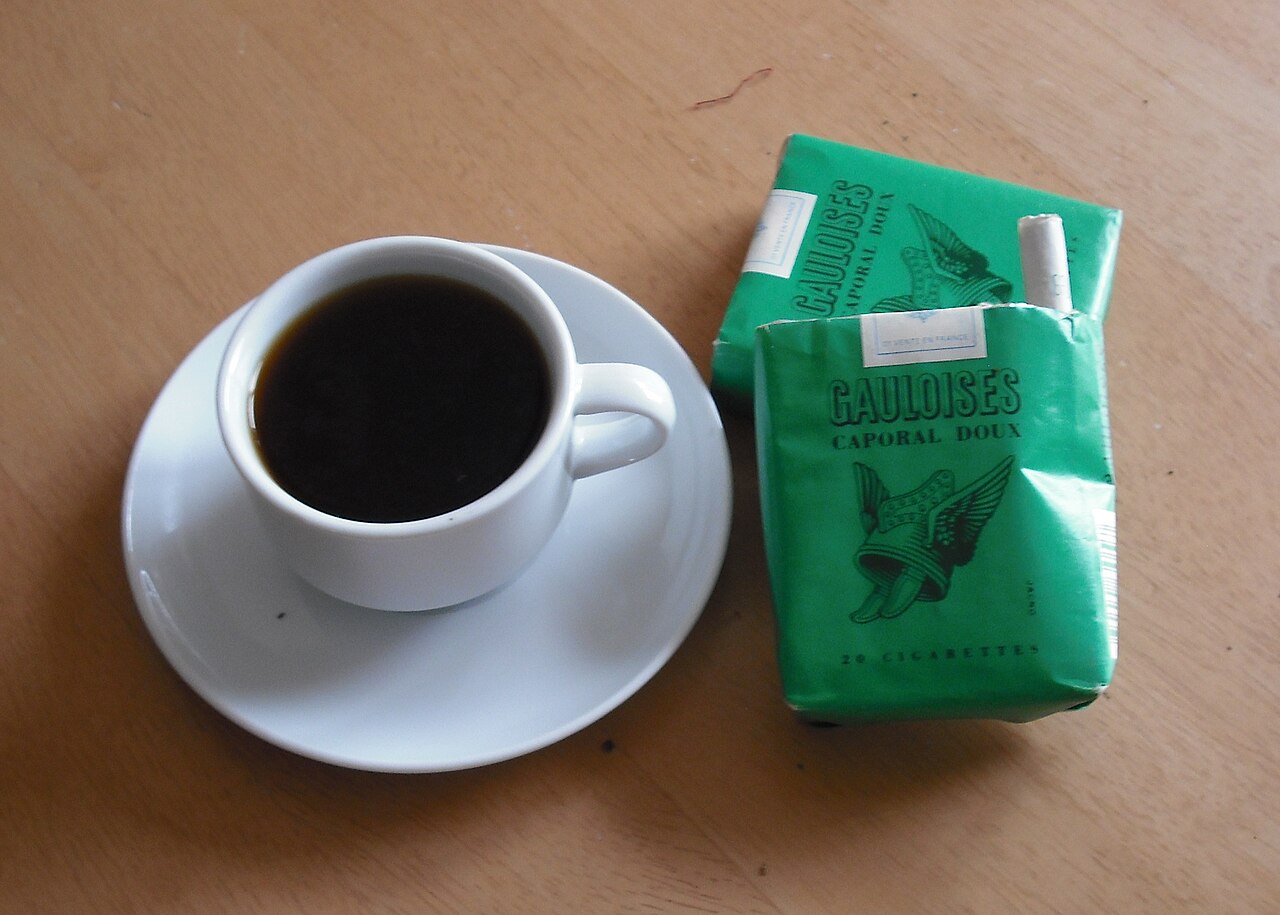

Exercising control of moods is another solution.  A Frenchwoman does not tend to indulge her moods in ways that lead to her indulging herself further with food.  Anglo-Saxon women tend to get angry about things and rant angrily, before resorting to comfort eating to lift their moods.  On the other hand, a Frenchwoman will just light another Gauloise (just kidding, we French women are not the stereotypical chainsmokers Zoë Williams thinks we are), do a Gallic shrug and say "bof".  She knows that self-discipline in general is key: - if she has mastered it over her moods, she will more than likely have self-discipline over food as well.  I am not saying a Frenchwoman never has trying times in life, but her solution is to deal with them by other means, such as more searching for beautiful garments.


The power of imagination is another solution in a Frenchwoman's arsenal.  She considers eating more of her favourite foods and then remembers the joy of being able to fit into all her favourite clothes.  When tempted, she thinks of the joy of being able to walk round in tight outfits and the misery of being too fat to fit into beautiful clothes!  Simple!  The only times I have ever been too big are during my two pregnancies: - the danger during this time is women will slip, given that she won't fit into her previous clothes anyway, so she needs to picture a postpartum shopping spree for the most gorgeous clothes she can find (I wouldn't dream of wearing fashions from 9 months ago) and fitting into all of them perfectly as she has no pregnancy pounds.  One day, I hopped on the train at Marseille-St. Charles at 08.38, arrived in Paris 3h07m later, rushed round shops selling haute couture (that would never fit fat and dumpy Anglo-Saxon women) and found anything I wanted fitted me just like before. I got on the 16.15 train at Paris-Gare de Lyon with my hands full of shopping (plenty of room though, given how little of the seat I took up, MDR) and 3h10m later arrived back at Marseille-St. Charles to find Bilal waiting for me with our sons telling me I was a "well buff wifey" in my latest outfit and that he was treating us to an exquisite dinner at the Vieux Port.  Imaging such situations is the ideal solution for maintaining self-control during pregnancy!


Though France suffers from big government, a Frenchwoman knows the solution is to take responsibility for her own body.  Mireille Guiliano pointed out that "French women choose their own indulgences and compensations.  They understand that little things count, both additions and subtractions, and that as an adult everyone is the keeper of her own equilibrium."  It is nice that Natalie Grant chose to take control of her diet for her own health, but she is vulnerable to falling into the bulimia trap again, as she lays the blame for this at the hands of her ex-boyfriend/fiancé, rather than accepting she is the keeper of her own equilibrium.  Granted, her ex-boyfriend/fiancé was unsuitable for her as a believing lady: - my daddy made it clear he would turn away all suitors if they had no history of regular attendance, participation and volunteering in a church (eventually, he realised it was not possible to fault Bilal on this).  However, a Frenchwoman has self-control and self-discipline and accepts responsibility whatever the men in her life are like: - I would never take the easy way out and blame the men in my life (Bilal and our two sons) for sidetracking me from exercising personal responsibility for staying beanpole thin!


So there you go: - common excuses for not being thin and a Frenchwoman's way round these excuses.  Stop making excuses and be impossibly perfect as we Frenchwomen are!

2017-04-20

Stuttgart: - a city of viticulture

Though I am heavily pregnant and due to give birth any day now, it was necessary to travel to Germany on business, as I am trying to get my magazine set up with a German office along with all the necessary infrastructure, such as distributors (admittedly, this is less of an issue in the online age).  I am considering the question of which cities to site the premises in.


To me, transport connectivity is a big issue, as in spite of the internet revolution, the fashion business contains many aspects that just require people to be there in person.  Airport connections don't really cut it for a Frenchwoman, as the short working week means she needs to be productive all the time, meaning that if she travels as part of her job, she needs to be able to do work during the journey, i.e. on a laptop/tablet hybrid on a table.  It was therefore necessary to choose a city that is well-linked to France and other German cities.


One of the cities I am considering is Stuttgart.  Current direct journey times from Paris are 3h11m.  This should drop further when the Rastatt Tunnel is opened in 2022.  Frankfurt is 1h17m on the fastest services.  Munich is 2h13m, though this will drop substantially with the Stuttgart 21 project's completion and the new line to Ulm.


Berlin is 5h04m, though it admittedly has a long way to go before it becomes a fashion capital, even though it is full of the metro-trendies from my industry I detest!  The Stuttgart 21 project will convert the main station from a terminus into a through station and shift it underground and will be completed concurrently with the Stuttgart-Wendlingen-Ulm high-speed line.  When they all open in 2021, they are expected to reduce journeys starting in Stuttgart by around 26 minutes, with Frankfurt-Munich journeys (via the Stuttgart route) being about 3h00m instead of 3h37m.  The increased saving for through journeys exists because of the time penalty for turning a train around.


In addition to good intercity connections, Stuttgart also has a great metropolitan public transport network, focused mainly on the tram system, but it also has a rack railway and funicular railway as part of its urban transport system, as the city is built on a series of hills.  Being from Marseille, this is something I am used to: - the city is shielded by mountains that mean the city is 8.4 degrees Celcius in January, compared with 5.5 in nearby Aix-en-Provence.  Bilal is more used to it, given the years spent in La Savine, a high-up area of the city.  The city has a series of outdoor staircases, a bit like Los Ángeles.


The Romans quickly discovered that Stuttgart has a mild climate suited to viticulture (some vineyards are a few hundred metres from the main station), which gives it an air of sophistication, though not to the same extent as France.  Germany has a reasonably large number of wine-producing areas: - the Rhine and Mosel(le) valleys are often used for wine cultivation.  The custom in these areas is to pick the grapes when snow arrives, which gives an extremely sweet quasi-dessert wine flavour: - not very good to my way of thinking, being a sophisticated Frenchwoman, but ultra-sweet dessert wines work with a few foods, such as crème caramel and blue cheese (Roquefort being a well-known French example).


Stuttgart is the capital of the Baden-Württemberg state and therefore contains the state parliament.  It is also the biggest city in the state and therefore the place where things are happening.  It is also a huge centre for the automotive industry: - Porsche and Mercedes-Benz are based in the city.  As my readers will know, I am less enthusiastic about cars, given the increased difficulty of finding somewhere to drive at 320km/h (the LGV Est, Rhine-Rhône, Sud-Europe Atlantique and Bretagne), but these two brands have definitely succeeded in creating an image of glamour!  Certainly, Stuttgart is a very prosperous city and these brands reinforce the image of luxury living.


A French it-girl such as myself will always be on the lookout for good places to go shopping.  I haven't slowed down on shopping since becoming a mother, as motherhood is not the time to kick back, neglect personal beauty and end up looking ugly: - this is what silly Anglo-Saxon women do!  Stuttgart is not as fabulous as the best French shopping destinations, but there are some reasonable bargain basement offerings and entry-level international cuisine in the form of the Calwer Passage: - after all, if German women are aspiring to be impossibly perfect and dainty like we Frenchwomen, they have to start somewhere!  MDR.


We shall see if this venture into Germany is successful and whether a whole new country can be made aware of how impossibly and unattainably perfect we French women are (and ideally inspired to replicate our impossible example even though they will never reach it)!

2013-10-11

Effortless perfection means exercise without trying

One thing that helps make we Frenchwomen impossibly and effortlessly perfect is our tendency to walk or take the stairs where practical.  Just like Mireille Guiliano, I cannot understand the American tendency to drive to the gym and put oneself through endless pain and then eat like a pig, thereby making the time in the gym wasted.


I completely share Mireille's disdain for the American idea of "no pain no gain".  A French woman's aim in life is to have as much pleasure as possible.  A French woman, in her effortless perfection, gains great pleasure from delicious morsels of food, savouring every bite.  Given the famous restaurant scene with Meg Ryan and Billy Crystal in Katz's Delicatessen in Nuu Yawk in "When Harry met Sally", even American women should know very well that it is possible to gain pleasure from food to the extent that one emits strange moans and groans!  I make similar noises when I consume a piece of chocolate that is 85% cocoa or higher!  For this reason, I tend to consume the 85%-plus varieties of chocolate only when I am alone, so as to save attracting attention!


The fundamental rule of losing weight is that the calories that enter our body must be fewer in number than the calories leaving our system.  With this in mind, there are only two ways to achieve this negative balance of calories: - exercise more or eat less.  A Frenchwoman knows that the latter is by far the most effective strategy.


When it comes to exercise, there are two points that a Frenchwoman knows.


Firstly, if one eats like a pig, then it is necessary to do ever more exercise to look like an impossibly perfect Frenchwoman.  A Frenchwoman loves being active, but she knows that she will hate active pursuits if she has to do them just to stay thin.  Therefore, what a Frenchwoman does is eat foods of the highest quality in the daintiest quantities so that exercise she does do tends to be for pleasure only.  As I say, a Frenchwoman goes out of her way to make sure she has as much pleasure as possible.


Secondly, the exception to that rule is passive exercise.  A Frenchwoman will try and fit as much exercise as possible into her normal routine.  When I lived in London when I was building up my career in the fashion magazine industry, I got tired of all the disapproving stares I got from overweight colleagues when I walked distances they would take public transport for or when I took the stairs in situations when they would take the lift!  Stupid people!  If they paid attention to the things a Frenchwoman just instinctively knows, they wouldn't be so fat!  This article concentrates on passive exercise.


When I receive American guests in Marseille who arrive via the train station (train travel is a bit "ye olde worlde" for them until they see how sophisticated we French are in this area), if they don't insist on taking a taxi to the Vieux Port for me to introduce them to the various cafés selling pastis, they will at the very least insist on taking the metro!  As for me personally, I have never used the metro (which has been in operation since 1977) and I don't plan to.  It is not that I dislike trains in any way (though I generally think the idea of a rubber-tyre metro is bonkers), but the distances covered by the metro are a long way within distances I would walk.  Ditto the tram system.  Maybe the metro and tram systems were built just for the tourists?


I also like to introduce people to the Calanques.  I like to walk all the way to the Calanques around les Goudes sometimes, but if someone is staying in Marseille only briefly, the walk there and back can take out a big chunk of the time.  This is where "Le vélo" comes in: - this is Marseille's equivalent of Boris Bikes and its arrival in 2007 pre-dates Boris Bikes by a long time.  There is something very French about riding a bike (and wearing a stripey jumper and a beret and having some onions in a string over one's shoulder, MDR).  Not surprisingly, as although Karl Drais (a German) invented the Laufmaschine (powered by the rider using a walking motion), Pierre Michaux, Pierre Lallement and the Olivier brothers invented what seems to be the first example of what we know of as a bicycle, given that it was pedal-driven, in the 1860s.  Also, the Michaux company was the first to mass-produce what was then known as the velocipede.  Anyway, I digress.  American visitors tend to want to take a taxi to see the Calanques, but I find that rather silly.  One would have to be super-unfit to take a taxi in preference to a bike to get there.


Granted, I tend to take the TGV when I travel to Paris, as the journey is almost 750km, which is a little impractical for walking.  Also, London-Paris is around 450km, but one is not allowed to walk inside the Channel Tunnel, MDR.


I also can't understand why unfit American guests who visit my home insist on taking the "ellllllevadorrrrrrrrrrrr".  They tend to be puffed out after the first floor.  I have sometimes made the mistake of asking American guests to help me carry shopping home on the way back from the station and up to my penthouse flat: - these people are used to doing this by car.  I love to share with people the delights of the pine smell in hot weather on the hill on which Notre Dame de la Garde, but if someone is that unfit, they aren't going to keep up with me and Americans don't know how to appreciate simple pleasures in life anyway.


Americans like to look disapprovingly at me when I say that I refuse to set foot in a gym, but they don't realise how fit French women are on account of exercise built into their routine such as walking and using the stairs.  In their stupidity, they pay huge sums of money to get an effect that we French women get for free.  American and British women should look to our example of seeking maximum pleasure in all we do: - training ourselves to be full on as little food as possible so that we can afford to only set out to do vigorous pursuits when they give us pleasure.

2013-09-07

Okinawa, Japan's closest thing to effortless perfection

I thought I would revisit my trip to Japan and discuss a region of the country I visited that I particularly liked.  The region in question is the archipelago province of Okinawa.  As you will see, it was my favourite region of the regions I visited on account of the people there being almost as naturally fabulous as in France.


Okinawa is a province (prefecture) of Japan with a colourful history.  Anecdotally, I have heard that it received more Chinese influence than other Japanese provinces, given its proximity.  The area was pivotal during WWII (a quarter of the population was killed in the 1945 Battle of Okinawa) and to this day, the Americans maintain bases on the archipelago (3/4 of American bases in Japan are in this province).  This is a source of controversy, given various sexual assaults that have been perpetrated by American soldiers against local women (if American soldiers are as fat as the rest of the American population, no wonder rape seems like the only option to them).


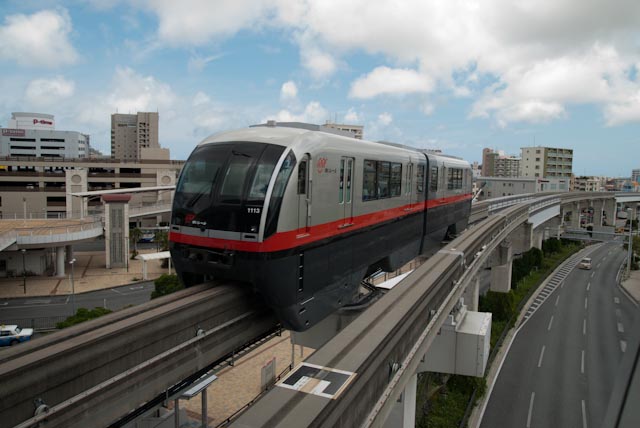
Being an archipelago province, Okinawa has very little in the way of railways: - as far as I know, the monorail linking the airport to the centre of the city of Naha is the only one.  I personally think monorails are generally a rubbish way of doing things when it comes to railway technology, given that the ride is less comfortable, they use less common technology (driving up the price), they don't corner so well etc.  The only advantage I can think of is that the flyovers needed to support them aren't so wide.  I am aware that the island also has at least 13 airports: - a necessity, when you consider that the archipelago stretches over 1,000km.


The islands stretch in a gradual fashion from being not far from the coast of the Japanese island of Kyushu to, at the the furthest extremity, not far from the coast of Taiwan.  I was informed that the island of Ishigaki was the major inhabited island that was furthest south and so decided to visit there as well as Okinawa.  According to http://en.wikipedia.org/wiki/Ishigaki,_Okinawa#Climate , the climate seems to be borderline tropical: - I recall that for a climate to be defined as tropical, all the monthly average temperatures need to be above 18 degrees celcius.  With the January average temperature being 17.7, the island's climate falls short of being classed as tropical by 0.3 degrees celcius.  I loved the tropical weather and vegetation on the island.  Once I accumulate enough money from sales of my magazine, I plan to buy some homes in other areas of the world: - Japan is one place I plan to buy some, with the island of Ishigaki or its environs being one place.


Naha, the prefecture's capital, is a reasonably major metropolis, even if it isn't as major as Tokyo and it isn't as stylish as Paris and Marseille.


The archipelago produces some lovely and cute pottery.  I nearly filled up my suitcases with the stuff and it looks pretty in my cabinets in my homes in Paris and Marseille.


On account of the rich history, there are some beautiful historical buildings to see, such as the Gusuku ruins.


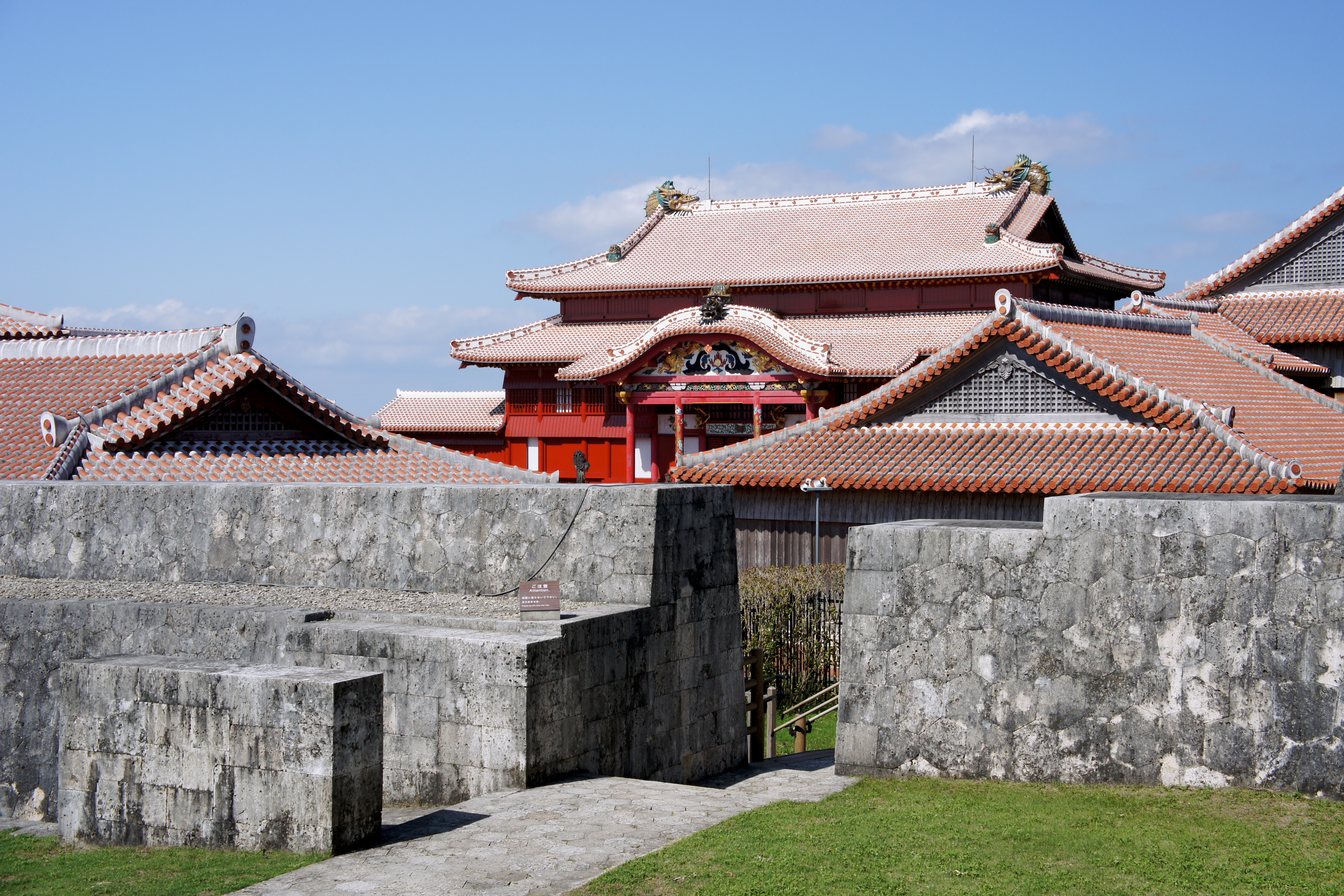
And Shuri castle in Naha.  If taxes in France weren't so high, I think I would probably buy a castle like this in Japan or construct a replica if it turned out none were for sale.


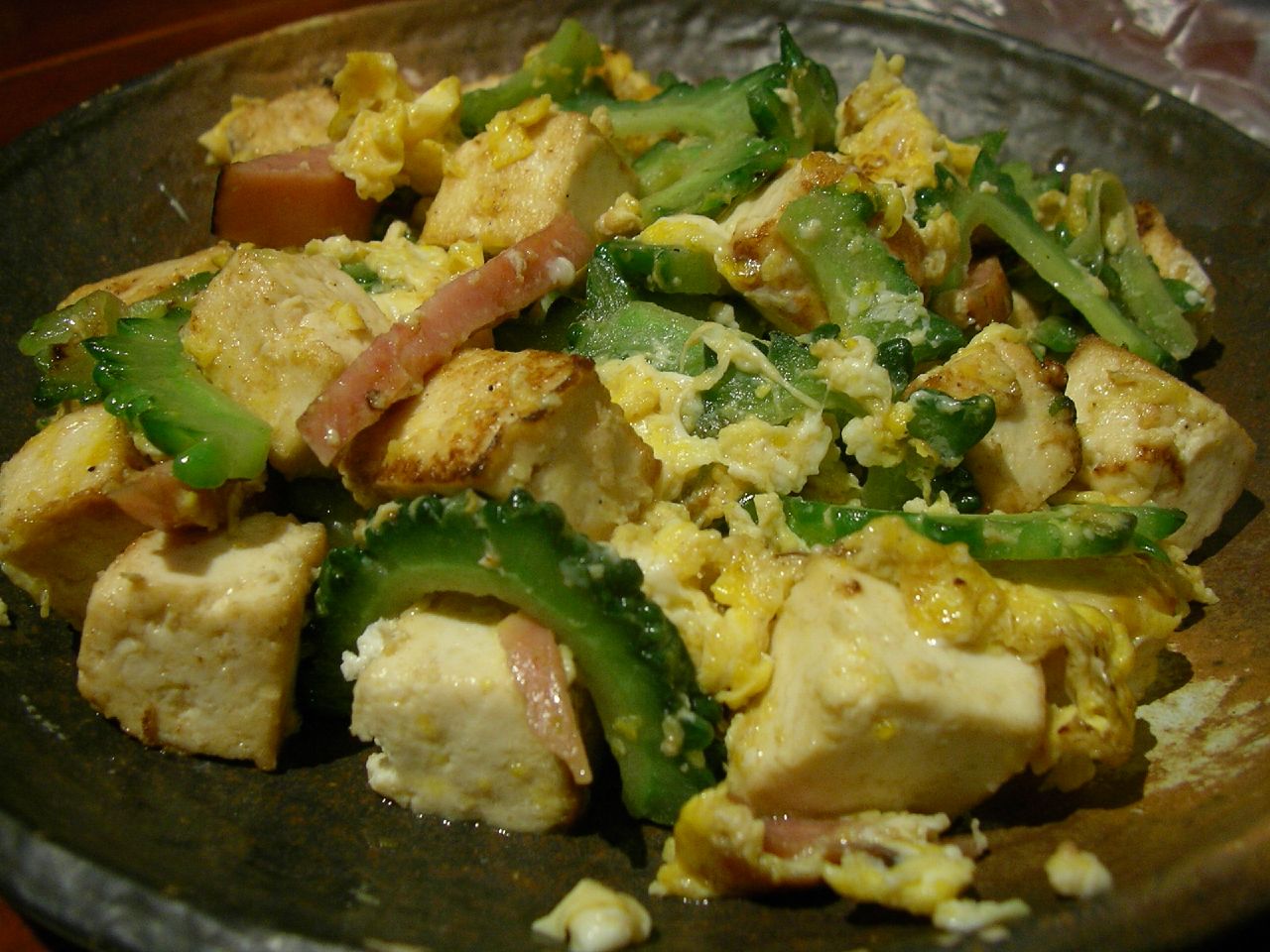
Anyway, though these aspects of Okinawa are lovely, one thing I must move onto is why I think the Okinawans are almost as naturally fabulous as we French.  Okinawa, though unfortunately succumbing to the influences of the USA with its fast food emanating from its military bases, was previously famous for having the highest life expectancy in the world on account of the extremely good eating habits.  Although the gastronomy isn't quite as stylish as in France, it was absolutely delicious.  Probably the most famous dish is chanpuru, whose main ingredients are normally tofu, bitter melon, eggs and sliced pork or Spam (as for me personally, I dislike American cuisine and steer clear of Spam).


Another famous dish is Okinawa Soba.  If anyone here is yuppie enough to be gluten intolerant, you should note that Okinawa Soba is not made with buckwheat like normal Japanese soba noodles.  It is just that it has been known as Okinawa Soba for so long, that a dispensation has been given to allow the Okinawans to continue referring to them that way, even though they are made with wheat rather than buckwheat and they more closely resemble udon noodles.


One noteworthy feature of Okinawan cuisine is the fact that it doesn't use much fish, even though the island is an archipelago.  Given the tropical climate, it was traditionally not very easy to store fish and the mountainous climate made transportation from the sea difficult.  As a result, pork became a staple of the local cuisine rather than fish.  Jews and Muslims may not like this situation, but past life expectancy figures for the island speak for themselves.  A Frenchwoman is so effortlessly perfect that she doesn't feel the need to abstain from any foods, so long as they aren't unnatural (e.g. margarine) or excessively sweet, (e.g. cupcakes): - both of these food types are characteristic of less stylish people.


However, what I just adore about Okinawa is the commitment of the inhabitants to dainty eating.  There is a famous Confucian saying which goes 腹八分, or in a transliterated form, "hara hachi bu", which translates roughly as "eat until you are 8/10 full".  This avoids stretching the stomach and French women are also aware that if one eats slowly and daintily, one can feel full by the end of the meal, as one's stomach receptors take time to respond to say that they have received enough.  The Wikipedia article about hara hachi bu claims that the Okinawans are the only people who deliberately practice calorie restriction at a societal level.  I'm not sure what to make of this claim: - I suppose I would say that French women are so effortlessly perfect that they can feel full without needing to artificially practice calorie restriction.  However, whatever the reason, one can look at the people of Okinawa and see how incredibly skinny they are: - 18 to 22 is a typical Body Mass Index for them.  Healthy living is traditionally very well integrated into daily life there, as one can see in the video below.


It would be quite fun to have competitions with these people to see who can feel full on the smallest amount of food, but then such a competition would be impractical, given the difficulty in ascertaining whether or not someone is telling the truth: - anyone could just fake it!  However, I have to concede that Okinawa is probably the only place in the world that has anything whatsoever that French women, in their effortless perfection, can learn from.  The only problem I can see with life here is people succumbing to American lifestyle habits and obesity consequently rising.  It is also noteworthy that Okinawa no longer has the highest life expectancy in Japan: - from what I have seen, Nagano seems to be top or nearly top of tables these days.  The prefecture of Nagano also has an advantage that Okinawa doesn't have: - a Shinkansen line known as the Nagano Shinkansen.


Maybe I will visit the prefecture of Nagano next time I visit Japan, but for now, I am delighted to have spent time in a place outside of France where people know how to eat properly, are lovely and thin and actually have something to teach us effortlessly perfect French women.