Showing posts with label wine. Show all posts

2017-04-20

Stuttgart: - a city of viticulture

Though I am heavily pregnant and due to give birth any day now, it was necessary to travel to Germany on business, as I am trying to get my magazine set up with a German office along with all the necessary infrastructure, such as distributors (admittedly, this is less of an issue in the online age).  I am considering the question of which cities to site the premises in.


To me, transport connectivity is a big issue, as in spite of the internet revolution, the fashion business contains many aspects that just require people to be there in person.  Airport connections don't really cut it for a Frenchwoman, as the short working week means she needs to be productive all the time, meaning that if she travels as part of her job, she needs to be able to do work during the journey, i.e. on a laptop/tablet hybrid on a table.  It was therefore necessary to choose a city that is well-linked to France and other German cities.


One of the cities I am considering is Stuttgart.  Current direct journey times from Paris are 3h11m.  This should drop further when the Rastatt Tunnel is opened in 2022.  Frankfurt is 1h17m on the fastest services.  Munich is 2h13m, though this will drop substantially with the Stuttgart 21 project's completion and the new line to Ulm.


Berlin is 5h04m, though it admittedly has a long way to go before it becomes a fashion capital, even though it is full of the metro-trendies from my industry I detest!  The Stuttgart 21 project will convert the main station from a terminus into a through station and shift it underground and will be completed concurrently with the Stuttgart-Wendlingen-Ulm high-speed line.  When they all open in 2021, they are expected to reduce journeys starting in Stuttgart by around 26 minutes, with Frankfurt-Munich journeys (via the Stuttgart route) being about 3h00m instead of 3h37m.  The increased saving for through journeys exists because of the time penalty for turning a train around.


In addition to good intercity connections, Stuttgart also has a great metropolitan public transport network, focused mainly on the tram system, but it also has a rack railway and funicular railway as part of its urban transport system, as the city is built on a series of hills.  Being from Marseille, this is something I am used to: - the city is shielded by mountains that mean the city is 8.4 degrees Celcius in January, compared with 5.5 in nearby Aix-en-Provence.  Bilal is more used to it, given the years spent in La Savine, a high-up area of the city.  The city has a series of outdoor staircases, a bit like Los Ángeles.


The Romans quickly discovered that Stuttgart has a mild climate suited to viticulture (some vineyards are a few hundred metres from the main station), which gives it an air of sophistication, though not to the same extent as France.  Germany has a reasonably large number of wine-producing areas: - the Rhine and Mosel(le) valleys are often used for wine cultivation.  The custom in these areas is to pick the grapes when snow arrives, which gives an extremely sweet quasi-dessert wine flavour: - not very good to my way of thinking, being a sophisticated Frenchwoman, but ultra-sweet dessert wines work with a few foods, such as crème caramel and blue cheese (Roquefort being a well-known French example).


Stuttgart is the capital of the Baden-Württemberg state and therefore contains the state parliament.  It is also the biggest city in the state and therefore the place where things are happening.  It is also a huge centre for the automotive industry: - Porsche and Mercedes-Benz are based in the city.  As my readers will know, I am less enthusiastic about cars, given the increased difficulty of finding somewhere to drive at 320km/h (the LGV Est, Rhine-Rhône, Sud-Europe Atlantique and Bretagne), but these two brands have definitely succeeded in creating an image of glamour!  Certainly, Stuttgart is a very prosperous city and these brands reinforce the image of luxury living.


A French it-girl such as myself will always be on the lookout for good places to go shopping.  I haven't slowed down on shopping since becoming a mother, as motherhood is not the time to kick back, neglect personal beauty and end up looking ugly: - this is what silly Anglo-Saxon women do!  Stuttgart is not as fabulous as the best French shopping destinations, but there are some reasonable bargain basement offerings and entry-level international cuisine in the form of the Calwer Passage: - after all, if German women are aspiring to be impossibly perfect and dainty like we Frenchwomen, they have to start somewhere!  MDR.


We shall see if this venture into Germany is successful and whether a whole new country can be made aware of how impossibly and unattainably perfect we French women are (and ideally inspired to replicate our impossible example even though they will never reach it)!

2016-06-02

More pointless diatribes

As many readers will know, I have a particular dislike of the British journalist Zoë Williams, who is somewhat covetous of the effortless perfection that we Frenchwomen possess.  She wrote a review of Mireille Guiliano's French Women Don't Get Facelifts.


Nobody (save for our Lord and Saviour) is perfect, but I particularly like the way Mireille Guiliano proclaims the effortless perfection of French women.  In this book, she tells the world how French women age well, choosing natural beauty over horrid facelifts.


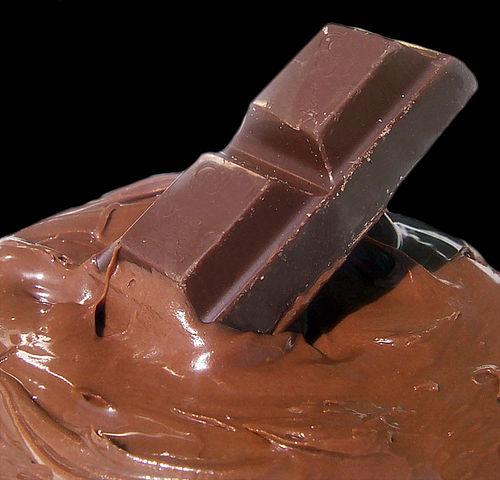
It is not as if we Frenchwomen don't know anything about ageing.  French women tend to rank very highly in life expectancy tables.  According to the OECD, in 2013, only Japan and Spain had higher female figures (pun intended).  Many will be aware of Jeanne Calment, who lived her whole life in Arles, a town not too far from Marseille.  Some of the stories she told were a bit silly, e.g. eating 1kg of chocolate a week.  Any Frenchwoman will tell you that if you did this, you would be incredibly fat, especially given the reduced physical activity that comes with advancing age (unless one is very diligent).  Mireille Guiliano recommends a one-square fix of chocolate each day.


Many Anglo-Saxon women choose to have cosmetic surgery after giving birth, e.g. to remove surplus skin, stretch marks etc.  Having just had a baby, I know that it can be a challenge to avoid the changes to one's tummy, but it can be done.  If you look after your body, you can keep your skin supple and able to cope with the changes pregnancy brings.


I note the bitchy comment about the supposed contradiction between not spending a lot on vitamins, but spending money on Bottega Veneta.  A Frenchwoman knows that nature is best when it comes to food and real natural stuff does not come at great cost.  However, when one buys fashion, one pays for the skill of the designer.  Granted, there are some deviations to this rule, but generally, you get what you pay for in the word of fashion.


I also disagree with the comment that watching one's weight and receiving admiring glances are a betrayal of feminism.  Readers will be aware of my desire to allow Bilal to build our family in the image of the Bible (with the husband as the head).  Zoë Williams would say the Bible oppresses women, to which I would say that she doesn't know about the very capable businesswoman in Proverbs 31, but anyway.  A Frenchwoman knows that it is possible to both look good and do well in life, be this one's career, business, politics etc.  Segolène Royal was, as Bilal would say, well buff (though far less so than me).  Granted, she lost to Nicolas Sarkozy, but in my opinion, that was because she promoted socialist policies which France did not need.  Mireille Guiliano was the CEO of Veuve Cliquot before her retirement and she wrote all these books showing the world how wonderful we Frenchwomen are.  Who says such women have betrayed the feminist revolution?


I always find Zoë Williams' francophobic diatribes funny and I particularly loved her rant in the last two paragraphs about Mireille Guiliano playing, as I understand things, a Borat-style naïve foreigner.  However, when I finished laughing, I thought to myself, why doesn't she just face up to the fact that we Frenchwomen know how to be beautiful and live life to the fullest?

2013-08-23

Provence

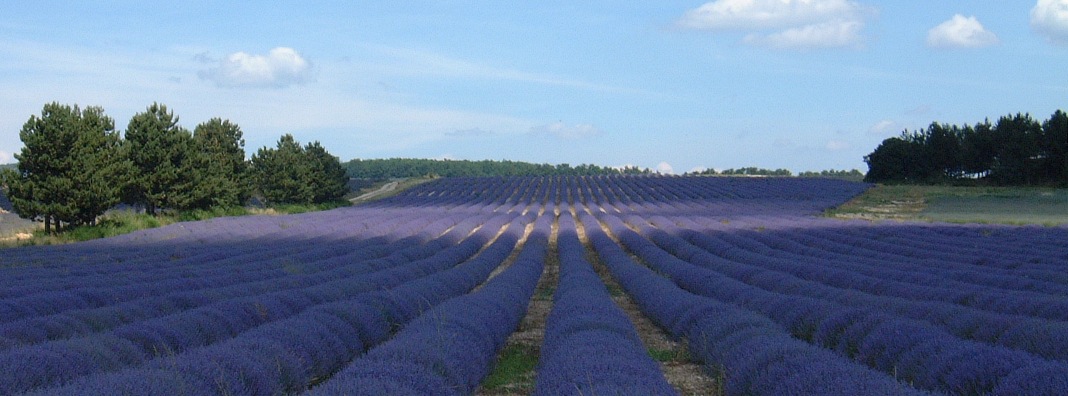
As I have more or less said in earlier postings, I grew up in Marseille, the largest city in Provence.  As a whole, France (with its impossibly thin women) is impossibly perfect, but superlatives let me down when it comes to describing my home region of Provence: - it is not just impossibly thin women that make Provence just divine.


I can't stand being away from Provence, so I am very pleased that it is possible to cover the approximately 750km or so between Paris and Marseille in only 3h05m by the train.  Paris is the fashion capital of the world, but I think it would be absolutely divine if the capital relocated itself to Marseille!  I would rarely need to leave the city to conduct my business activities, though I do think the train journey is just fabulous!  The Eurostar services also make transportation a little easier when I regrettably find the need to go to London on business.


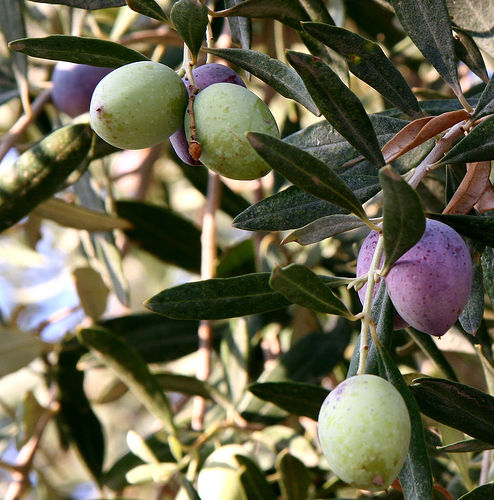
France's Mediterranean coast is pretty much the only area of France where olives can be grown.  Olive trees are a very important plant to a French woman for various reasons.


We just adore using olive oil in our cuisine: - Jeanne Calment of Arles, a town within the boundaries of Provence, set the record for the confirmed oldest person (though a Bolivian man is vying for her title).  She was 122 years old when she died and used olive oil with all her food, as well as using it as a moisturiser.


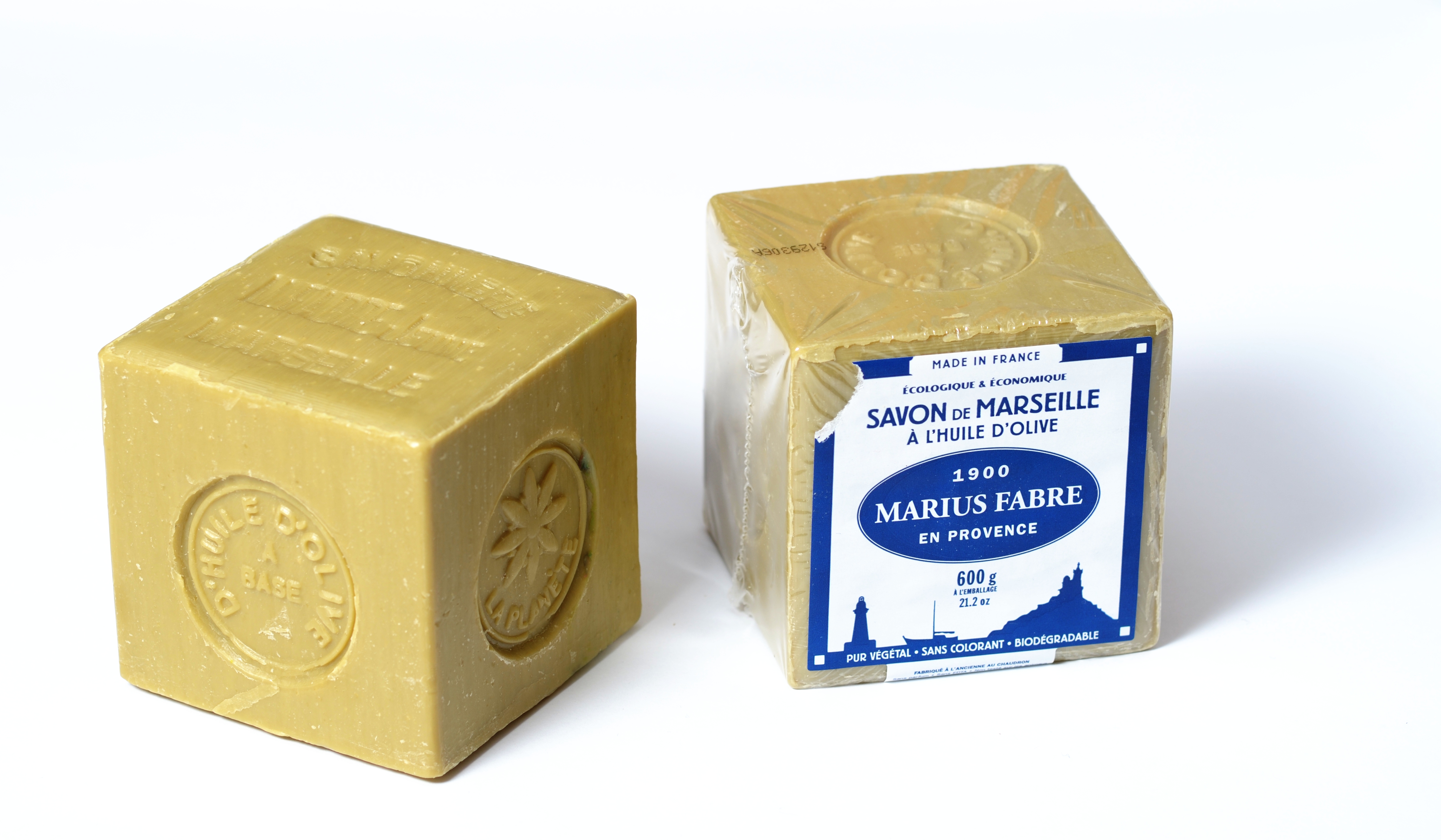
The moisturiser part brings me onto another thing I just adore about Marseille: - Savon de Marseille, which is made using olive oil.  When buying Savon de Marseille, one must be careful, as it is often mislabelled.  The green variety is made using olive oil (as mandated by Louis XIX in the Edict of Colbert), whereas the white variety is made using a mixture of copra oil and palm oil!  Yeek!  Palm oil is a disgusting ingredient that is used by the food industry as a substitute for real fats that I will not touch!  Savon de Marseille should also be made from sea water from the Mediterranean Sea: - the water of any other body of water simply will not do!


When I am in the UK on business and I struggle to cope with the lack of sophistication, I tend to head for branches of a chainstore called L'Occitane en Provence, which sells various beauty products of Provençal provenance and has its headquarters in the town of Manosque, Provence (Olivier Baussan wanted to promulgate the Provençale lifestyle).  When I am at home in Marseille, I tend to buy such things from artesanal producers, but L'Occitane en Provence is the next best thing if this option is not practical.


Let us not forget the dietary things one can do with olive oil: - after all, if you are filling your body with filth, some absolutely divine olive oil used as moisturiser is of no avail.  A French woman just adores good wine and there are many useful things that come from the process: - I cannot stand unnatural and artificial dressings that one buys in a supermarket that are laden with E-numbers.  A French woman knows that it is very easy to make proper dressings using olive oil and wine vinegar (1 part vinegar to 3-4 parts olive oil or whatever ratio you prefer).  Olive oil made in Provence is great as a salad dressing all by itself: - drizzled on freshly-picked and sliced tomatoes from Provence, it tastes divine!


Note that both ingredients need to come from Provence for the sensation of pure pleasure!  They taste a world better than poisonous tomatoes covered in pesticides imported from the Canary Islands in the depths of winter!  As the saying goes, you are what you eat: - a French woman's dislike of unnatural food helps explain her unrivalled perfection.  I hope that Paris' fashion industry will move to Marseille, as I couldn't stand living anywhere but Provence.