Showing posts with label sweet. Show all posts

2019-06-14

Gabrielle Deydier

Apologies for the lack of postings as of late: - I gave birth to our fourth son a couple of months ago.  Bilal is obviously delighted and wanting more.  I have no reason to say no: - I always eat sensibly and therefore have no worries about what effect this will have on my impossibly dainty figure.


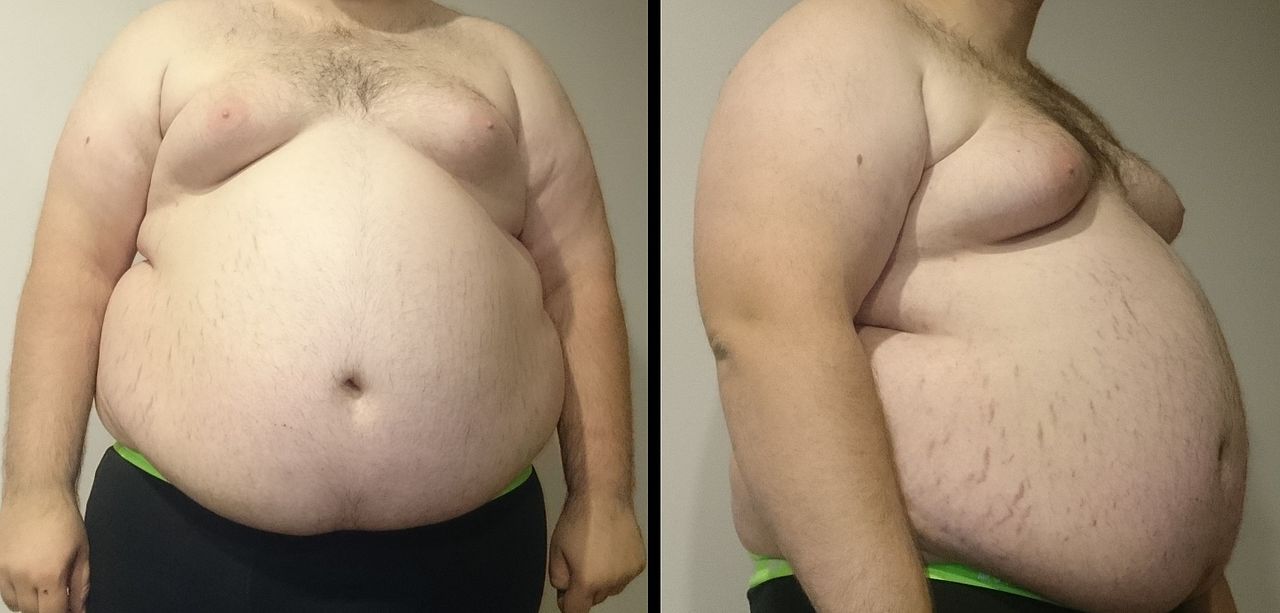
I have been asked a few times what I think about Gabrielle Deydier, the supposed Frenchwoman denouncing "grossophobie", so I thought I would write a blog post on this subject.  For English-speaking readers of this post, an article summarising the situation can be found at https://www.theguardian.com/society/2017/sep/10/gabrielle-deydier-fat-in-france-abuse-grossophobia-book-women .  Note that The Guardian is the British publication that Zoë Williams tends to write for: - she is the journalist who whinges about how perfect we Frenchwomen are.


Gabrielle Deydier claimed she was pushed out of her job as a special education classroom assistant because of her weight.  Me personally, I think it is useless speculating about whether this is true or not.  Maybe she was difficult to deal with in other ways?  We will probably never know.  In my experience as an employer, people often make silly claims like this to divert attention away from poor performance, bad behaviour and other things that make them undesirable employees.


I also note the part about how she spent a year in Spain where her weight wasn't an issue.  Let's be honest here: - France and Spain are not only part of the Single Market (people can live and work in each other's nations under the Maastricht Treaty), but also the Schengen Zone (no hard borders).  You can get on the TGV at various French stations and there is nothing (except perhaps ticket checks) stopping people getting to Spain.  If I were that unhappy with life in France (I am not by any stretch of the imagination), I would ask myself if emigration would improve my life.


Let me be candid here: - I think she looks disgusting and a disgrace to the effortlessly perfect French women you see all around the country.  When I showed Bilal a photo of her and asked his opinion, he didn't hesitate to describe her as "cheum" (verlan for "moche", French for ugly).  I understand the school's difficulty in allowing someone so fat to be around children and set a bad example, but if you are running a fashion magazine (like I am) and someone turns up at an interview looking like that, it makes it clear that they don't have any interest in what we cover as a magazine (looking good, which fashion contributes to).  It reminds me of the interview scene from "The Devil Wears Prada" where Anne Hathaway's character turned up for the interview with Meryl Streep's character unrepentant about her lack of interest in fashion.


That said, I do feel sorry for her, as The Guardian's article makes it clear that the doctor prescribed some remedies that are just not French!  He prescribed medication and a diet of meat and boiled vegetables.  Did the doctor just not know what he was doing?  We Frenchwomen eat all sorts of things that the outside world considers "naughty", such as cheese (I love local cheeses like Banon, Saint-Marcellin, Picodon de la Drôme and Picodon de l'Ardéche), tartiflette, foie gras, Nutella crêpe, steak frites, baguettes, Quiche Lorraine, Croque Monsieur, Raclette/fondue, confit de canard and many other lovely dishes.  As Mireille Guiliano rightly points out, we eat for pleasure (not punishment), but there are some things we do to maintain our wonderful beanpole thin figures: -
  • Not eating between meals: - we have proper meals three times a day to eliminate the temptation to snack
  • Concentrating on meals properly, so as to avoid mindless eating
  • Passive exercise: - walking and taking the stairs as far as reasonably practicable
  • Choosing foods that taste delicious, so we get our jollies from the taste, rather than our stomachs being stretched
  • Make food look visually appealing for the same reason
  • Avoiding uselessly sweet foods, say having desserts slightly sour and only as sweet as they need to be to cleanse the palate of the previous course (e.g. tarte au citron) or perhaps a cheese course before the dessert
  • Eating real foods: - breaking the link between sweetness/fat (say with artificial sweeteners and low-fat foods) and calories confuses the body, causing people to eat more
  • Never dieting: - we change our habits permanently if something goes wrong
  • Drinking bottled water, rather than unhealthy fizzy drinks: - I don't care if Greta Thunberg, the high priestess of the green religion, disapproves of me for this
  • Sip champagne and fine wines regularly, but not hard liquor: - hard liquor comes with many additional calories and blunts the taste buds, making it harder to get our jollies from the taste
And, drum roll............................................................
  • Saying "la moitié, s'il vous plaît" ("just half of that, please") when offered some food, not forgetting what Mireille Guiliano said about how there are three ways French women stay thin: - portion control, portion control and portion control

In summary, I think Gabrielle Deydier could turn her situation around if she tried (along with some sound advice from an average French woman that she seems to lack).  She has passed her prime career years, but she may be able to recover some semblance of a career if she gets herself back on track.  Rather than whingeing about "grossophobie", she should take responsibility and lose the weight.

2017-04-20

Stuttgart: - a city of viticulture

Though I am heavily pregnant and due to give birth any day now, it was necessary to travel to Germany on business, as I am trying to get my magazine set up with a German office along with all the necessary infrastructure, such as distributors (admittedly, this is less of an issue in the online age).  I am considering the question of which cities to site the premises in.


To me, transport connectivity is a big issue, as in spite of the internet revolution, the fashion business contains many aspects that just require people to be there in person.  Airport connections don't really cut it for a Frenchwoman, as the short working week means she needs to be productive all the time, meaning that if she travels as part of her job, she needs to be able to do work during the journey, i.e. on a laptop/tablet hybrid on a table.  It was therefore necessary to choose a city that is well-linked to France and other German cities.


One of the cities I am considering is Stuttgart.  Current direct journey times from Paris are 3h11m.  This should drop further when the Rastatt Tunnel is opened in 2022.  Frankfurt is 1h17m on the fastest services.  Munich is 2h13m, though this will drop substantially with the Stuttgart 21 project's completion and the new line to Ulm.


Berlin is 5h04m, though it admittedly has a long way to go before it becomes a fashion capital, even though it is full of the metro-trendies from my industry I detest!  The Stuttgart 21 project will convert the main station from a terminus into a through station and shift it underground and will be completed concurrently with the Stuttgart-Wendlingen-Ulm high-speed line.  When they all open in 2021, they are expected to reduce journeys starting in Stuttgart by around 26 minutes, with Frankfurt-Munich journeys (via the Stuttgart route) being about 3h00m instead of 3h37m.  The increased saving for through journeys exists because of the time penalty for turning a train around.


In addition to good intercity connections, Stuttgart also has a great metropolitan public transport network, focused mainly on the tram system, but it also has a rack railway and funicular railway as part of its urban transport system, as the city is built on a series of hills.  Being from Marseille, this is something I am used to: - the city is shielded by mountains that mean the city is 8.4 degrees Celcius in January, compared with 5.5 in nearby Aix-en-Provence.  Bilal is more used to it, given the years spent in La Savine, a high-up area of the city.  The city has a series of outdoor staircases, a bit like Los Ángeles.


The Romans quickly discovered that Stuttgart has a mild climate suited to viticulture (some vineyards are a few hundred metres from the main station), which gives it an air of sophistication, though not to the same extent as France.  Germany has a reasonably large number of wine-producing areas: - the Rhine and Mosel(le) valleys are often used for wine cultivation.  The custom in these areas is to pick the grapes when snow arrives, which gives an extremely sweet quasi-dessert wine flavour: - not very good to my way of thinking, being a sophisticated Frenchwoman, but ultra-sweet dessert wines work with a few foods, such as crème caramel and blue cheese (Roquefort being a well-known French example).


Stuttgart is the capital of the Baden-Württemberg state and therefore contains the state parliament.  It is also the biggest city in the state and therefore the place where things are happening.  It is also a huge centre for the automotive industry: - Porsche and Mercedes-Benz are based in the city.  As my readers will know, I am less enthusiastic about cars, given the increased difficulty of finding somewhere to drive at 320km/h (the LGV Est, Rhine-Rhône, Sud-Europe Atlantique and Bretagne), but these two brands have definitely succeeded in creating an image of glamour!  Certainly, Stuttgart is a very prosperous city and these brands reinforce the image of luxury living.


A French it-girl such as myself will always be on the lookout for good places to go shopping.  I haven't slowed down on shopping since becoming a mother, as motherhood is not the time to kick back, neglect personal beauty and end up looking ugly: - this is what silly Anglo-Saxon women do!  Stuttgart is not as fabulous as the best French shopping destinations, but there are some reasonable bargain basement offerings and entry-level international cuisine in the form of the Calwer Passage: - after all, if German women are aspiring to be impossibly perfect and dainty like we Frenchwomen, they have to start somewhere!  MDR.


We shall see if this venture into Germany is successful and whether a whole new country can be made aware of how impossibly and unattainably perfect we French women are (and ideally inspired to replicate our impossible example even though they will never reach it)!

2014-03-12

Being fat is a sign of stupidity

Och, ah jist read aboot a study in Scotland sayin' that fowk wha' dinnae keep their figures in check dinnae dae sae well in exams the noo!  Translation for those of us who don't understand this corrupted form of English: - "I just read about a study in Scotland saying that people who don't keep their figures in check don't do so well in exams".  http://www.bbc.co.uk/news/uk-scotland-26523602
This is a very diplomatic way of saying that being fat is a sign of stupidity.  During my time living in the UK and my various travels in the Anglo-Saxon world, it gradually became increasingly clear to me that Anglo-Saxon women are in fact stupid.  When I speak with such women, they often tell me about their ridiculous dieting strategies.  Since they tend to tell me such things over business lunches (during which I will always say, "La moitié, s'il vous plaît", unless it is a buffet, in which case, I take food to suit my own stomach), it is normally necessary for me to be diplomatic.  If I weren't constrained by the need to be diplomatic, I would tell them how idiotic they were.
I know of one American woman who tried the diet mentioned in "The Devil Wears Prada" (eating nothing at all and then eating a cube of cheese when close to fainting).  She lasted about three days on the diet and the next time I saw her, she had gone from obese to morbidly obese.  As Mireille Guiliano points out, any regimen you can't maintain for life is bound to fail you.  Granted, French cheese (the cheese in the picture below is Banon, from the eponymous Provençale town, a.k.a. Banon à la feuille) is so delicious that it can satisfy with a single cube, but the diet described removes pretty much all of life's pleasure.
I have also seen countless examples of Anglo-Saxon women having only a green salad at lunchtime (though often covered in very sugary dressings) and then snacking all the way through the afternoon.  Similarly, many women much fatter than myself proudly tell me that they have skipped breakfast, yet by mid-morning, they are munching on disgusting-looking preservative-laden muffins!  When will Anglo-Saxon women wake up and realise their own stupidity?
There is nothing particularly complicated about how we Frenchwomen manage to stay pencil-thin.  These are a few of the main rules (though we admittedly have a few other tricks): -
1)  The three main reasons why French women are so thin are portion control, portion control and portion control: - practice saying "La moitié, s'il vous plaît" several times a day
2)  Only eat food of the highest quality: - get your jollies from your taste buds, not from your stomach being stretched
3)  No snacking
4)  Only make desserts as sweet as they need to be to cleanse your palate of the previous course: - excessively sweet desserts are characteristic of bumpkins and minimally sweet desserts are characteristic of stylish Frenchwomen
5)  Passive exercise: - my mother won't consider using the lift unless her destination is at least 10 floors away and the figure for me is 20 floors, not forgetting to walk everywhere as well, though Paris-Marseille at almost 750km is a little too far even for me!
6)  Slim-fitting high-quality fashion: - if a woman finds herself struggling to fit into her clothes, she will have an extra source of motivation to be dainty in her eating
7)  Living in a society where a trim figure is necessary for success: - I despair when I hear the phrase, "It's not what's on the outside, it's what's on the inside", as it can cause women to become demotivated and lazy about keeping their weight down, like Anglo-Saxon women
8)  Only doing vigorous pursuits if they bring pleasure: - maybe this means hillwalking, maybe this means tennis, à chacun son goût, but make sure it is pleasurable
9)  Only eating chocolate if it is above 60% cocoa: - only really stupid people consume chocolate with lower cocoa proportions, as the difference is often made up with sugar and it doesn't have the same filling effect
10)  Taking care of one's appearance: - if one takes pride in one's appearance, one will not want to spoil it by overeating (even when a Frenchwoman is "in the field", she will always have at least two lipsticks, one for the day and one for the evening)
11)  Making sure to read fashion magazines promoting beanpole-thin figures as the ideal: - one's standards should always be set high
12)  Not watching television excessively: - there is always some scouring to be done in markets for the choicest ingredients
13)  Not making ridiculous excuses about one's weight: - occasionally, people have differences when it comes to metabolism rates (e.g. Bilal's coeliac disease causing him to have malabsorption problems, meaning he has an enormous appetite), but I am tired of hearing gormless Anglo-Saxon women justify their huge waistlines with excuses such as genetics, being big-boned etc

It is time Anglo-Saxon women stopped coming up with all these fad diets (Atkins, South Beach, Beverley Hills etc).  The only fad diet (if one would call it that) that has any basis in reality when it comes to becoming and remaining thin is the Okinawan habit of "hara hachi bu" ("eat until you are 8/10 full"), which is a variant of the French teaching of only eating food of the highest quality in the daintiest quantities.  Anglo-Saxon women, stop being stupid, pretending that you have the faintest idea about how to be beanpole-thin and slavishly replicate the impossibly perfect example that we Frenchwomen set!

2013-12-29

Cassoulet: - a very naughty French dish (supposedly)

One thing I have noticed is that Anglo-Saxon women like to talk about "naughty" foods, i.e. ones that contain fat.  This shows a very poor understanding of how to eat properly.  A Frenchwoman does not go around thinking about forbidden foods and which foods are "naughty" to eat.  Silly Anglo-Saxon woman talk about "naughty, but nice", as shown in the advertisement below (whose saying was popularised by Salman Rushdie) for cream cakes that featured a now-mostly-retired washed-up soap and Carry On actress (Barbara Windsor, who played Peggy Mitchell in the silly trashy British soap opera EastEnders, where vem characters off of it don't neva talk wiv no proper grammar).
As Mireille Guiliano pointed out, a Frenchwoman doesn't watch much television, so I can't really comment too authoritatively, but anyway, I digress.  A Frenchwoman doesn't do this "naughty, but nice" group.  It is mostly true to say that a Frenchwoman does not abstain from any food types, not even fatty ones.  As a reformed baptist, I am aware of at least 10 parts of the New Testament which say that all foods are fine (Matthew 15:11, Acts 10:9-16, Acts 11:1-10, Romans 14, 1Corinthians 8, 1Timothy 4:1-5, Titus 1:15, Mark 7:14-23, 1Corinthians 10:23-33 and Luke 10:8 for the readers who are interested to look them up).  The only exception to this rule is when the foods are excessively sweet.  As I often say in this blog, as far as an impossibly dainty and sophisticated Frenchwoman is concerned, a dessert should only be as sweet as it needs to be to cleanse one's palate of the previous dish.  Any sweeter than that and it becomes increasingly less sophisticated.
Onto the main point of this article, ignoring the disgusting-looking cupcakes above.  A few days ago, I was contacted by a reader in Barcelona who said that though tapas were available, it wasn't always possible to find the rich foods that would enable her to eat like a dainty Frenchwoman.  I could have told her that cassoulet is vaguely similar to the Spanish Fabada Asturiana, but I don't want her to think anything is even remotely comparable with French cuisine, so I suggested that she visit France more often, MDR.  She said that France wasn't all that accessible, given the low quantity of direct daytime trains, mentioning that the night service to Paris was due for imminent abolition.  I replied by pointing out that earlier this month, RENFE and SNCF started offering more cross-border services this month (previously, the French TGVs only went as far as Figueres) and that two of the new destinations served are Carcassonne and Toulouse.  These two settlements plus Castelnaudary are rather blasphemously referred to as the Holy Trinity of cassoulet, a very well-known dish that helps make we French people as stylish as we are.  Carcassonne is accessible in 2h22m from Barcelona using the new service and Toulouse in 3h07m, which uses the RENFE S-100 rolling stock (notably built by Alstom, a French manufacturer, tee hee), which can be seen below in Seville's Santa Justa station.
All in all, it is very easy for residents of Barcelona to travel to two of the three locations where cassoulet is native to.  Cassoulet is a very, very rich French dish.  On account of its very rich flavour, a dainty Frenchwoman feels no great need to eat large quantities of it.  It is almost the case that a Frenchwoman can take a few dainty nibbles and feel full, savouring each nibble to the fullest, as I have described doing with chocolate in earlier postings.  I have been in Carcassonne and seen stupid Americans ordering four cassoulets per person (because they look around and see how small the dishes are and assume this won't fill them up) and then finding themselves unable to get beyond the second helping.  Still, at least most of them had the good sense to appreciate the beauty of Carcassonne.  As today's weather forecast was relatively good, I suggested a visit to Carcassonne with Bilal.  As the regular readers of my blog will know, Bilal is a solitary character and has therefore not always found much occasion to travel to other areas of France, so he appreciated the change of scenery.
The main ingredients of cassoulet are meat (e.g. pork, goose meat, duck meat etc), pork skin and white beans.  This is one pleasure that a Frenchwoman can therefore enjoy whilst being relatively free of Muslims and Jews: - being a reformed baptist who believes in the principle of sola scriptura, I refer to the above parts of the Bible when someone asks me how I can gain so much pleasure from cassoulet, knowing that supposedly forbidden foods feature so heavily in it (ditto Saucisson d'Arles).  For a few years after his conversion to Christianity, Bilal continued abstaining from pork and restricting himself to halal food, so as to avoid compromising his witness with his family.  After a few years though, he eventually stopped bothering to abstain, as he realised that it is a minor issue in the enormous gulf that separates him from his Muslim family members, though he avoids doing so in front of his family still.
Bilal tried cassoulet for the first time during our visit to Carcassonne today and he also gained an enormous amount of pleasure from the incredibly rich flavour, though this is not something Bilal plans to eat regularly.  The reason for this is that Bilal is an extremely heavily built guy and needs a lot of protein to fulfil his needs, meaning that rich foods of which he feels only able to eat dainty quantities are not ultimately in his best interests.  As ever, Bilal wore his tagelmust/chèche to Carcassonne and this provoked a few stares (I also got a few stares from foreign men not used to seeing dainty Frenchwomen like me, MDR).  However, this was a wise decision, as it was fairly windy and I felt a little cold, while Bilal was wrapped up comfortably warm.  Below is a picture of a Touareg man who appears engaged in thought.  This is not Bilal, but he can often be seen with such facial expressions.
Bilal and I enjoyed our trip to Carcassonne today and I am looking forward to several such days out with him on Saturdays in future: - when one is able to engage Bilal in communication, he is a very personable man with a lot of insightful things to say.  One weekday evening, I would like to show him how to cook cassoulet, tartiflette and all the other wonderful dishes that make we Frenchwomen impossibly perfect and thin: - he was not previously used to it, but he enjoys the culinary variety.

2013-08-26

Low-fat low-sugar low-flavour

One of the things the gormless Anglo-Saxon world just won't learn is that if one wants to lose weight, low-fat, low-sugar, low-flavour foods are not the way to go.  They have been prevalent in Anglo-Saxon nations for a long time and have not made much of a dent, if any, in the obesity rate.  There is a saying about insanity being when one does the same thing over and over again and expects different results!


A French woman knows that if one wants to be impossibly perfect and thin like us, it is no good going for low-fat variants: - what is necessary is to have an impossibly dainty appetite like us.  A French woman prefers dainty portions of the real thing: - the flavour gives her extremely refined taste buds a sensation of pure pleasure that goes a long way to making her feel full (I couldn't find a Wikimedia Commons picture showing the sensation I wanted), so there is no picture between here and the next paragraph.

I just adore real yoghurt: - there was once an occasion on my travels to the USA when I was at the breakfast buffet and I picked up a yoghurt without thinking, but what I didn't know was that it was phoney low-fat yoghurt!  I was so disgusted by the taste that I had to rush to the toilet, where I nearly threw up!  I had to wash my mouth out, but needed to go back to the table to do this, as I don't like water that is not pure.  Tap water will not do even for washing out my mouth!  Real yoghurt is one of life's great pleasures.


There is an article on Wikipedia about something called the French paradox, which concerns how French people eat a large amount of saturated fats than many other nations, but still have a very low heart disease rate.  A French woman knows that real saturated fats are much less bad than severely unnatural trans fats that are found in many foods today.

A French woman will also not do artificial sweeteners, such as sucralose, glucose syrup etc.  A French woman treats sweet foods as being occasional treats and knows that artificial sweeteners are no good, as they prolong one's taste for sweet foods.  Also, even though many of them are more powerful per gram than sugar, they often load the person eating them up with calories, but without making them full.  A French woman much prefers a dessert that is only as sweet as it needs to be to cleanse her palate of the previous course: - this might be sprinkled with a small amount of sugar only.  Also, a French woman much prefers to eat natural foods.  What does this mean when it comes to sugar?  It means that she much prefers muscovado sugar, knowing that this is closer to how nature intended it (the word "refined" does not always have good connotations to a French woman) and that unrefined sugar preserved more of the nutrients such as mineral salts, phosphorous, calcium, magnesium, potassium, iron etc.  The picture below shows the difference: - the one on the right is brown sugar and the one on the left is muscovado sugar.


In summary, a French woman much prefers dainty quantities of the real thing, with its rich flavours, rather than large quantities of flavourless food.  As silly Americans would say, I'm like helloooooooooo, earth to America!  Low-fat low-sugar low-flavour foods do not help!