
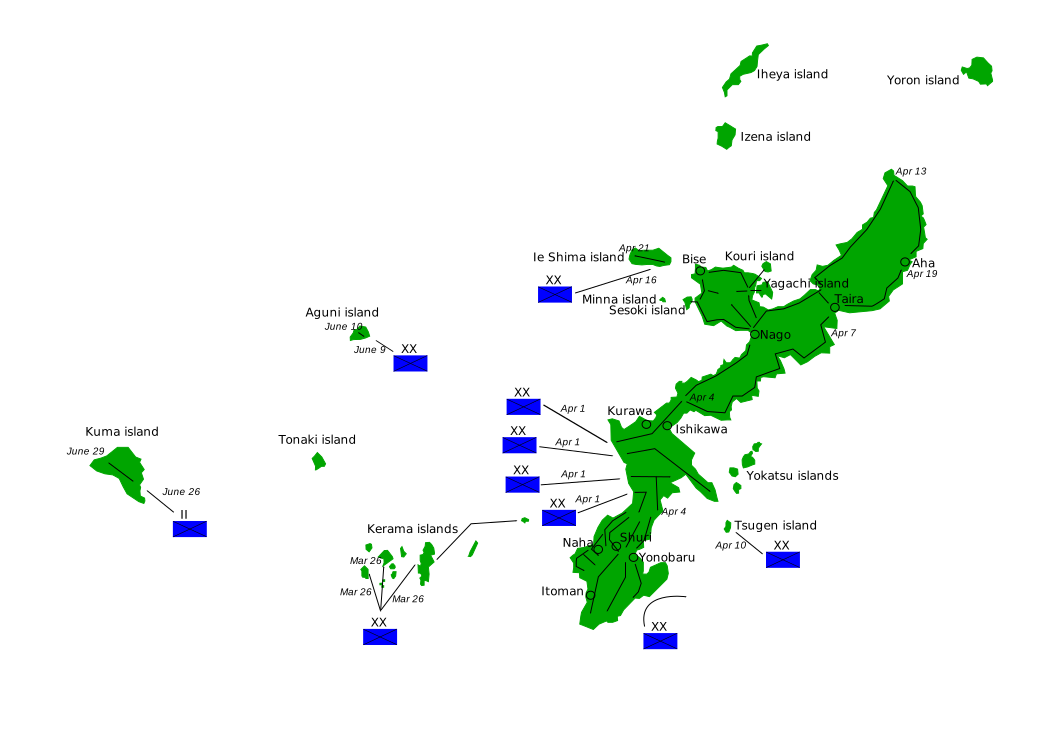
Okinawa is a province (prefecture) of Japan with a colourful history. Anecdotally, I have heard that it received more Chinese influence than other Japanese provinces, given its proximity. The area was pivotal during WWII (a quarter of the population was killed in the 1945 Battle of Okinawa) and to this day, the Americans maintain bases on the archipelago (3/4 of American bases in Japan are in this province). This is a source of controversy, given various sexual assaults that have been perpetrated by American soldiers against local women (if American soldiers are as fat as the rest of the American population, no wonder rape seems like the only option to them).
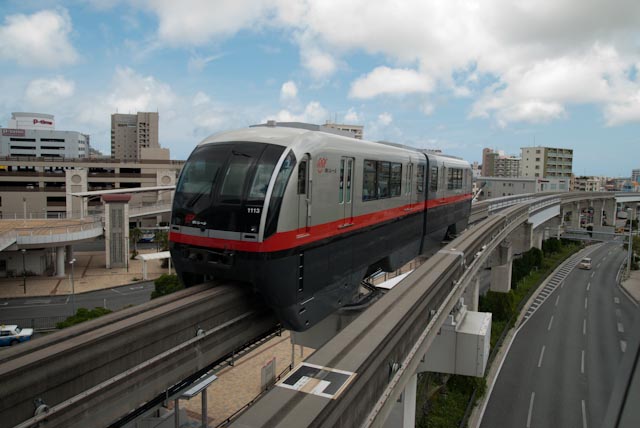
Being an archipelago province, Okinawa has very little in the way of railways: - as far as I know, the monorail linking the airport to the centre of the city of Naha is the only one. I personally think monorails are generally a rubbish way of doing things when it comes to railway technology, given that the ride is less comfortable, they use less common technology (driving up the price), they don't corner so well etc. The only advantage I can think of is that the flyovers needed to support them aren't so wide. I am aware that the island also has at least 13 airports: - a necessity, when you consider that the archipelago stretches over 1,000km.
The islands stretch in a gradual fashion from being not far from the coast of the Japanese island of Kyushu to, at the the furthest extremity, not far from the coast of Taiwan. I was informed that the island of Ishigaki was the major inhabited island that was furthest south and so decided to visit there as well as Okinawa. According to http://en.wikipedia.org/wiki/Ishigaki,_Okinawa#Climate , the climate seems to be borderline tropical: - I recall that for a climate to be defined as tropical, all the monthly average temperatures need to be above 18 degrees celcius. With the January average temperature being 17.7, the island's climate falls short of being classed as tropical by 0.3 degrees celcius. I loved the tropical weather and vegetation on the island. Once I accumulate enough money from sales of my magazine, I plan to buy some homes in other areas of the world: - Japan is one place I plan to buy some, with the island of Ishigaki or its environs being one place.

Naha, the prefecture's capital, is a reasonably major metropolis, even if it isn't as major as Tokyo and it isn't as stylish as Paris and Marseille.

The archipelago produces some lovely and cute pottery. I nearly filled up my suitcases with the stuff and it looks pretty in my cabinets in my homes in Paris and Marseille.

On account of the rich history, there are some beautiful historical buildings to see, such as the Gusuku ruins.

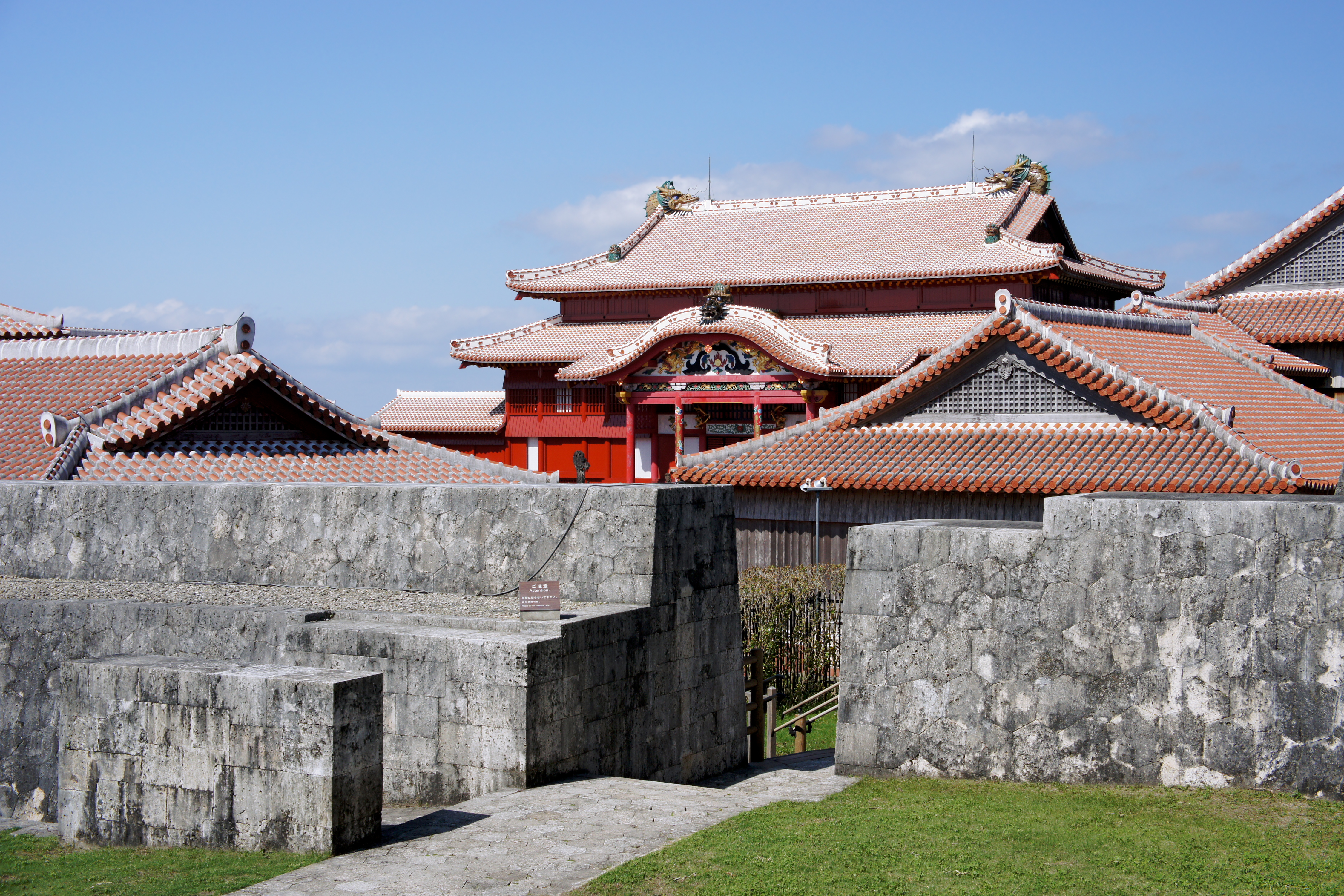
And Shuri castle in Naha. If taxes in France weren't so high, I think I would probably buy a castle like this in Japan or construct a replica if it turned out none were for sale.
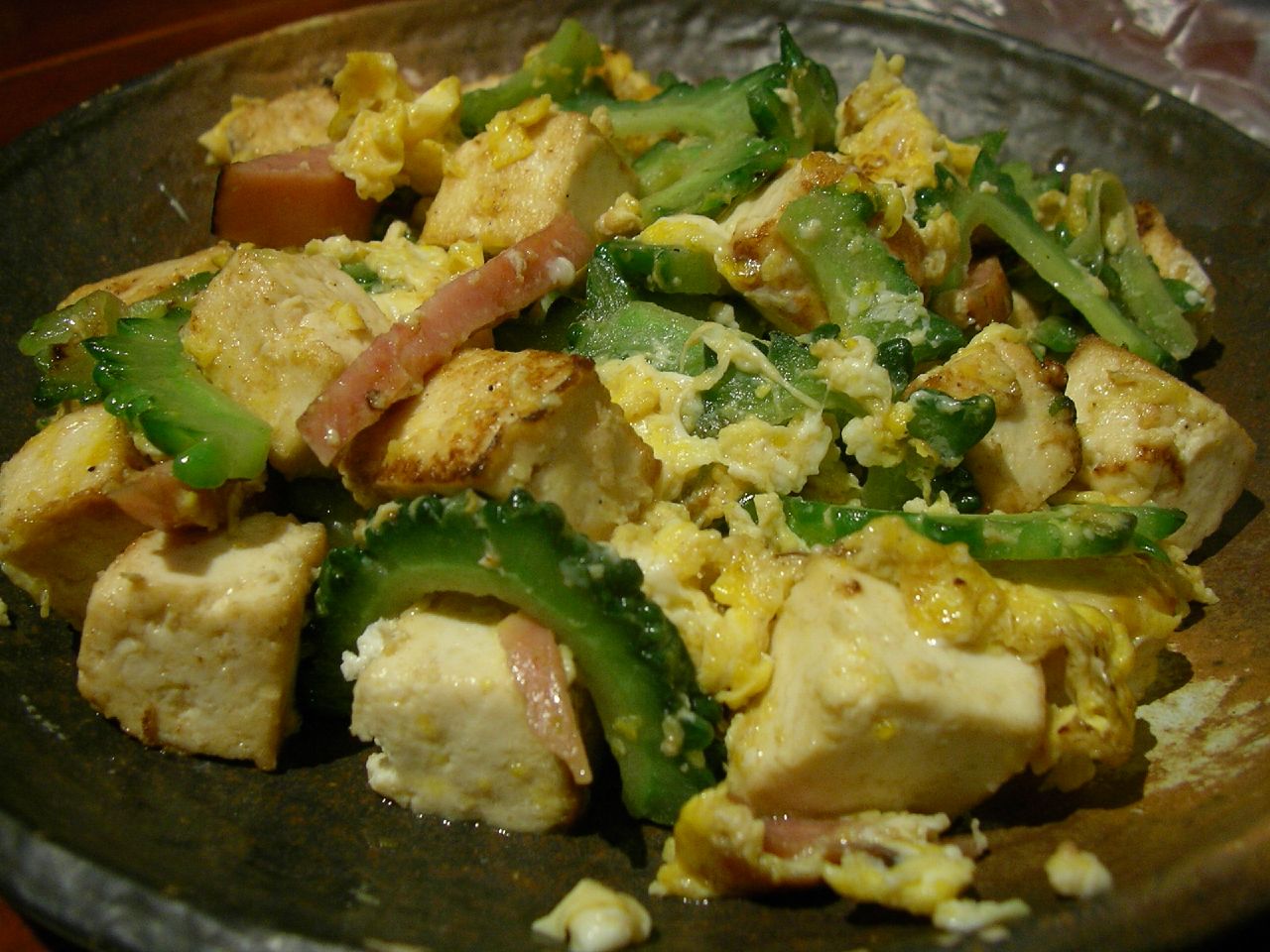
Anyway, though these aspects of Okinawa are lovely, one thing I must move onto is why I think the Okinawans are almost as naturally fabulous as we French. Okinawa, though unfortunately succumbing to the influences of the USA with its fast food emanating from its military bases, was previously famous for having the highest life expectancy in the world on account of the extremely good eating habits. Although the gastronomy isn't quite as stylish as in France, it was absolutely delicious. Probably the most famous dish is chanpuru, whose main ingredients are normally tofu, bitter melon, eggs and sliced pork or Spam (as for me personally, I dislike American cuisine and steer clear of Spam).
Another famous dish is Okinawa Soba. If anyone here is yuppie enough to be gluten intolerant, you should note that Okinawa Soba is not made with buckwheat like normal Japanese soba noodles. It is just that it has been known as Okinawa Soba for so long, that a dispensation has been given to allow the Okinawans to continue referring to them that way, even though they are made with wheat rather than buckwheat and they more closely resemble udon noodles.

One noteworthy feature of Okinawan cuisine is the fact that it doesn't use much fish, even though the island is an archipelago. Given the tropical climate, it was traditionally not very easy to store fish and the mountainous climate made transportation from the sea difficult. As a result, pork became a staple of the local cuisine rather than fish. Jews and Muslims may not like this situation, but past life expectancy figures for the island speak for themselves. A Frenchwoman is so effortlessly perfect that she doesn't feel the need to abstain from any foods, so long as they aren't unnatural (e.g. margarine) or excessively sweet, (e.g. cupcakes): - both of these food types are characteristic of less stylish people.
However, what I just adore about Okinawa is the commitment of the inhabitants to dainty eating. There is a famous Confucian saying which goes 腹八分, or in a transliterated form, "hara hachi bu", which translates roughly as "eat until you are 8/10 full". This avoids stretching the stomach and French women are also aware that if one eats slowly and daintily, one can feel full by the end of the meal, as one's stomach receptors take time to respond to say that they have received enough. The Wikipedia article about hara hachi bu claims that the Okinawans are the only people who deliberately practice calorie restriction at a societal level. I'm not sure what to make of this claim: - I suppose I would say that French women are so effortlessly perfect that they can feel full without needing to artificially practice calorie restriction. However, whatever the reason, one can look at the people of Okinawa and see how incredibly skinny they are: - 18 to 22 is a typical Body Mass Index for them. Healthy living is traditionally very well integrated into daily life there, as one can see in the video below.
It would be quite fun to have competitions with these people to see who can feel full on the smallest amount of food, but then such a competition would be impractical, given the difficulty in ascertaining whether or not someone is telling the truth: - anyone could just fake it! However, I have to concede that Okinawa is probably the only place in the world that has anything whatsoever that French women, in their effortless perfection, can learn from. The only problem I can see with life here is people succumbing to American lifestyle habits and obesity consequently rising. It is also noteworthy that Okinawa no longer has the highest life expectancy in Japan: - from what I have seen, Nagano seems to be top or nearly top of tables these days. The prefecture of Nagano also has an advantage that Okinawa doesn't have: - a Shinkansen line known as the Nagano Shinkansen.

Maybe I will visit the prefecture of Nagano next time I visit Japan, but for now, I am delighted to have spent time in a place outside of France where people know how to eat properly, are lovely and thin and actually have something to teach us effortlessly perfect French women.


.jpg/1280px-Gr%C3%A6sk_yoghurt_med_solb%C3%A6rsyltet%C3%B8j_og_m%C3%BCsli_(4776711227).jpg)

