Showing posts with label french. Show all posts

2017-01-13

Moving purposefully

I read an article just now about how South Korea is planning to revive its non-stop Seoul-Busan railway services (these two cities are the country's biggest).  It said that direct services had existed, but were discontinued, though they believe the economics are now different.  This got me thinking about one thing that is great about France's high-speed network: - the extensive use of non-stop or "infrequent-stop" services with great journey times.  Great journey times are fundamental to a good railway system.  The service planning that SNCF is probably the greatest thing about our high-speed network: - French train journey times are fantastic.  A Frenchwoman loves to sit back, unwind and enjoy the moment, but she manages her time efficiently and therefore does not want to uselessly spend an unduly large amount of time on trains because of ridiculous service and timetable planning: - she doesn't like to rush, but she loves to move purposefully.  She doesn't want to be stuck on a train going nowhere, whiling away the time in long dwell times at stations.  This would deduct from the time she has to shop for the latest fashions and the choicest ingredients at markets.


Apart from a Frenchwoman wanting to move purposefully, SNCF is always in a hard-slog battle to compete with air travel, which is never easy.  On some routes, it is in the lead (Paris-Marseille TGV services have an absolute majority), whereas the Paris-Orly Toulouse-Blagnac air route is the most congested in Europe.  I guess this is due to the prosperity of Toulouse, the prevalence of its aerospace industry there and the extremely long journey times (5h27m direct, 5h24m with an interchange).  When the LGV Sud-Europe Atlantique and the Toulouse branch of the GPSO (Grand Projet Ferroviaire du Sud-Ouest) are complete, journey times will be 3h14m with a stop in Bordeaux and 3h07m without, which will hopefully reduce air journeys drastically.


I know this is comparing apples and oranges, but roughly equivalent high-speed journeys in Germany for instance would take a very long time because of very generous timetabling and stopping patterns that prevent various routes from being competitive.  For instance, Hamburg Hauptbahnhof-Munich Hauptbahnhof (admittedly with a few high-speed gaps, e.g between Würzburg and Nuremberg is about 780km, but the fastest direct service is 5h38m (5h36m possible with interchange).  It stops in Hamburg-Harburg, Hannover Hauptbahnhof, Göttingen, Kassel-Wilhelmshöhe, Fulda, Würzburg, Nuremberg and Ingolstadt.  I am aware that Germany's settlement pattern is very different (lots of medium-sized cities everywhere), but they have missed several opportunities for reasonable journey times, e.g. by not building bypasses.  Apart from the Coburg bypass on the Erfurt-Nuremberg route to be opened this year, I struggle to think of high-speed bypasses in Germany where the town centre station is also served.  Given that Germans dislike anything outside the ordinary as far as punctuality goes, timetable planning often involves very generous run and station dwell times.  Probably, when they are planning timetables, they probably say, "How long does zis journey take at line speed?  Five minutes?  Give it an hour and ven it arrives on time, we will say, "Ve Germans are so efficient!""  There are plenty of stations that appear to be useless for high-speed traffic, given the low populations they serve, one example being Siegburg/Bonn station.


Austria also doesn't seem all that concerned about journey times: - whenever new railway improvements come along that should improve journey times, they always seem to slip in some more stops or journey time padding.  For instance, I cannot understand the need to stop Railjet trains in Jenbach.  Given that: -
1) Innsbruck, the major population centre, has a population of about 130,000, compared to Jenbach's 7,000
2) The Neue Unterinntalbahn (New Lower Inn Valley Railway) allows Jenbach to be bypassed at 220km/h
3) The Railjet trains, having a locomotive configuration, don't have particularly good acceleration
It therefore seems wasteful to stop trains in Jenbach.  I believe the Austrians were aiming for "1-2-3" journey times from Vienna, i.e. 1 hour to Linz, 2 hours to Salzburg and 3 hours to Munich and Innsbruck.  It is anybody's guess how this will be achieved if they are still pursuing it.  However, they will face some competition from Westbahn, which is planning to operate fast services to Salzburg (2h10m, compared to 2h22m with Railjet services), with alternate services going onward to Innsbruck (not sure of the journey times).


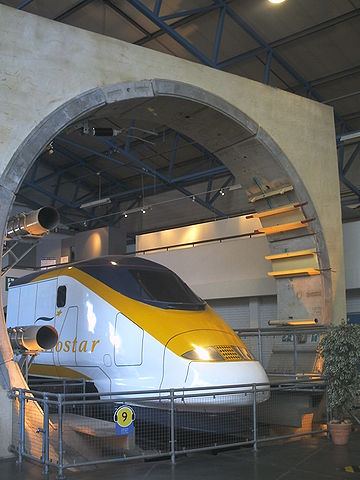
On the other hand, the French network has bypasses aplenty and is designed around great journey times.  Cities with high-speed bypasses where town centre through stations are served from both ends that I can think of include Douai, Arras and Lyon.  The LGV Sud-Europe Atlantique to Bordeaux will also include them at Tours (half in service, used by non-stop Bordeaux trains), Poitier and Angoulême, debatably Châtellerault as well.  Currently, there are no non-stop trains running to Marseille (seasonal, I guess), but where they exist, they have tended to offer journey times of 3h05m for the 742km journey.  Similarly, though the Paris-Bordeaux services only run on high-speed line to just beyond Tours, they offer non-stop journeys of 3h11m, which will drop to around 2h when the LGV Sud-Europe Atlantique enters service this year.  I don't quite understand the lack of a planned bypass at Bordeaux, given the need for Paris-Toulouse journey times to be competitive and a bypass for Eurostar trains not stopping at Lille Europe would be good, as the line goes round three sides of a square, but RFF has generally been enthusiastic about building bypasses.  I am loathed to speak favourably of anything British, but the Ashford bypass is a fantastic feat of engineering: - the line goes underground as it approaches the outskirts of Ashford, stays underground a little way, comes up alongside Ashford International station and runs on a flyover through Ashford, allowing trains to pass through at 300km/h.  This means I can minimise the time I spend in the unsophisticated UK, MDR!


I particularly appreciate good journey times when it is necessary to receive foreign clients at the Paris office, as well as during fashion show season (I hope Marseille becomes a fashion capital one day).  Many foreign visitors come to Paris thinking they will find a quintessentially French city with the Eiffel Tower, people eating frog legs and snails, people wearing striped jerseys and berets etc.  The Eiffel Tower is there and isn't going anywhere, but with all the immigrants and the foreign cultures they inflict upon us, Paris is definitely not a French city!  Other nearby cities, though they have immigrants, don't have them in quite such large numbers.  When they ask to see a more French city, there are several easily available options, e.g. Strasbourg (1h46m), Bordeaux (discussed above) etc.


One day, I hope people will realise the value of great journey times and their contribution to making France great.

2016-06-02

More pointless diatribes

As many readers will know, I have a particular dislike of the British journalist Zoë Williams, who is somewhat covetous of the effortless perfection that we Frenchwomen possess.  She wrote a review of Mireille Guiliano's French Women Don't Get Facelifts.


Nobody (save for our Lord and Saviour) is perfect, but I particularly like the way Mireille Guiliano proclaims the effortless perfection of French women.  In this book, she tells the world how French women age well, choosing natural beauty over horrid facelifts.


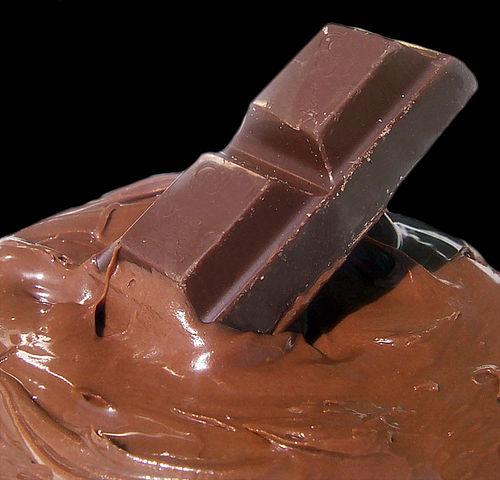
It is not as if we Frenchwomen don't know anything about ageing.  French women tend to rank very highly in life expectancy tables.  According to the OECD, in 2013, only Japan and Spain had higher female figures (pun intended).  Many will be aware of Jeanne Calment, who lived her whole life in Arles, a town not too far from Marseille.  Some of the stories she told were a bit silly, e.g. eating 1kg of chocolate a week.  Any Frenchwoman will tell you that if you did this, you would be incredibly fat, especially given the reduced physical activity that comes with advancing age (unless one is very diligent).  Mireille Guiliano recommends a one-square fix of chocolate each day.


Many Anglo-Saxon women choose to have cosmetic surgery after giving birth, e.g. to remove surplus skin, stretch marks etc.  Having just had a baby, I know that it can be a challenge to avoid the changes to one's tummy, but it can be done.  If you look after your body, you can keep your skin supple and able to cope with the changes pregnancy brings.


I note the bitchy comment about the supposed contradiction between not spending a lot on vitamins, but spending money on Bottega Veneta.  A Frenchwoman knows that nature is best when it comes to food and real natural stuff does not come at great cost.  However, when one buys fashion, one pays for the skill of the designer.  Granted, there are some deviations to this rule, but generally, you get what you pay for in the word of fashion.


I also disagree with the comment that watching one's weight and receiving admiring glances are a betrayal of feminism.  Readers will be aware of my desire to allow Bilal to build our family in the image of the Bible (with the husband as the head).  Zoë Williams would say the Bible oppresses women, to which I would say that she doesn't know about the very capable businesswoman in Proverbs 31, but anyway.  A Frenchwoman knows that it is possible to both look good and do well in life, be this one's career, business, politics etc.  Segolène Royal was, as Bilal would say, well buff (though far less so than me).  Granted, she lost to Nicolas Sarkozy, but in my opinion, that was because she promoted socialist policies which France did not need.  Mireille Guiliano was the CEO of Veuve Cliquot before her retirement and she wrote all these books showing the world how wonderful we Frenchwomen are.  Who says such women have betrayed the feminist revolution?


I always find Zoë Williams' francophobic diatribes funny and I particularly loved her rant in the last two paragraphs about Mireille Guiliano playing, as I understand things, a Borat-style naïve foreigner.  However, when I finished laughing, I thought to myself, why doesn't she just face up to the fact that we Frenchwomen know how to be beautiful and live life to the fullest?

2014-02-01

Coeliac disease is no longer a yuppie illness

Over Christmas, Bilal had some very strange times.  Being my new boyfriend, he was invited to spend Christmas with my family, given that his gormless family members don't celebrate this occasion.  I remember when my mother invited him over.  He seemed very unenthusiastic, but my mother persisted and he agreed to spend Christmas with us reluctantly.  I stayed in my own flat while he stayed with my parents.  I was enthusiastically looking forward to having Les Treize Desserts, that great Provençal equivalent of a smörgåsbord.
One of the things that has been regarded as extremely odd about Bilal is his refusal to eat any local French cuisine.  There are a few specialist shops in or near La Savine selling traditional Malian products and Bilal always refused to eat anything other than traditional Malian cuisine and nobody had the faintest idea why.  Our church is one where people tend to stay the whole day.  Given Bilal's responsibilities at church, it was not really practical for him to go back to La Savine and come back again for his next task, so he would bring in a packed lunch, perhaps eating it in a room out of sight.  Even on House Party, he would insist on bringing his own food and he would cook it himself if need be, setting up a fire to cook taguella, a traditional Malian bread, which tends to be cooked in sand and ashes.
During the various meals at Christmas, Bilal was constantly trying to make excuses not to participate in mealtimes, saying that he didn't have much of an appetite.  In France, this is quite normal for women with dainty figures such as myself, MDR.  However, it is not normal for a man to have no interest in food: - as I have explained in a previous posting, if a Frenchman is overweight, it is regarded as a sign that he is living the good live.  Anyway, Bilal found that there was no way to avoid eating food at my parents' home without seriously offending those who had cooked it, so he reluctantly ate the food available.  I did not witness the events of the early hours of Christmas Day, as I was sleeping in my own flat after the midnight celebrations of Christmas Eve.  However, when I arrived on Christmas Day, I saw Bilal walking towards the door of my parents' home in order to leave and looking very upset and humilliated.  There was quite a commotion of people trying to persuade him to stay.  What apparently happened is that in the early hours of the morning, he had some extremely violent bowel problems and unfortunately, because the bathroom is not soundproofed, he was not able to hide the sounds resulting from these violent bowel problems and he made very loud moans of pain.  Toilet humour is not exactly to a French woman's taste, so I will bypass some of the details.
After a lot of persuading from me and my parents, Bilal eventually agreed to stay.  This he did for a few further weeks and he ate whatever food was in front of him (and continued having the same bowel problems).  One of my relatives who is known for being a hypochondriac happened to be staying with us this Christmas.  She spoke with Bilal and persuaded him to see a doctor.  Bilal is quietly a macho man, as he is used to surviving in harsh conditions in the Sahara Desert facing down threats to his family's livestock, be they wild animals, armed raiders, lack of water etc, so he wasn't all that enthused by a visit to the doctor.  However, after a very large amount of persuasion, he agreed to visit the doctor.  The doctor took a blood sample from him and told him to visit for a follow-up appointment to discuss the results after the sample had been tested.
When Bilal returned for his follow-up appointment, the doctor asked his permission to refer him to the local hospital for a biopsy, as the blood sample confirmed suspicions that there were antibodies present.  Bilal was a bit apprehensive, but he agreed, as he felt that if there was something wrong with him, he may as well stick the course and find out.  I remember accompanying him to hospital for the biopsy and seeing how nervous he was, even though a biopsy is a reasonably routine surgical procedure.  In this case, it involved pushing a tube all the way through his digestive system and scraping out a sample of his lower intestine.  The sample was later analysed to see if the villi had been blunted on account of inflammation, as in the picture below.
When Bilal visited the doctor again, the doctor informed him that he has coeliac disease (spelled "celiac" by silly Americans who like to murder the English language).  Coeliac disease is an autoimmune condition in which ingestion of gluten causes the villi in the lower intestines to become inflamed.  It is lifelong and there is no way of treating it; one can only prevent the negative effects thereof by not eating gluten, which is found in wheat, barley, rye and spelt.  All this perfectly explains why Bilal never liked deviating from normal Malian cuisine.  Malian cuisine, particularly in the north, is not completely free of wheat, though Bilal comes from the area around Timbuktoo, which is further south.  The foods he tends to eat include taguella (a bread made out of millet flour), rice, beef, mutton, goat, chicken, baobab leaves, spinach, jollof rice, fufu (no, this has nothing to do with men being camp, in spite of how its name sounds), maafe etc.  These foods are not sophisticated in the opinion of a stylish Frenchwoman like myself (at least in the way they are prepared in Malian cuisine), but unknowingly, it appears that they allowed Bilal to live with coeliac disease for so long.  He abstained from French cuisine (in which gluten features so heavily), as he found it inflamed his bowels.
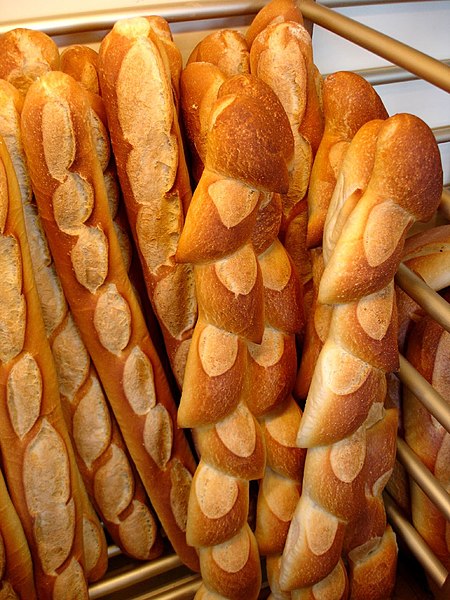
I don't personally know what I would do if I had coeliac disease myself.  I would struggle to abstain from all those foods with gluten in them that make French cuisine so sophisticated.  Granted, not all French recipes have gluten in them: - tartiflette and cassoulet are two examples I have discussed in previous blog posts that don't normally contain gluten.  However, I would struggle to do without my morning baguette: - a micro baguette of course.  One can buy large French sticks like the ones in the photo above.  However, as Mireille Guiliano agrees, the optimum size of a portion of bread for a sophisticated Frenchwoman such as myself is about the size of an old cassette tape.  Gosh, I feel so old, given that I can remember these!  Still, as Zoë Williams correctly points out (grudingly and somewhat sarcastically), we Frenchwomen excel in all of life's seasons, whether it be the young filly season or the old bag season, tee hee.
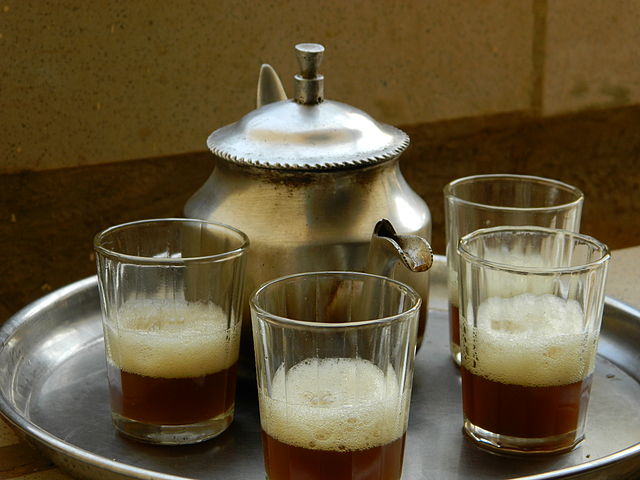
Anyway, enough about that silly woman!  Bilal has introduced me to various aspects of Malian cuisine and some of it, though nowhere near as sophisticated as French cuisine, at least appears to be vaguely edible.  I am particularly curious about the way tea is drunk.  Normally, what happens is they pour the tea from a great height into the pot several times over.  Supposedly, this enhances the flavour, but even my sophisticated French palate can't tell the difference, so I have no doubt that this is made up.  It isn't as sophisticated as Mariage Frères tea, but it is just about bearable.  Still, if I get married to Bilal, I will have to make some adjustments: - it won't do for him to be in bed alongside me and having bowel problems!  MDR!
So there you have it: - coeliac disease is definitely not a yuppie disease (along the lines of man flu), as I indicated in a previous blog posting about gluten intolerances, tee hee!  Bilal is about as un-yuppieish (yes, I acknowledge there is no such word) as you can imagine.  Granted, some Anglo-Saxon yuppies like to spend ages reading medical textbooks and therefore induce symptoms psychosomatically, but occasionally, there are genuine cases of food issues and Bilal is one such example.  All you yuppies out there, stop pretending you have diseases you don't really have!  It makes a mockery of the people who really do have them!

2013-10-11

Effortless perfection means exercise without trying

One thing that helps make we Frenchwomen impossibly and effortlessly perfect is our tendency to walk or take the stairs where practical.  Just like Mireille Guiliano, I cannot understand the American tendency to drive to the gym and put oneself through endless pain and then eat like a pig, thereby making the time in the gym wasted.


I completely share Mireille's disdain for the American idea of "no pain no gain".  A French woman's aim in life is to have as much pleasure as possible.  A French woman, in her effortless perfection, gains great pleasure from delicious morsels of food, savouring every bite.  Given the famous restaurant scene with Meg Ryan and Billy Crystal in Katz's Delicatessen in Nuu Yawk in "When Harry met Sally", even American women should know very well that it is possible to gain pleasure from food to the extent that one emits strange moans and groans!  I make similar noises when I consume a piece of chocolate that is 85% cocoa or higher!  For this reason, I tend to consume the 85%-plus varieties of chocolate only when I am alone, so as to save attracting attention!


The fundamental rule of losing weight is that the calories that enter our body must be fewer in number than the calories leaving our system.  With this in mind, there are only two ways to achieve this negative balance of calories: - exercise more or eat less.  A Frenchwoman knows that the latter is by far the most effective strategy.


When it comes to exercise, there are two points that a Frenchwoman knows.


Firstly, if one eats like a pig, then it is necessary to do ever more exercise to look like an impossibly perfect Frenchwoman.  A Frenchwoman loves being active, but she knows that she will hate active pursuits if she has to do them just to stay thin.  Therefore, what a Frenchwoman does is eat foods of the highest quality in the daintiest quantities so that exercise she does do tends to be for pleasure only.  As I say, a Frenchwoman goes out of her way to make sure she has as much pleasure as possible.


Secondly, the exception to that rule is passive exercise.  A Frenchwoman will try and fit as much exercise as possible into her normal routine.  When I lived in London when I was building up my career in the fashion magazine industry, I got tired of all the disapproving stares I got from overweight colleagues when I walked distances they would take public transport for or when I took the stairs in situations when they would take the lift!  Stupid people!  If they paid attention to the things a Frenchwoman just instinctively knows, they wouldn't be so fat!  This article concentrates on passive exercise.


When I receive American guests in Marseille who arrive via the train station (train travel is a bit "ye olde worlde" for them until they see how sophisticated we French are in this area), if they don't insist on taking a taxi to the Vieux Port for me to introduce them to the various cafés selling pastis, they will at the very least insist on taking the metro!  As for me personally, I have never used the metro (which has been in operation since 1977) and I don't plan to.  It is not that I dislike trains in any way (though I generally think the idea of a rubber-tyre metro is bonkers), but the distances covered by the metro are a long way within distances I would walk.  Ditto the tram system.  Maybe the metro and tram systems were built just for the tourists?


I also like to introduce people to the Calanques.  I like to walk all the way to the Calanques around les Goudes sometimes, but if someone is staying in Marseille only briefly, the walk there and back can take out a big chunk of the time.  This is where "Le vélo" comes in: - this is Marseille's equivalent of Boris Bikes and its arrival in 2007 pre-dates Boris Bikes by a long time.  There is something very French about riding a bike (and wearing a stripey jumper and a beret and having some onions in a string over one's shoulder, MDR).  Not surprisingly, as although Karl Drais (a German) invented the Laufmaschine (powered by the rider using a walking motion), Pierre Michaux, Pierre Lallement and the Olivier brothers invented what seems to be the first example of what we know of as a bicycle, given that it was pedal-driven, in the 1860s.  Also, the Michaux company was the first to mass-produce what was then known as the velocipede.  Anyway, I digress.  American visitors tend to want to take a taxi to see the Calanques, but I find that rather silly.  One would have to be super-unfit to take a taxi in preference to a bike to get there.


Granted, I tend to take the TGV when I travel to Paris, as the journey is almost 750km, which is a little impractical for walking.  Also, London-Paris is around 450km, but one is not allowed to walk inside the Channel Tunnel, MDR.


I also can't understand why unfit American guests who visit my home insist on taking the "ellllllevadorrrrrrrrrrrr".  They tend to be puffed out after the first floor.  I have sometimes made the mistake of asking American guests to help me carry shopping home on the way back from the station and up to my penthouse flat: - these people are used to doing this by car.  I love to share with people the delights of the pine smell in hot weather on the hill on which Notre Dame de la Garde, but if someone is that unfit, they aren't going to keep up with me and Americans don't know how to appreciate simple pleasures in life anyway.


Americans like to look disapprovingly at me when I say that I refuse to set foot in a gym, but they don't realise how fit French women are on account of exercise built into their routine such as walking and using the stairs.  In their stupidity, they pay huge sums of money to get an effect that we French women get for free.  American and British women should look to our example of seeking maximum pleasure in all we do: - training ourselves to be full on as little food as possible so that we can afford to only set out to do vigorous pursuits when they give us pleasure.

2013-10-03

Misperceptions about French women being chainsmokers

One thing that bothers me considerably about the perceptions English and American people have of we French women is that we are only slim because we smoke like chimneys, mentioning that tobacco causes appetite-suppressing effects.  This is nonsense.  There are various reasons why a French woman is able to feel full on very little food.   Firstly, her taste buds are able to discern the finest flavours and, if she follows this up by eating them, she gets her jollies primarily from the taste, rather than her stomach being stretched (as is the case with gluttonous American and British women), causing her to feel full.  Secondly, France contains only the finest ingredients and recipes, combined with innately capable chefs, making this possible.  I must point out that smoking is most unattractive to my way of thinking.


I recall Zoë Williams' article that I discussed in an earlier posting, where she said words to the effect that rather than rant like she was doing, a Frenchwoman would light up another fag and say, "bof".  According to data at http://en.wikipedia.org/wiki/Prevalence_of_tobacco_consumption , the smoking rates in the USA are 26.3% and 21.5%, in the UK, they are 36.7% and 34.7% and 36.6% and 26.7% in France for men and women respectively.  Granted, American data seems to be significantly lower, though it appears the smoking rates for British women are higher than for French women.  


However, there is a huge difference in the obesity rate in France, according to the CIA's statistics at https://www.cia.gov/library/publications/the-world-factbook/rankorder/2228rank.html , which says that the USA's figure is 33%, the UK's figure is 26.9% and France's figure is a paltry 18.2%!  Now, one could argue that there are lies, damned lies and statistics, but the suggestion that French women are only slim because they smoke so much is untrue: - firstly, it is not backed up by data and secondly, it is just an excuse for gluttonous American and British women to gorge themselves on gigantic quantities of food endlessly and avoid taking responsibility for being disgustingly obese.


I have some advice for such people: - slavishly replicate the French way of life so you can be effortlessly perfect like Frenchwomen.  I have often mentioned my English mother.  She openly admits that she was disgustingly overweight in her teenage years because she ate gigantic quantities of low quality food.  She went on family holidays to France, though she didn't lose any weight then because she was still in her substandard English eating habits.  However, she went to France on a week-long exchange visit with her secondary school during Year 10 (the year one attends in Britain when one is 14/15 years old).  Though a week is not long enough to burn off huge quantities of flab, she lost a notable amount of weight in that week alone.  She enjoyed that week so much that she asked if her exchange family would allow her to stay over her school's summer holidays: - her host family was immediately enthusiastic, as it greatly enjoyed her company.  Her parents were initially reluctant, but she pestered them endlessly to agree to this until they caved in.  She then spent her summer holidays in France and when she returned home, her father said, "You look like you're suffering from anorexia or bulimia!"  


Silly Grandad!  He didn't know that my mother's stay in France was the making of her as an effortlessly perfect Frenchwoman.  When my mother was back in England, she was constantly lecturing her family members about how to cook properly and they grew grumpy, because hey, the truth hurts!  Her French teacher was very pleased with her greatly improved performance though and scored the top grade in O-level French, going on to study French as part of her A-levels, again scoring the top grade.  By the time she was halfway through her A-levels, she decided she was fed up of backward British attitudes and the general lack of sophistication, so she applied to French universities.  The day she received her A-level results was the happiest day of her life, as her grades were more than good enough to get into her choice of university (in Marseille) and she was able to kiss goodbye to her unsophisticated homeland.  She occasionally returned for important family events, such as weddings, funerals etc, but after departing for Marseille, she never returned to Britain for any length of time.


In other words, it is quite possible to be impossibly thin and perfect like a Frenchwoman: - my mother is testament to the fact that being impossibly perfect is possible.  As mentioned in an earlier posting, she only eats the daintiest quantities of the highest quality of food and she will not take the lift or escalator unless her destination is at least 10 floors away.  Also, she gains huge pleasure from eating dark chocolate and finds chocolate with less than 60% cocoa repulsive.  She knows French cheeses inside out and can identify pretty much every French wine by its taste alone.  She does everything in Mireille Guiliano's French Women's Manifesto.  And she doesn't smoke.

To all the American and British women reading this posting, stop using the nonsensical idea that French women smoke all the time as an excuse for not accepting responsibility for your weight and be effortlessly perfect like we Frenchwomen!

2013-09-07

Okinawa, Japan's closest thing to effortless perfection

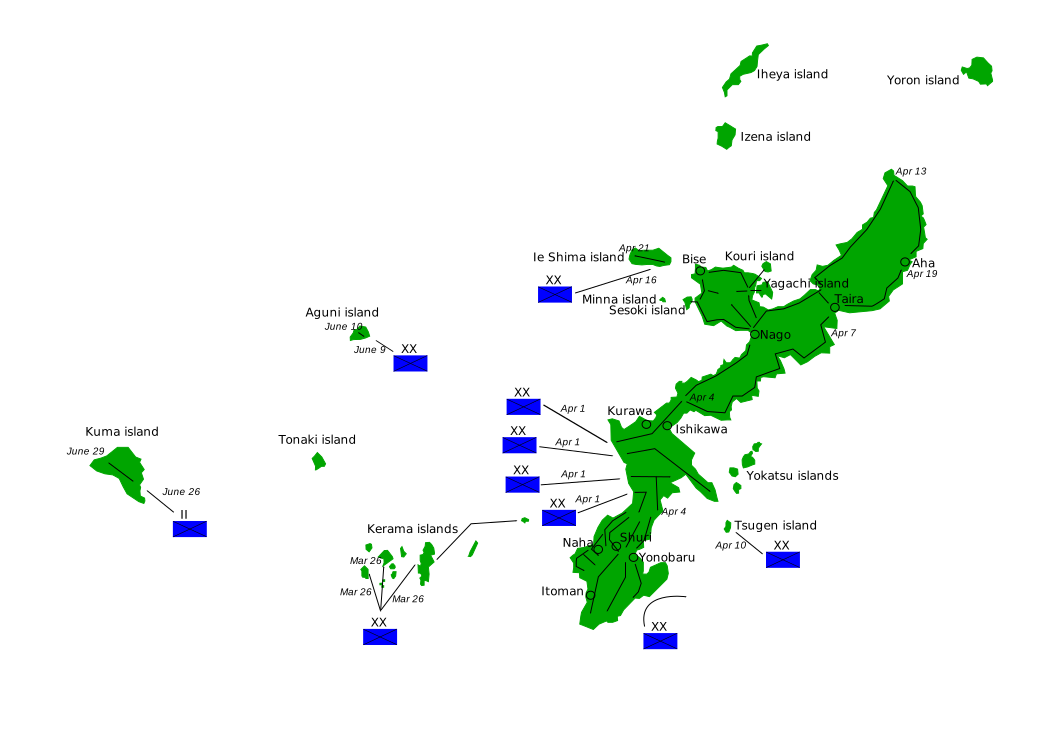
I thought I would revisit my trip to Japan and discuss a region of the country I visited that I particularly liked.  The region in question is the archipelago province of Okinawa.  As you will see, it was my favourite region of the regions I visited on account of the people there being almost as naturally fabulous as in France.


Okinawa is a province (prefecture) of Japan with a colourful history.  Anecdotally, I have heard that it received more Chinese influence than other Japanese provinces, given its proximity.  The area was pivotal during WWII (a quarter of the population was killed in the 1945 Battle of Okinawa) and to this day, the Americans maintain bases on the archipelago (3/4 of American bases in Japan are in this province).  This is a source of controversy, given various sexual assaults that have been perpetrated by American soldiers against local women (if American soldiers are as fat as the rest of the American population, no wonder rape seems like the only option to them).


Being an archipelago province, Okinawa has very little in the way of railways: - as far as I know, the monorail linking the airport to the centre of the city of Naha is the only one.  I personally think monorails are generally a rubbish way of doing things when it comes to railway technology, given that the ride is less comfortable, they use less common technology (driving up the price), they don't corner so well etc.  The only advantage I can think of is that the flyovers needed to support them aren't so wide.  I am aware that the island also has at least 13 airports: - a necessity, when you consider that the archipelago stretches over 1,000km.


The islands stretch in a gradual fashion from being not far from the coast of the Japanese island of Kyushu to, at the the furthest extremity, not far from the coast of Taiwan.  I was informed that the island of Ishigaki was the major inhabited island that was furthest south and so decided to visit there as well as Okinawa.  According to http://en.wikipedia.org/wiki/Ishigaki,_Okinawa#Climate , the climate seems to be borderline tropical: - I recall that for a climate to be defined as tropical, all the monthly average temperatures need to be above 18 degrees celcius.  With the January average temperature being 17.7, the island's climate falls short of being classed as tropical by 0.3 degrees celcius.  I loved the tropical weather and vegetation on the island.  Once I accumulate enough money from sales of my magazine, I plan to buy some homes in other areas of the world: - Japan is one place I plan to buy some, with the island of Ishigaki or its environs being one place.


Naha, the prefecture's capital, is a reasonably major metropolis, even if it isn't as major as Tokyo and it isn't as stylish as Paris and Marseille.


The archipelago produces some lovely and cute pottery.  I nearly filled up my suitcases with the stuff and it looks pretty in my cabinets in my homes in Paris and Marseille.


On account of the rich history, there are some beautiful historical buildings to see, such as the Gusuku ruins.


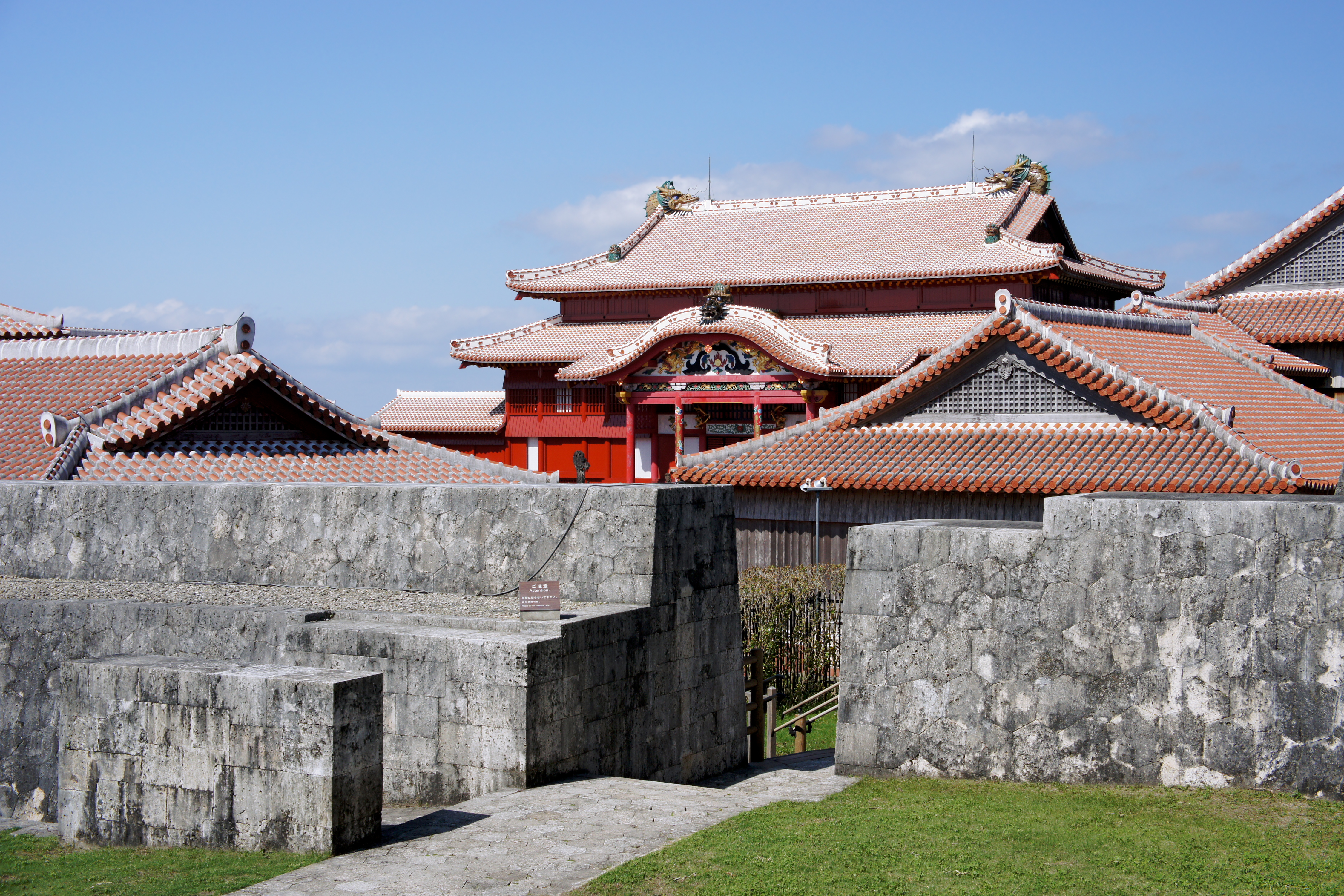
And Shuri castle in Naha.  If taxes in France weren't so high, I think I would probably buy a castle like this in Japan or construct a replica if it turned out none were for sale.


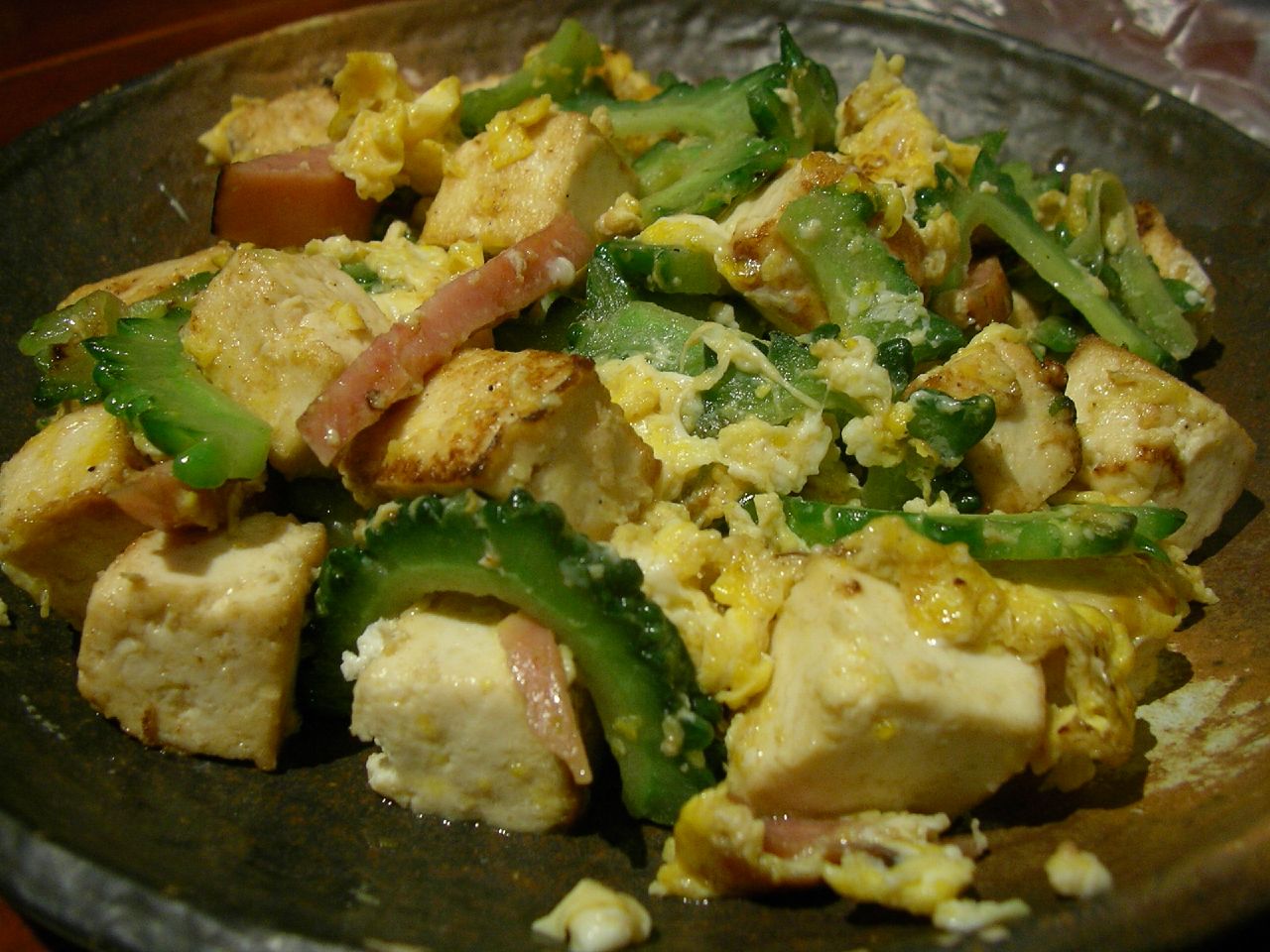
Anyway, though these aspects of Okinawa are lovely, one thing I must move onto is why I think the Okinawans are almost as naturally fabulous as we French.  Okinawa, though unfortunately succumbing to the influences of the USA with its fast food emanating from its military bases, was previously famous for having the highest life expectancy in the world on account of the extremely good eating habits.  Although the gastronomy isn't quite as stylish as in France, it was absolutely delicious.  Probably the most famous dish is chanpuru, whose main ingredients are normally tofu, bitter melon, eggs and sliced pork or Spam (as for me personally, I dislike American cuisine and steer clear of Spam).


Another famous dish is Okinawa Soba.  If anyone here is yuppie enough to be gluten intolerant, you should note that Okinawa Soba is not made with buckwheat like normal Japanese soba noodles.  It is just that it has been known as Okinawa Soba for so long, that a dispensation has been given to allow the Okinawans to continue referring to them that way, even though they are made with wheat rather than buckwheat and they more closely resemble udon noodles.


One noteworthy feature of Okinawan cuisine is the fact that it doesn't use much fish, even though the island is an archipelago.  Given the tropical climate, it was traditionally not very easy to store fish and the mountainous climate made transportation from the sea difficult.  As a result, pork became a staple of the local cuisine rather than fish.  Jews and Muslims may not like this situation, but past life expectancy figures for the island speak for themselves.  A Frenchwoman is so effortlessly perfect that she doesn't feel the need to abstain from any foods, so long as they aren't unnatural (e.g. margarine) or excessively sweet, (e.g. cupcakes): - both of these food types are characteristic of less stylish people.


However, what I just adore about Okinawa is the commitment of the inhabitants to dainty eating.  There is a famous Confucian saying which goes 腹八分, or in a transliterated form, "hara hachi bu", which translates roughly as "eat until you are 8/10 full".  This avoids stretching the stomach and French women are also aware that if one eats slowly and daintily, one can feel full by the end of the meal, as one's stomach receptors take time to respond to say that they have received enough.  The Wikipedia article about hara hachi bu claims that the Okinawans are the only people who deliberately practice calorie restriction at a societal level.  I'm not sure what to make of this claim: - I suppose I would say that French women are so effortlessly perfect that they can feel full without needing to artificially practice calorie restriction.  However, whatever the reason, one can look at the people of Okinawa and see how incredibly skinny they are: - 18 to 22 is a typical Body Mass Index for them.  Healthy living is traditionally very well integrated into daily life there, as one can see in the video below.


It would be quite fun to have competitions with these people to see who can feel full on the smallest amount of food, but then such a competition would be impractical, given the difficulty in ascertaining whether or not someone is telling the truth: - anyone could just fake it!  However, I have to concede that Okinawa is probably the only place in the world that has anything whatsoever that French women, in their effortless perfection, can learn from.  The only problem I can see with life here is people succumbing to American lifestyle habits and obesity consequently rising.  It is also noteworthy that Okinawa no longer has the highest life expectancy in Japan: - from what I have seen, Nagano seems to be top or nearly top of tables these days.  The prefecture of Nagano also has an advantage that Okinawa doesn't have: - a Shinkansen line known as the Nagano Shinkansen.


Maybe I will visit the prefecture of Nagano next time I visit Japan, but for now, I am delighted to have spent time in a place outside of France where people know how to eat properly, are lovely and thin and actually have something to teach us effortlessly perfect French women.