2013-12-29

Cassoulet: - a very naughty French dish (supposedly)

One thing I have noticed is that Anglo-Saxon women like to talk about "naughty" foods, i.e. ones that contain fat.  This shows a very poor understanding of how to eat properly.  A Frenchwoman does not go around thinking about forbidden foods and which foods are "naughty" to eat.  Silly Anglo-Saxon woman talk about "naughty, but nice", as shown in the advertisement below (whose saying was popularised by Salman Rushdie) for cream cakes that featured a now-mostly-retired washed-up soap and Carry On actress (Barbara Windsor, who played Peggy Mitchell in the silly trashy British soap opera EastEnders, where vem characters off of it don't neva talk wiv no proper grammar).
As Mireille Guiliano pointed out, a Frenchwoman doesn't watch much television, so I can't really comment too authoritatively, but anyway, I digress.  A Frenchwoman doesn't do this "naughty, but nice" group.  It is mostly true to say that a Frenchwoman does not abstain from any food types, not even fatty ones.  As a reformed baptist, I am aware of at least 10 parts of the New Testament which say that all foods are fine (Matthew 15:11, Acts 10:9-16, Acts 11:1-10, Romans 14, 1Corinthians 8, 1Timothy 4:1-5, Titus 1:15, Mark 7:14-23, 1Corinthians 10:23-33 and Luke 10:8 for the readers who are interested to look them up).  The only exception to this rule is when the foods are excessively sweet.  As I often say in this blog, as far as an impossibly dainty and sophisticated Frenchwoman is concerned, a dessert should only be as sweet as it needs to be to cleanse one's palate of the previous dish.  Any sweeter than that and it becomes increasingly less sophisticated.
Onto the main point of this article, ignoring the disgusting-looking cupcakes above.  A few days ago, I was contacted by a reader in Barcelona who said that though tapas were available, it wasn't always possible to find the rich foods that would enable her to eat like a dainty Frenchwoman.  I could have told her that cassoulet is vaguely similar to the Spanish Fabada Asturiana, but I don't want her to think anything is even remotely comparable with French cuisine, so I suggested that she visit France more often, MDR.  She said that France wasn't all that accessible, given the low quantity of direct daytime trains, mentioning that the night service to Paris was due for imminent abolition.  I replied by pointing out that earlier this month, RENFE and SNCF started offering more cross-border services this month (previously, the French TGVs only went as far as Figueres) and that two of the new destinations served are Carcassonne and Toulouse.  These two settlements plus Castelnaudary are rather blasphemously referred to as the Holy Trinity of cassoulet, a very well-known dish that helps make we French people as stylish as we are.  Carcassonne is accessible in 2h22m from Barcelona using the new service and Toulouse in 3h07m, which uses the RENFE S-100 rolling stock (notably built by Alstom, a French manufacturer, tee hee), which can be seen below in Seville's Santa Justa station.
All in all, it is very easy for residents of Barcelona to travel to two of the three locations where cassoulet is native to.  Cassoulet is a very, very rich French dish.  On account of its very rich flavour, a dainty Frenchwoman feels no great need to eat large quantities of it.  It is almost the case that a Frenchwoman can take a few dainty nibbles and feel full, savouring each nibble to the fullest, as I have described doing with chocolate in earlier postings.  I have been in Carcassonne and seen stupid Americans ordering four cassoulets per person (because they look around and see how small the dishes are and assume this won't fill them up) and then finding themselves unable to get beyond the second helping.  Still, at least most of them had the good sense to appreciate the beauty of Carcassonne.  As today's weather forecast was relatively good, I suggested a visit to Carcassonne with Bilal.  As the regular readers of my blog will know, Bilal is a solitary character and has therefore not always found much occasion to travel to other areas of France, so he appreciated the change of scenery.
The main ingredients of cassoulet are meat (e.g. pork, goose meat, duck meat etc), pork skin and white beans.  This is one pleasure that a Frenchwoman can therefore enjoy whilst being relatively free of Muslims and Jews: - being a reformed baptist who believes in the principle of sola scriptura, I refer to the above parts of the Bible when someone asks me how I can gain so much pleasure from cassoulet, knowing that supposedly forbidden foods feature so heavily in it (ditto Saucisson d'Arles).  For a few years after his conversion to Christianity, Bilal continued abstaining from pork and restricting himself to halal food, so as to avoid compromising his witness with his family.  After a few years though, he eventually stopped bothering to abstain, as he realised that it is a minor issue in the enormous gulf that separates him from his Muslim family members, though he avoids doing so in front of his family still.
Bilal tried cassoulet for the first time during our visit to Carcassonne today and he also gained an enormous amount of pleasure from the incredibly rich flavour, though this is not something Bilal plans to eat regularly.  The reason for this is that Bilal is an extremely heavily built guy and needs a lot of protein to fulfil his needs, meaning that rich foods of which he feels only able to eat dainty quantities are not ultimately in his best interests.  As ever, Bilal wore his tagelmust/chèche to Carcassonne and this provoked a few stares (I also got a few stares from foreign men not used to seeing dainty Frenchwomen like me, MDR).  However, this was a wise decision, as it was fairly windy and I felt a little cold, while Bilal was wrapped up comfortably warm.  Below is a picture of a Touareg man who appears engaged in thought.  This is not Bilal, but he can often be seen with such facial expressions.
Bilal and I enjoyed our trip to Carcassonne today and I am looking forward to several such days out with him on Saturdays in future: - when one is able to engage Bilal in communication, he is a very personable man with a lot of insightful things to say.  One weekday evening, I would like to show him how to cook cassoulet, tartiflette and all the other wonderful dishes that make we Frenchwomen impossibly perfect and thin: - he was not previously used to it, but he enjoys the culinary variety.

2013-12-25

French Christmas dinner is more stylish than any other

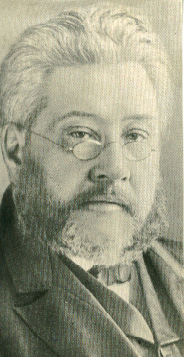
This year, I ate Christmas dinner with my own family plus Bilal: - his stupid parents won't have anything to do with Christmas.  Granted, some reformed Christians had no time for Christmas either, viewing it as an extra-scriptural obligation.  Charles Spurgeon dissented from this view to a small extent, saying, "However, I wish there were ten or a dozen Christmas-days in the year; for there is work enough in the world, and a little more rest would not hurt labouring people."

Eating Christmas dinner (known in French as "Le Gros Souper" and "Lou Gros Soupa" in Provençal), I thought to myself about how stylish we French are when it comes to what we eat at Christmas.  Le Gros Souper is traditionally eaten before Midnight Mass (which we don't have, as it is too Roman Catholic).

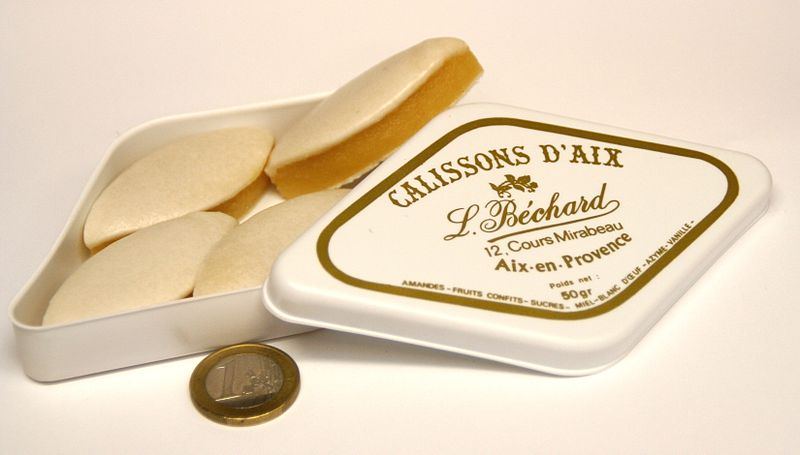
A recent survey showed that the British Christmas dinner was the least healthy in Europe and the French Christmas dinner the healthiest!  See!  Even the British media can't help but tell everyone how impossibly perfect we French are.  We don't want to put rubbish into our bodies, but we really do go to town when it comes to preparing proper Christmas dinners.  As I was born and raised in Provence, we naturally had the Thirteen Desserts.  No!  I do not mean thirteen excessively sweet desserts such as cupcakes as some stupid Americans might be inclined to think upon reading this!  In Provence, we are far more sophisticated than that.  Sweet things are not completely off the menu: - I make mention of Calisson, a Provençal dessert which is made of candied fruit and royal icing.  As you can see below, they are naturally made in dainty sizes that are appropriate for French women with dainty figures such as myself.
For people who cannot get by without sweet foods, a Frenchwoman also likes nougat blanc and nougat noir au miel at Christmas.  As for main courses, we have things including smoked salmon, chestnut stuffed turkey, roast chicken and that delicious French dish Foie Gras.  Hopefully nobody was daft enough to think we Frenchwomen would go fat-free at Christmas!  A Frenchwoman loves rich foods like Foie Gras and would never consider low-fat low-flavour options!
We do enjoy some healthy options as part of a traditional French Christmas dinner though.  These include melons, oranges, apples, pears etc.  Nuts are also included, particularly in Les Treize Desserts.  The British and Americans tend to buy them in huge quantities and so they are no longer regarded as a delicacy like they used to be.  It is the same with fruit.  In the immediate post-war era, British children were content with things like oranges in their christmas stockings, but now they want the latest X-Box One, PS4 and Wii-U games.  I would refer them to the book "Why French Children Don't Talk Back" by Catherine Crawford to remind them of the fact that we French know what we are talking about in everything, even child-raising.
As you can see above, Les Treize Desserts tends to include that delicious Provençal bread fougasse.  When I visited Asda in Gravesend a few weeks ago to teach the chav single mother how to feed her children properly, I came across some really awful imitations of French bread, but I am glad that I am in Marseille with proper fougasse easily available.  I couldn't stand being away from real bread for too long.  I don't know how I managed to get by in London being away from all these stylish foods as long as I did!  A Frenchwoman just adores (in the non-religious sense of the word) fougasse!
Let me not forget another dish (discussed somewhat out of sequence I know) is aigo boulido, another delicious thing that results in me feeling homesick when I am away from Provence for too long.  We French do not like to waste food and this is something we do with stale bread.  The ingredients are stale bread, fresh garlic, olive oil, salvia and water.  The end result is the stale bread soaked in the delicious juices made from the other ingredients.

One French tradition I am not so happy about is le cacho fio.  This is roughly equivalent to the British tradition of the Yuletide log.  The reason I don't like this is its very clear links to paganism, especially as it includes a libation (the pouring out of an alcoholic drink in honour of a god/deity or someone who has died).  Yes, it mentions God's holy name, but it is too heavily steeped in the occult for me to take it seriously as a religious prayer.  Also, the idea of pouring out a drink for God is pointless: - firstly, he created it anyway and secondly, as Jesus has offered his sacrifice once and for all on the cross (as Hebrews 10 makes clear), libations are absolutely pointless.  The ceremony involves the youngest person present reciting the following words (who is old enough to talk, MDR): -
"Alegre, Diou nous alegre, Cachofue ven, tout ben ven, Diou nous fague la graci di veïre l'an que ven Se sian pas mai que siguen pas men." (Provençal)
"Soyons joyeux, Dieu nous garde joyeux, Cacho feu vient, tout bien vient, Dieu nous fasse la grâce de voir l'an qui vient, Si nous sommes pas plus, que nous ne soyons pas moins." (French)
"May we be happy, God keep us happy, [if] Cacho's fire comes, every good thing comes, may God grant us the grace to face the year ahead, whether we be nothing more, or whether we be nothing less." (English)
But anyway, apart from le cacho fio, everything we French do when it comes to Christmas is infinitely more stylish than anything anyone else does, even if French society has become too atheistic to remember anything about why we are celebrating Christmas in the first place.  I am so glad I am not celebrating Christmas in a decidedly unstylish country such as the USA or UK.  I remember the Christmas I spent in the USA on business.  Apart from the substandard biscuits and sweets at parties, I remember a disgusting drink called eggnog.  I was shocked to see a photo of an eggnog carton with French writing on it in Wikimedia commons.  It appears that my francophone cousins in Québec have regrettably fallen for some awful American customs.  Why couldn't they keep in touch with their stylish French ancestry?  Who knows?
All in all, a lovely traditional French Christmas, minus le cacho fio.  Bilal enjoyed it.  He has always been a solitary person and as mentioned, his family has little enthusiasm for celebrating Christmas.  However, he said he really enjoyed the company of myself and my family.  In the unlikely event we want something different for Christmas next year, we could ask him to cook, though as Mali has always been a majority pagan nation (yes, Islam falls into that category), there isn't really any such thing as a traditional Malian Christmas dinner.  However, some Malian foods sound lovely and natural, such as Meni-meniyong, foutou banane, foutou igname etc, even if they aren't as stylish as French cuisine!  MDR.

2013-12-24

Remaining impossibly thin during the Christmas season

People have often asked me how I remain an impossibly thin during advent, the season to celebrate the birth of our Lord and Saviour Jesus Christ.  They talk about all the sweet foods and hearty dinners they attend at this time of year, basically indulging in gluttony during what was traditionally a penitential season.  As a supporter of reformed Christian doctrines, I have no time for all these imposition of fasts, penitential seasons etc by the Church of Rome (I don't like the term "catholic", as that word means "universal", which the pseudo-Christian Church of Rome is not). 

The reformed Christian readers of this blog might have heard of something called the Affair of the Sausages, where Ullrich Zwingli protested against the Roman Catholic fasting during lent as being an extra-scriptural obligation, following which Christoph Froschauer hosted an event to eat sausages during Lent in protest.  I don't know which type of sausages they used.  I hope they didn't use those disgusting sausages that one finds in British "fry-ups", say Lincolnshire sausages or chipolatas (that one feeds to dogs); yuck!
Sausages are something that we French know how to make far better than anyone else.  As a sophisticated Frenchwoman, I only eat French sausages.  Being from Provence, the type of sausage I view as being absolutely divine (in the non-religious sense of the word) is Saucisson d'Arles.  It is an absolutely delicious sausage that has some origins in Boulogne, a town in the far north of France.  However, it was brought to Arles (the home of Jeanne Calment, the longest-living person in the world) by a charcutier named Godart.  Traditionally, it was drunk with local rosé or white wine, though the people of Arles would accompany the sausage with pastis instead.  Yum!
Anyway, back to the topic.  As said earlier, being a subscriber to reformed Christianity, I don't do penitential seasons.  As a stylish Frenchwoman, I am always seeking to have as much pleasure as possible, hence another reason why I don't dig penitential seasons.  So how do I stay so skinny?  Simple.  The same way I have always done.  By eating extremely dainty portions and only of food of the highest quality.  I was once in the USA over Christmas and when I attended parties, I would see fatties munching their way through mediocre sweets (known as "caaaaaaaaaaayndy" there") and biscuits (known as "cookies" there).  Apart from my dislike of hearing Americans murder the English language, it made me feel physically sick, MDR.
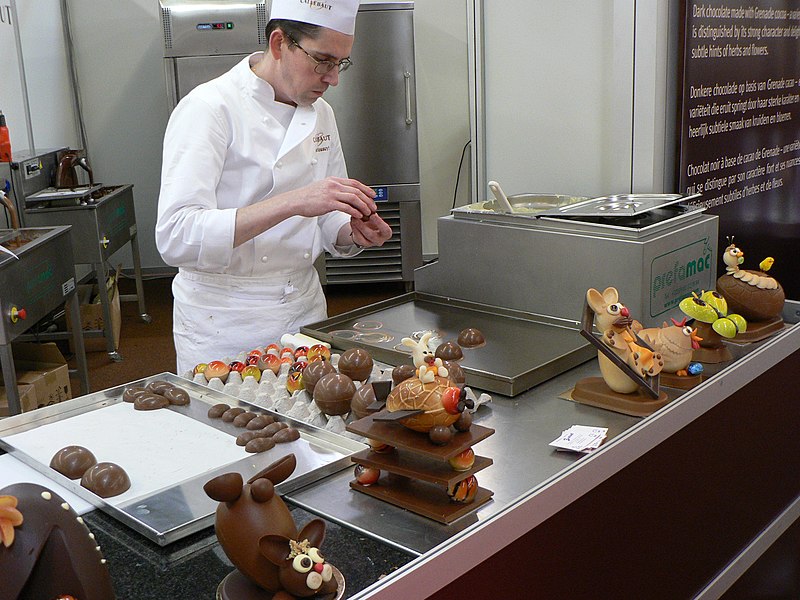
So how did I stay thin?  Simple: - apart from the fact that most American confectionary is simply too disgusting to allow between my lips (often on account of being too sweet for a sophisticated Frenchwoman such as myself), the strategy I use is as follows.  Instead of spending the whole evening munching my way through substandard sweets and biscuits, I restrict myself to one or two chocolates tasting absolutely divine!  Often, such chocolates were hard to come by at American Christmas parties, so I often used to sneak a bar of very dark chocolate into the party in my handbag, or perhaps something posted over from Marseille from my local chocolatier in Marseille, MDR.
On one occasion, one of my hosts noticed me sneaking a chocolate from my handbag and she was 'avin' the 'ump with me, asking me, "Is my cooking not good enough for you?  Would you rather be at Buckingham Palace instead of here?"  I told her it wasn't my fault she didn't know how to cook and exercise proper discernment about food, which resulted in her having kittens (another interesting phrase my mother taught me), which resulted in me just turning my back to her and resuming my conversation from which I had been interrupted by her.  So rude!  Thankfully, some high-class people in the USA mercifully invited me to their parties and they were sophisticated enough to import Belgian chocolates, so that Christmas wasn't all bad.
So what to do if you are attending lots of Christmas parties?  Apologies for the late nature of this advice, but one can use it on Christmas Day I suppose.  As mentioned, only have one or two absolutely divine chocolates.  If you are going to have more, make sure the portion sizes are suitable for a dainty Frenchwoman and if not, say, "La moitié, s'il vous plaît" ("Half of that, please"), if halving it is what it would take to get it down to a suitable size.  Just in case your host doesn't know how to cook and you are in an unsophisticated country like the UK, I have done a quick price comparison for Lindt & Sprüngli 90% cocoa chocolate: - http://www.mysupermarket.co.uk/asda-compare-prices/block_chocolate/lindt_excellence_dark_chocolate_supreme_90_cocoa_100g.html .  The comparison mercifully shows that Waitrose is selling it at the lowest price at present, so what I recommend is buying this and secretly keeping some in one's handbag in case all the food is low-quality.
All in all, anyone following my advice (not just here, but throughout my blog posts) should emerge from Christmas and New Year no less dainty than before.  Merry Christmas everyone!