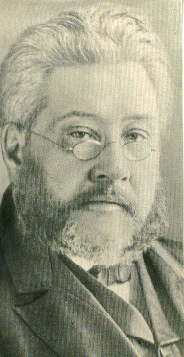
This year, I ate Christmas dinner with my own family plus Bilal: - his stupid parents won't have anything to do with Christmas. Granted, some reformed Christians had no time for Christmas either, viewing it as an extra-scriptural obligation. Charles Spurgeon
dissented from this view to a small extent, saying, "However, I wish there were ten or a dozen Christmas-days in the year; for there is work enough in the world, and a little more rest would not hurt labouring people."
Eating Christmas dinner (known in French as "Le Gros Souper" and "Lou Gros Soupa" in Provençal), I thought to myself about how stylish we French are when it comes to what we eat at Christmas. Le Gros Souper is traditionally eaten before Midnight Mass (which we don't have, as it is too Roman Catholic).
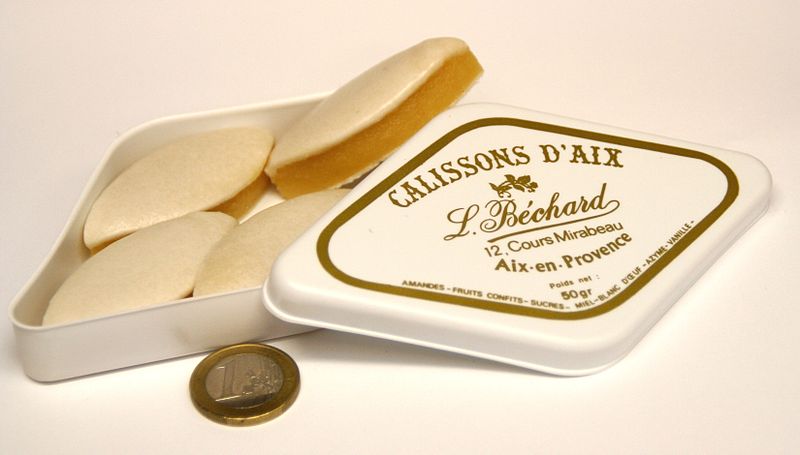
A recent survey showed that the British Christmas dinner was the least healthy in Europe and the French Christmas dinner the healthiest! See! Even the British media can't help but tell everyone how impossibly perfect we French are. We don't want to put rubbish into our bodies, but we really do go to town when it comes to preparing proper Christmas dinners. As I was born and raised in Provence, we naturally had the Thirteen Desserts. No! I do not mean thirteen excessively sweet desserts such as cupcakes as some stupid Americans might be inclined to think upon reading this! In Provence, we are far more sophisticated than that. Sweet things are not completely off the menu: - I make mention of Calisson, a Provençal dessert which is made of candied fruit and royal icing. As you can see below, they are naturally made in dainty sizes that are appropriate for French women with dainty figures such as myself.

For people who cannot get by without sweet foods, a Frenchwoman also likes nougat blanc and nougat noir au miel at Christmas. As for main courses, we have things including smoked salmon, chestnut stuffed turkey, roast chicken and that delicious French dish Foie Gras. Hopefully nobody was daft enough to think we Frenchwomen would go fat-free at Christmas! A Frenchwoman loves rich foods like Foie Gras and would never consider low-fat low-flavour options!

We do enjoy some healthy options as part of a traditional French Christmas dinner though. These include melons, oranges, apples, pears etc. Nuts are also included, particularly in Les Treize Desserts. The British and Americans tend to buy them in huge quantities and so they are no longer regarded as a delicacy like they used to be. It is the same with fruit. In the immediate post-war era, British children were content with things like oranges in their christmas stockings, but now they want the latest X-Box One, PS4 and Wii-U games. I would refer them to the book "Why French Children Don't Talk Back" by Catherine Crawford to remind them of the fact that we French know what we are talking about in everything, even child-raising.

As you can see above, Les Treize Desserts tends to include that delicious Provençal bread fougasse. When I visited Asda in Gravesend a few weeks ago to teach the chav single mother how to feed her children properly, I came across some really awful imitations of French bread, but I am glad that I am in Marseille with proper fougasse easily available. I couldn't stand being away from real bread for too long. I don't know how I managed to get by in London being away from all these stylish foods as long as I did! A Frenchwoman just adores (in the non-religious sense of the word) fougasse!

Let me not forget another dish (discussed somewhat out of sequence I know) is aigo boulido, another delicious thing that results in me feeling homesick when I am away from Provence for too long. We French do not like to waste food and this is something we do with stale bread. The ingredients are stale bread, fresh garlic, olive oil, salvia and water. The end result is the stale bread soaked in the delicious juices made from the other ingredients.

One French tradition I am not so happy about is le cacho fio. This is roughly equivalent to the British tradition of the Yuletide log. The reason I don't like this is its very clear links to paganism, especially as it includes a libation (the pouring out of an alcoholic drink in honour of a god/deity or someone who has died). Yes, it mentions God's holy name, but it is too heavily steeped in the occult for me to take it seriously as a religious prayer. Also, the idea of pouring out a drink for God is pointless: - firstly, he created it anyway and secondly, as Jesus has offered his sacrifice once and for all on the cross (as Hebrews 10 makes clear), libations are absolutely pointless. The ceremony involves the youngest person present reciting the following words (who is old enough to talk, MDR): -
"Alegre, Diou nous alegre, Cachofue ven, tout ben ven, Diou nous fague la graci di veïre l'an que ven Se sian pas mai que siguen pas men." (Provençal)
"Soyons joyeux, Dieu nous garde joyeux, Cacho feu vient, tout bien vient, Dieu nous fasse la grâce de voir l'an qui vient, Si nous sommes pas plus, que nous ne soyons pas moins." (French)
"May we be happy, God keep us happy, [if] Cacho's fire comes, every good thing comes, may God grant us the grace to face the year ahead, whether we be nothing more, or whether we be nothing less." (English)

But anyway, apart from le cacho fio, everything we French do when it comes to Christmas is infinitely more stylish than anything anyone else does, even if French society has become too atheistic to remember anything about why we are celebrating Christmas in the first place. I am so glad I am not celebrating Christmas in a decidedly unstylish country such as the USA or UK. I remember the Christmas I spent in the USA on business. Apart from the substandard biscuits and sweets at parties, I remember a disgusting drink called eggnog. I was shocked to see a photo of an eggnog carton with French writing on it in Wikimedia commons. It appears that my francophone cousins in Québec have regrettably fallen for some awful American customs. Why couldn't they keep in touch with their stylish French ancestry? Who knows?

All in all, a lovely traditional French Christmas, minus le cacho fio. Bilal enjoyed it. He has always been a solitary person and as mentioned, his family has little enthusiasm for celebrating Christmas. However, he said he really enjoyed the company of myself and my family. In the unlikely event we want something different for Christmas next year, we could ask him to cook, though as Mali has always been a majority pagan nation (yes, Islam falls into that category), there isn't really any such thing as a traditional Malian Christmas dinner. However, some Malian foods sound lovely and natural, such as Meni-meniyong, foutou banane, foutou igname etc, even if they aren't as stylish as French cuisine! MDR.



.jpg/461px-Farag%C3%B3,_G%C3%A9za_-_Slim_Woman_with_a_Cat_(1913).jpg?uselang=en-gb)
