Welcome to Impossibly Dainty French Woman, the The #1 blog dedicated to explaining to women worldwide how to be impossibly perfect like we Frenchwomen and enjoy the French lifestyle, be it the trains or beautiful cities, but most of all the cuisine that facilitates us in our quest to remain pencil-thin. Please subscribe to this blog to receive updates by e-mail (below).
I have often heard the question debated about whether takeaway food is bad and I saw an article on the BBC's website at http://www.bbc.co.uk/news/health-26546863 about the issue. So what do I, as the Impossibly Dainty French Woman think regarding the question of whether takeaway food is bad? Yes and no. It depends on various factors.
If we are talking about battered Mars bars, that archetypical example of disgusting British cuisine that can be found in some Scottish takeaways, then Bilal's coeliac disease and the barley malt in the ingredients list plus the flour in the batter mean they would be very bad news for him. For me, they would be bad news on account of their severe lack of sophistication! Tee hee! I would also not be willing to touch the fish, chips and mushy peas shown in the picture below.
I have noticed that British takeaways, which have sadly been serving curries instead of fish and chips in recent decades (not that this was ever tasty, but it is a shame that Britain is selling itself out), tend to serve things in much bigger proportions than in France. In a British takeaway, when buying fish and chips, one will get a huge package of thickly-cut chips wrapped up in newspaper, whereas in France, one receives a dainty portion of thinly-cut chips in a small square polystyrene container. Granted, French chips tend to have more fat per unit weight, given the increased surface area, but what people forget is that cutting one's food up into small pieces is a way we impossibly perfect Frenchwomen have of making less seem like more!
Me personally, I wouldn't touch such disgusting food even if it were done the French way, though as I have admitted in previous posts, I am very partial to sophisticated French dishes that use potatoes and fat, such as tartiflette! Tee hee!
The summary answer to the original question of whether or not takeaways are bad is as follows: - not if you are a dainty and sophisticated Frenchwoman who only eats the daintiest of portions like me, but its unsophisticated nature means one will probably eat more on account of getting one's jollies from one's stomach being stretched, rather than the effects on one's taste buds, MDR.
Recently, Bilal and I made the train journey to Madrid and I finally got around to doing another blog post.
Apologies for not having posted an article recently. As my regular readers will know, I am now in a courtship and it wouldn't do to neglect my boyfriend in favour of blogging. Also, as I've often said, running one's own fashion magazine is never easy. I'm always pursuing new business opportunities, as I am always keen to share the knowledge we Frenchwomen have about fashion. Anything a Frenchwoman doesn't know about fashion isn't worth knowing! Tee hee! I don't always enjoy being away from my beloved Marseille, so I love the opportunities that modern communications and networks offer me to do business remotely, e.g. with WhatsApp (a pun on "wassup?", an English translation of "wesh-wesh?"), Facebook, Skype, e-mail, LinkedIn etc.
However, occasionally, there are times when face-to-face meetings are needed. On this occasion, a face-to-face meeting was needed with a distributor in Madrid, the capital of Spain. I am not particularly familiar with Spain, but I was aware that RENFE (the Spanish national operator) had started a daily direct train service in both directions between Marseille and Madrid. The journey takes a little over seven hours, as a large part of the time is spent on the slow tracks between Nîmes and Perpignan: - our incompetent president has severely delayed the construction of the Montpellier-Perpignan route, supposedly for lack of capacity needs, but in reality because he has run the economy into the ground. We French are the best at producing high-speed trains and planes, but as Mireille Guiliano likes to point out, Frenchwomen like to unwind and savour the moment, so I thought I would go by train.
Bilal took some leave and accompanied me to Madrid. He was a bit apprehensive, as this was his first time travelling outside of France and Mali. Travelling is just not something he has tended to do regularly, unless it was between Marseille and his family's lands in Mali. However, as I will explain later, he found some things that made him feel at home.
In the seven-plus hours of the journey, the train stopped at the following stations: - Aix-en-Provence TGV, Avignon TGV, Nîmes, Montpellier, Béziers, Perpignan, Figueres-Vilafant, Girona and Barcelona. One thing that is notable about Spain is that it has the longest high-speed rail network in the whole of Europe. It would have had the longest high-speed rail network in the whole world briefly before being overtaken by China, but delays in opening the Madrid-Valencia line meant this didn't happen. Some of the cities have no high-speed bypass routes, e.g. Girona, Barcelona and Madrid (the Yeles Bypass exists, but the trains slow down to 150km/h or so for this): - the entrance to Barcelona from the northeast in particular was extremely slow. However, save for exceptions such as these, the whole of the route beyond Perpignan was high-speed.
I remember the route beyond Barcelona as being very mountainous: - if one looks on a map, one will see that the high-speed route is rather strange, but given the surrounding topography, it didn't look like there were many alternatives. One other thing that is notable about Spain is that it is the most mountainous country in Europe besides Switzerland (in terms of total mountain area, I assume). The line goes towards Martorell (the location of Seat's main factory and headquarters and where the Audi Q3 is produced) before curving towards Madrid. As the line approaches Camp de Tarragona station, one can easily see the Mediterranean Sea on the left, though the train had no stops between Barcelona Sants and Madrid Puerta de Atocha stations. The train sped past intermediate cities such as Lleida/Lérida and Zaragoza. As the train drew closer towards Calatalyud station, it passed through the Sístema Ibérica (a mountain range) at its narrowest point. After a few more mountains here and there, followed by a plateau with high mountains on the right, the train began its descent into Madrid. Madrid was chilly at that time of year, though I am told things are very different in summer! Still, we were dressed up for cold weather, so things weren't so bad.
Given my interest in food, there are many things that I am inclined to point out about Spain. The most notable point as far as Bilal was concerned is how coeliac-friendly the country is. Restaurant staff and shop assistants were never once bemused when asked about the gluten-free credentials of their food. Also, food on sale in supermarkets often has a label indicating that it is gluten-free (useful to Bilal, as he doesn't speak Spanish) and supermarkets often have relatively large gluten-free food sections. One of the people we met during the visit was familiar with the Catalonian town of Blanes, in which a store selling only gluten-free products named Soms Celiacs (Catalan for "We are coeliacs" exists).
The other notable feature of the Spanish food scene was the availability of food in different portion sizes. There are three sizes in ascending order of size: - "tapa", "ración" and "porción". The idea of the tapas culture is that one can try small quantities of food and go between different bars, sampling small amounts of lots of different types of foods. Being the Impossibly Dainty French Woman, as far as I was concerned, a tapa was the size of a full meal. During our first evening in Madrid, I ordered a few tapas and was shocked when I saw their size, given what I had been told about the tapas culture.
However, Bilal was with me and he ate the rest. Because Bilal has coeliac disease, he needs to eat quite a bit more to gain the same amount of nutrients. Many coeliacs are very thin because their bodies don't absorb food and nutrients very well, though other coeliacs are overweight because their bodies overcompensate and cause them to overeat. Now, any Americans or British women reading this should bear in mind that not everyone who is overweight has coeliac disease or any other physiological reason why losing weight isn't so simple. Most people who are overweight are that way because they are gluttonous, self-indulgent and not as impossibly perfect as we Frenchwomen! So if you want to lose weight, stop blaming physiology and emulate the habits of impossibly perfect Frenchwomen such as myself. MDR.
Though Spanish cuisine isn't as impossibly perfect as French cuisine, it was not all that bad and certainly a lot better than American and British cuisine. Madrileño restaurants have a strong focus on fresh ingredients, especially when it comes to fish. With the high-speed link to Valencia now complete, it is possible to be at the Mediterranean Sea using a train taking just 1h38m. If I find I have more time on my hands, one interesting business venture would be to have people catch fish just off the coast of Valencia and then take them by train to a restaurant I would set up close to Puerta de Atocha station. They would have a much more beautiful flavour than fish preserved in ice for a few days before reaching their target market! Now that Bilal knows he has coeliac disease, rather than a narrow-minded digestive system when it comes to cuisine, he is more willing to try new foods. He tried various other things that he found had reasonably tasty flavours.
Bilal started to feel homesick, as the two different hotels we stayed at were not in the ghetto. We therefore decided to take the train to Seville. The high-speed line to Seville was Spain's first high-speed railway line when it opened in 1992. The route to Seville was very pretty. We passed the depot in La Sagra, before passing Toledo (famous for swords), before going uphill slightly and crossing the plateau towards Ciudad Real and Puertollano, before heading in the direction of the Sierra Morena. The terrain became particularly mountainous after the not-yet-opened Villanueva de Córdoba-Los Pedroches station. After passing through Córdoba station (the train was non-stop), the train continued through the obviously-fertile Guadalquivir valley, with the Sierra Morena mountains gradually becoming more distant. Two hours and twenty minutes after leaving Puerta de Atocha station, the train arrived at Sevilla Santa Justa station.
The old town was very pretty, though Bilal wasn't entirely at ease with the Giralda Tower, as it was built by the Moors and preserves the architectural styles that remind him of Islam, the religion he has turned his back on. However, though he didn't like the Alcázar Palace for the same reason, he loved the Alcázar's gardens. He enjoyed the area of the city with lots of modern architecture known as La Cartuja and found the Metropol Parasol de la Encarnación interesting.
After having seen various sights in the old town and elsewhere, Bilal and I travelled with Seville's only metro line to Primero de Mayo station, which was situated near two "de la zone" barrios known as Los Pajaritos and La Candelaria. The former was where the hip-hop singer Haze grew up and the latter is where he filmed his video "La potenzia pa' tu carro". Bilal was finally starting to feel at home!
Following our visit to these two barrios, we then travelled to the barrio known as "Las Vegas"/"Martínez Montañés" within Las 3.000 Viviendas, possibly Spain's most dangerous barrio. I wasn't entirely comfortable and my visit to the barrio was a grudging concession to Bilal, who was only now ceasing to look nervous and starting to loosen up, given that he was back in da 'hood, MDR. We also visited Pino Montano, the barrio Zatu and Acción Sánchez of the hip-hop group SFDK came from.
As Bilal doesn't speak Spanish, he had to relay his questions through me, with me speaking in English, as there was a small number of people in the barrio who spoke English. A lot of his questions concerned life in their 'hood and vocabulary and he wanted to get onto subjects of evangelism, but we had to rush back to catch the train and. Before we left, Bilal got some e-mail addresses for people he met in the barrio Martínez Montañés: - it is clear that he has made some lifelong friends, lol.
They parted with a fist bump/nudge/spud (whatever name one prefers). We then walked back towards Virgen del Rocío station (shown with an asset inspection train of some sort), from which we caught a train to Santa Justa station, in order to catch our train to Madrid. One thing that is quite nice about Spanish high-speed rail services is that they have an integrated ticket available if travelling with the high-speed AVE services. What this means is that one can use the Cercanías services (similar in nature to France's Transport Express Régional services) for free. All one needs to do is have the AVE ticket ready, enter the code from the ticket into the Cercanías machines and, hey presto, you get a free ticket!
We then travelled back to Seville. I continued my business discussions in the city until it was time to take the pre-arranged train back to Marseille. Bilal definitely enjoyed the trip to Seville, but he was becoming noticeably homesick and, if I'm honest, so was I, as I was missing the intense quality that only exists in French cuisine! Tee hee! Bilal said that if he lived in Spain and weren't thinking about marriage to me and having children, he would head straight for the barrio Martínez Montañés, but I guess this is one aspect of his character I will have to work on, as I would never go there without a big muscular dark-skinned man like him for protection. We shall see how his nascent friendships with the hip-hop people there go, MDR.
Though Spain is not a wasteland when it comes to sophistication that the UK and USA are, I was overjoyed when the train pulled into Marseille St. Charles station. As the old Wizard of Oz cliché goes, "there's no place like home". We ate dinner at a Vieux Port restaurant and I enjoyed my usual dainty portions and pastis! There is nowhere like Marseille, but it is spendid that we have these new train connections!
One thing that has been cause for concern as of late is the decline of French lunchtime rituals. A Frenchwoman knows that rushing one's meals, particularly in the Anglo-Saxon style, can lead to what Mireille Guiliano calls "mindless eating", i.e. where people consume huge amounts and have become so distracted by things around them that they forget to concentrate on their food and end up consuming more of it, given that it has escaped their attention that they are consuming it. A Frenchwoman likes to savour the moment and mealtimes are no exception. The picture below is named "Pereza Andaluza" ("Andalusian laziness") and was painted by Julio Romero de Torres around 1900 or so. I recall seeing it during one of my visits to Andalusia (known as "Andalucía" in Spanish and "Andalousie" in French), though Andalusia is a subject for another blog post. Though it is a shame I cannot think of a similar painting done by a French artist about France, I think this painting captures very well the way a Frenchwoman loves to savour the moment and enjoy it, rather than rush around American-style saying "time is money, time is money".
The article describes people falling into American ways of working, i.e. rushing for a quick bite to eat and then wolfing it down in a couple of minutes and then resuming one's work. It is very worrying that French women are falling into American habits. If living like this, the only way to have an impossibly dainty figure like mine (or that of another quintessential Frenchwoman) is to starve oneself or take dieting pills or something else that is disagreeable to a Frenchwoman seeking to have as much pleasure in life as possible. France needs to protect itself against American imperialism by keeping its own habits. Yes, one needs to get a large amount of work done to maintain one's standard of living, but a Frenchwoman knows how to work efficiently, so that she isn't drawn into American habits.
But you don't know what is necessary to have a successful business, I hear people cry. I do not run my workplace in the Anglo-Saxon style, though I must admit I am nevertheless a diva like Miss Anna Wintour, the British-born editor of the US version of Vogue, one of my competitors! MDR!
At my workplace, we are not completely rigid about our working hours, as some people make French people out to be. Obviously, if there is an important fashion show taking place outside of office hours (many of them seem to be mid-evening), then we need to make sure we are properly represented. However, employees of mine who work beyond the standard 35-hour week tend to receive negative attention from me for not being competent and efficient enough at their jobs to get their work done within 35 hours. I invest in various things to ensure that my employees can do this. I send them on organisational skills courses to help them manage their workload and strategically work out what does and does not need to be done in the first place. Touch-typing courses are a favourite with me as well, given that writing is pretty much what we do (not forgetting photography though).
Ok, so fashion shows require us to do stuff out-of-hours, but on a normal working day, we do not rush lunch or stay in. French schools are known for having very long hours and some schools run from 8AM to 6PM. When new employees start with me, just in case they have children, I give them a list of local schools that have timetables from 8AM to 6PM, so that we can observe proper lunchtime rituals the way Frenchwomen do. In our premises, we have a list of markets and when they are on.
The market picture above is French, though it is in Cherbourg (a place with a much cooler climate, hence the coats), not my beloved Marseille, but never mind. Anyway, regardless of whether or not it is a market day, we will normally start the working day at 8.30AM, leaving the employees with children half an hour or so to get into the office after dropping off their children. If there is a market that day, we will take an hour for our lunch break (12PM-1PM) and have a light lunch, normally in a café on the edge of the Vieux Port: - when I say light, I mean light by French standards! MDR! This means we finish work at 4.30PM to allow time for combing the markets for the choicest ingredients before picking children up from school. If there is no market that day, we will take a two-hour lunch break (12PM-2PM) and finish at 5.30PM (leaving half an hour for employees with children to reach their childrens' schools). During the lunch break, we tend to eat at local brasseries. I know all the restaurants in the local area and when it comes to the ones with the best food and atmosphere, I strike up relationships with them, meaning that they feed us a low price to my business (sometimes, good food costs less; a slogan for a horrible British supermarket chain) in exchange for regular custom. Free meals is a perk I give my employees and if one is tough in negotiations with the restaurant, a perk like this need not cost the earth. During these brasserie meals, we enjoy all the local culinary delights that Provence offers. Such as what? Bouillabaise for starters! Corny pun I know, MDR!
Bouillabaise is probably the dish that Marseille is most famous for. It is traditionally made up of a large number of different types of fish and is, for want of a better word (English culinary vocabulary is limited), a fish soup. It is absolutely delicious and when living in London building up my fashion career, I found I needed to go back to Marseille every so often and get my bouillabaise fix! MDR!
Pissaladière (a dish vaguely related to pizza) is closely associated with Nice, though it is fairly common in many areas of Provence. Unsophisticated Americans might compare it to a deep-pan pizza! Yuck!
Aïoli and olives are two things we like to eat as part of meals, though only the Provençal varieties are of sufficient quality for our palates. Another thing we like to have as a side is Fougasse, that very Provençal bread. Yuppies visiting my magazine's premises from the UK and USA tend to bleat about being gluten intolerant or having coeliac disease when this comes along, but I ignore their grumblings regarding their phoney yuppie diseases and order more! MDR!
Did I forget to mention that we always have such things in local brasseries/cafés accompanied by Pastis de Marseille? No meal in Marseille would be complete without Pastis de Marseille. Anglo-Saxon visitors with inadequately developed palates tend to moan endlessly about its strong flavour, but I say that an inability to like Pastis de Marseille is a sign that one's palate is not sophisticated enough!
To conclude this blog, all I need to say is that lunchtime is a time for intense pleasure and no business objectives could possibly be important enough to sacrifice the pleasure a Frenchwoman, with her sophisticated palate, gets from eating lunch in a high-quality brasserie or café.
After my negative article criticising our incompetent president, I thought I would write an article about something a little bit more happy. One of the culinary products of Provence with an absolutely beautiful flavour is aioli. Aioli has a flavour that is absolutely divine. A Frenchwoman knows that only French cuisine is of sufficient quality to eat if one is the bee's knees.
There are various factors that go into this distinction. We have very capable farmers, even if they are dinosaurs receiving far too much in the way of agricultural subsidies via the Common Agricultural Policy. We have very finely tuned senses that can discern which ingredients are of the highest quality. We have chefs that are very skilled at their craft, making food that is a feast for all the senses. We have consumers that have finely trained senses that create a marketplace in which only the highest quality of food will be successful.
One delicious condiment that exists in France that goes into making our cuisine effortlessly perfect is aioli, a garlic mayonnaise. Please note that this isn't the low-quality stuff in the bargain aisles of supermarkets made from vegetable oil. This is the real McCoy, made from olive oil, mustard, garlic, egg yolk etc.
As I have been keen to point out in numerous previous posts, one of the reasons a Frenchwoman has such a dainty appetite (and is therefore effortlessly thin) is the rich foods she eats. Real aioli made the proper way has an extremely rich flavour.
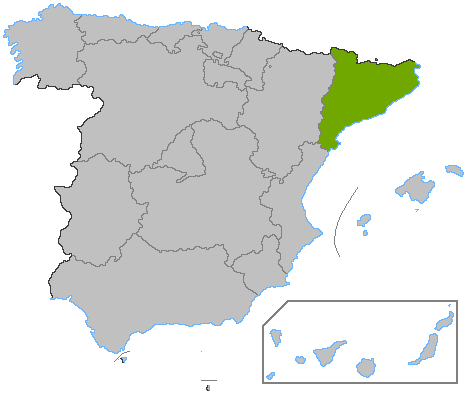
There is another variant that is commonly consumed in Spain, which is spelled "alioli". From what I can gather, it is fairly common in the province of Catalonia (as well as the Balearic Islands and Comunidad Valenciana), which forms part of the French-Spanish border. Catalonia's proximity to France means that it isn't complete garbage, but it is still nowhere near as good as traditional provençal aioli.
A little piece of information for people who are ignorant about French cuisine: - there is also the name "aillade" in existence. In Provence, this refers to a garlic-flavoured vinaigrette, whereas in other regions of France, e.g. Languedoc-Roussillon, it refers to aioli.
In my beloved Provence, there is a complete dish known as Le Grand Aioli, which normally includes boiled vegetables (commonly including carrots, potatoes, green beans, cauliflower courgettes and raw tomatoes), boiled desalted cod (though other fish are sometimes used as well), boiled eggs and sometimes also snails and mollusks.
Many of the aforementioned ingredients are very typical of Mediterranean regions, e.g. olive oil, garlic etc.
As with chocolate, a Frenchwoman likes bitter flavours in her food sometimes. One example is olive oil: - when making aioli, it should never be the mild version, but the extra virgin variety. This will give the aioli a lovely bitter and rich flavour. Please note that anything a Frenchwoman doesn't know about cookery is not worth knowing: - a Frenchwoman knows that there are very few circumstances where mild olive oil (rather than extra-virgin olive oil) is the best choice.
One of these examples is when using it for frying. Extra-virgin olive oil is a poor choice for frying, as it can easily fill one's house with acrid smoke. However, mild olive oil is a good way to enjoy the benefits of olive oil without doing this if frying.
Another example is bakery: - it is possible to bake cakes with extra-virgin olive oil, but unless one uses a Frenchwoman's intuition to work out the interaction of the flavours, the cake might end up tasting funny. Given its strong flavour, extra-virgin olive oil often overpowers the other flavours. However, with a properly worked-out flavour combination (which only a Frenchman/woman is remotely capable of doing), extra-virgin olive oil can produce cakes with absolutely beautiful flavours. A good example of this is a pastis-flavoured cake: - a recipe can be found at http://www.jujucuisine.com/recette.php?recette_id=73 . I love all the Mediterranean ingredients, such as pastis, olive oil, almonds etc.
All in all, ailoli is one of those things that go into making we French inexplicably special. So there!


.jpg/640px-Tapas_(by_Awersowy).jpg)


.JPG/640px-Metropol_Parasol_-_Seville_(3).JPG?uselang=en-gb)


.jpg?uselang=en-gb)


.jpg/320px-Bouillabaisse_(4254761968).jpg)




.jpg)
